Home / Blog / How to think about mining
Guide · Sep 22, 2026 · 8 min read
A failed hashboard is a line item, not a catastrophe
Every mining machine develops faults eventually. Whether that is frightening or routine has very little to do with the machine, and almost everything to do with where it is racked and who is standing next to it.
Everything with a power supply fails eventually
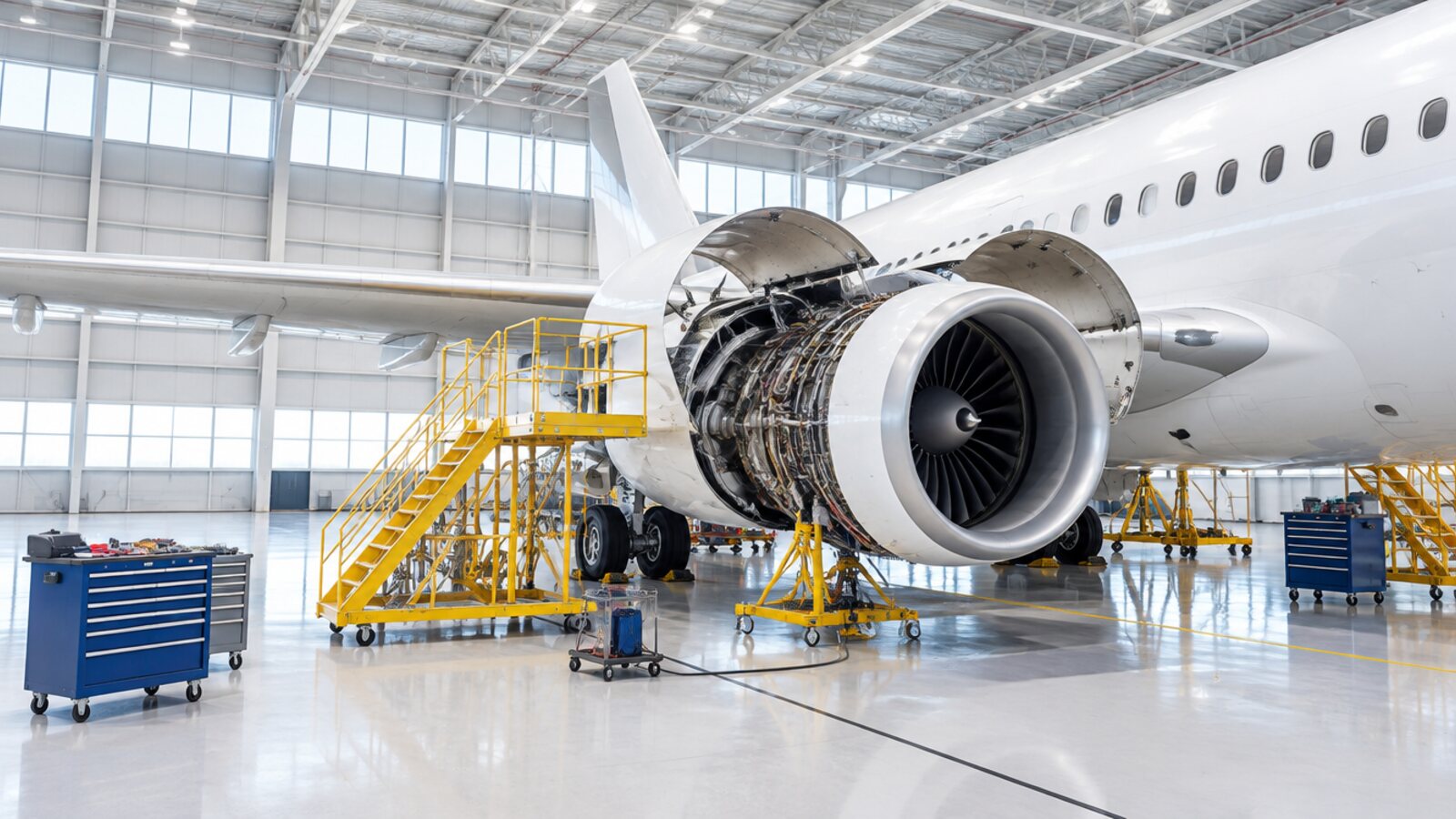
Airlines run some of the most reliable machinery ever built, and they still plan for every part of it to need work. Engines are inspected, overhauled and swapped on schedule, the cost of that work is typically provided for hour by hour as the aircraft flies, and a component coming off the wing is an entry in a maintenance plan rather than a crisis. The aircraft earns; the maintenance is part of what it costs to earn.
Mining hardware belongs in the same frame. Every machine, from every manufacturer, will develop faults over a working life of several years. That is not a flaw in one brand or one batch. It is what happens to dense electronics that run flat out, around the clock, at high temperature. The useful question is never whether a machine will need repairs. It is what a repair costs you when it comes.
An airline does not panic when an engine needs work. It budgeted for it before the aircraft flew.
How a miner actually fails
Most of a mining machine is its hashboards: long circuit boards carrying rows of mining chips, typically three or four boards to a machine. The chips on a board are wired in a chain, and work is passed down it from one chip to the next. That design is efficient and it has one well-known consequence: when a chip fails, it can break the chain, and everything downstream of it goes quiet. The machine keeps running on its other boards, reporting a missing chain and a hashrate that has dropped by a share.
The other common failures are the ones you would expect in anything that runs hot all day. Solder joints fatigue as a board heats and cools, which typically shows up as a board that works when it is cold and drops out when it is hot — and it is why machines on unstable power, switching on and off, see more of it. Fans are moving parts and wear out on air-cooled machines. Power supplies fail, as they do in every kind of electronics. Control boards, cables and connectors occasionally do too. Water-cooled machines trade the fans for fittings and coolant, which needs to be kept clean and correctly treated.
None of this is mysterious. For the established machine families it is documented in detail — board layouts, fault codes, repair guides — and a competent bench works through it every day.
What a fault looks like on a monitored floor
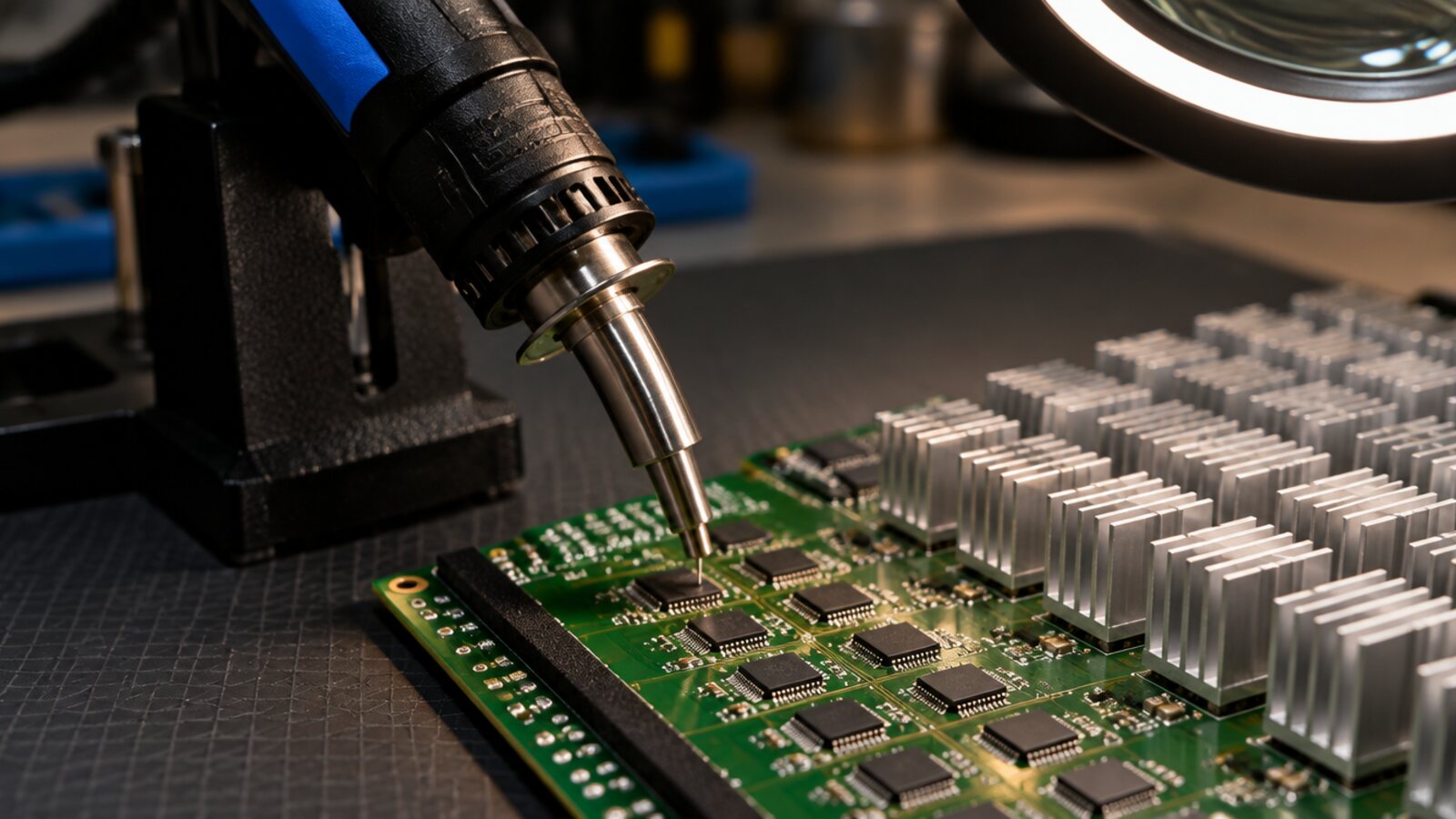
In a hosting facility a failure is usually noticed before an owner would ever have looked. Every machine reports its hashrate, its temperatures and the state of each board, and a board that drops out shows up as a missing chain and a gap in the numbers.
What happens next is ordinary. The machine keeps mining on its remaining boards while the faulty one is pulled, diagnosed and repaired or replaced. A power supply or a fan is a swap. A board is bench work. For the owner, the event is a note on an account and a line on an invoice — which is exactly what it should be.
One machine against a fleet
Here is the difference that matters most. Suppose a generation of machines sees one board in twenty fail in its first year. Across a fleet of a thousand machines, that is a steady trickle of repairs — a queue, predictable enough to staff and to budget, with spare parts on the shelf because they are always needed.
Across one machine in a garage, the same rate means something completely different. Most owners never see a failure. A few see one, and for them it is not five percent of anything: it is a machine short of a board, with no spare, no bench, no one to call, and a shipment to arrange to somebody who can fix it — and weeks of lost mining while it travels.
The failure rate is identical in both places. What differs is whether it arrives as an average or as an event. That is the whole case for keeping machines where the failures are somebody’s daily work.
A fleet turns a failure rate into an average. A single machine turns it into an event.
The expensive part is the downtime
It surprises people, but the parts are rarely the largest cost of a failure. A replacement chip, a fan or even a power supply is a small fraction of what the machine cost, and even a manufacturer’s own out-of-warranty price for repairing a whole hashboard runs to a couple of hundred dollars. The real cost is the hashrate that is not being produced while the machine waits: the days before anyone notices, the days to get it to a bench, the days waiting for a part.
That is why the value of a repair operation is measured mostly in speed. Monitoring that catches a dropped board the same day. Technicians on site rather than a courier away. Common parts in stock rather than on order. A machine that is back to full hashrate in days has had a minor event. The same fault that takes six weeks to resolve has cost a meaningful slice of the year.
The repair terms here
At our Argentina site, repairs are done on site and billed at the cost of the parts — no labour line, no margin on the repair. At our UAE site there is a manufacturer warranty centre close to the facility, so a machine still inside its warranty goes to the people who built it without crossing an ocean to get there.
New machines from the major manufacturers typically carry a one-year warranty from the day they ship, so the warranty centre matters most in exactly the year a machine is newest and most valuable. Those two arrangements are the practical difference between a failure rate being frightening and a failure rate being a budget line. They are also why our reviews talk about what a fault costs you here, rather than dwelling on failure threads. A board that develops a fault in a room with a bench and a warranty centre down the road is a routine piece of work.
What makes failures rarer
Most of what reduces failures is done by the site, not the owner. Stable power, so boards are not cycled hot and cold by every interruption. Clean, filtered intake air on air-cooled machines. Correctly treated coolant held at the right temperature on water-cooled ones. Sensible firmware, applied deliberately rather than whenever an update appears. Machines that run steadily in a controlled environment simply see fewer of the faults that come from stress.
For an owner the lever is choosing where the machine lives. That decision does more for its reliability than any choice between two machines of the same generation.
What this means when you choose a machine
Build quality matters, and it is worth knowing which generations have a clean record and which have a known weakness. But serviceability matters more than most buyers expect. A machine with a well-documented board, a deep supply of parts and repair benches that have seen thousands of them is cheaper to own over four years than one that is slightly more reliable and impossible to fix quickly.
That is why every one of our reviews scores quality control and serviceability separately, and why neither is scored as a reason not to mine. Faults are a cost of owning a machine that works for a living. Put it somewhere they are routine, budget for them like any other running cost, and they stay exactly that.
Disclosure
Firsthand Bitcoin sells and hosts mining hardware, including this machine. No manufacturer, distributor or affiliate programme paid for or reviewed this page and we take no commission on the links above. Historical figures are computed from daily bitcoin price and network hashprice, each day valued at its own prices. Nothing here is investment advice.