Home / Blog / Bitmain Antminer S17
Field report · Sep 5, 2026 · 7 min read
The Antminer S17 crossed the Atlantic three times chasing the best power bill
Argentina to Nigeria at the 2020 halving, back to Argentina for the 2021 bull run, back to Nigeria when it turned. Each move was made the month the other site started paying better — and the coins are all still here.
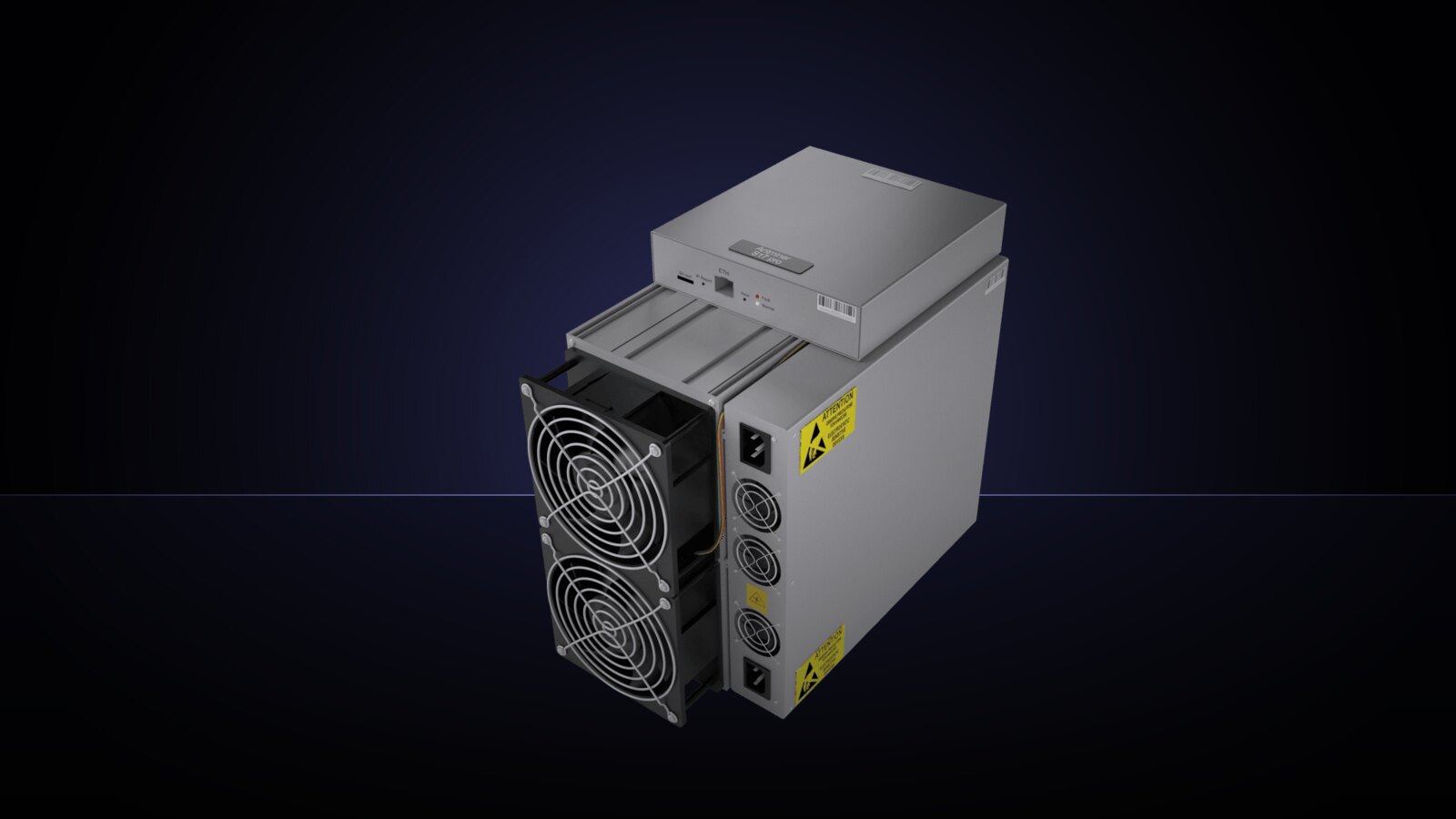
Bitmain Antminer S17 (56 TH/s)
Seven nanometres, and a new idea of efficient
When Bitmain introduced the S17 range in April 2019 it was the first of its machines on 7-nanometre chips, and it roughly halved the power per terahash of the S9 generation. The base S17 does 56 TH/s at 45 J/TH — in 2019, a genuinely efficient machine.
We bought ours in October 2019 for $1,248, and it landed in Argentina at $2,485 once freight, duty, infrastructure and setup were in.
It had a rough reputation in its first year; the forums are full of temperature-sensor threads and board complaints. That is the kind of problem a site with a repair bench absorbs as routine work, and it is not what this machine’s story turned out to be about.
Three crossings, each one on the numbers
It spent its first 228 days in Argentina. At the May 2020 halving the arithmetic shifted, and on 30 May 2020 it went to Nigeria, where 3.9¢ had started paying better than 6¢.
Then the 2021 bull run turned the arithmetic back. With hashprice that high, the extra coins from Argentina’s better-than-98% uptime were worth more than Nigeria’s cheaper power — so on 22 January 2021 it went back to Argentina and mined through the best months the network had seen in years.
When the market turned in 2022 the sums flipped again, and on 24 June 2022 it made its third crossing, back to Nigeria. Three relocations in three years, each made the month the other site started paying better rather than the month the current one stopped working.
When hashprice is high, uptime pays more than cheap power. When it falls, the cheap power wins. The S17 lived through both.
A long last stretch
After the April 2024 halving, 45 J/TH finally ran out of headroom even at 3.9¢. On 27 August 2024 it was switched off for the first time; it came back on while the margin allowed, and was switched off for good on 17 November 2025 — never a day mined at a loss.
The box was worth more at the top than we paid for it
The 2021 bull run did not only lift bitcoin. It lifted the price of the machines that mine it. In March 2021, eighteen months after we bought ours, an S17 was fetching $5,400 — 4.3× what we paid for it.
An owner who sold there would have walked away with 0.3082 BTC already in the wallet — worth $25,046 today — plus $5,400 for the box: $30,446, 12.3× the landed cost, for a year and a half of hashing. That is the part of mining people outside it rarely see: at the top of a cycle, the hardware itself can return a multiple of its price on top of everything it mined.
We kept ours running instead, and it went on mining for years — which is why its coins alone are now worth $45,098. Selling at the top and keeping on mining were both very good outcomes. The only bad one would have been not owning it.
Mine it for eighteen months, sell the box at the top, keep the coins. Or keep mining. Both were extraordinary.
The tally
Across 2,179 days of mining it kept 0.5549 BTC for $5,418 of electricity — about $9,763 a coin. Those coins are worth $45,098 today.
Against a $2,485 landed cost, that is $39,680 of cashflow — 16.0× its hardware. 0.2083 BTC of it, 38% of everything it made, came in its first seven months, before the 2020 halving.
Why the moves mattered
A machine that had sat at one site the whole time would have done well. This one did better, because it was always where it earned the most — and the move that looks strangest, back to the more expensive site in 2021, is the one that best shows how the decision works. The cheapest power is not always the best site. The best site is whichever one turns a day of hashing into the most value, and that changes with the market.
That is the same rule our fleet runs on today. An S21 or an S19 XP Hyd moves when the numbers say so, not when something breaks — and the S17 is the clearest picture we have of what that is worth over a whole working life.
Sources and further reading
- Bitmain introduces the Antminer S17 Pro, Antminer S17 and Antminer T17 — Bitcointalk, April 2019
- Antminer T17/S17 temperature sensor discussion — Bitcointalk, 2020
Which machines this covers
Disclosure
Firsthand Bitcoin sells and hosts mining hardware, including this machine. No manufacturer, distributor or affiliate programme paid for or reviewed this page and we take no commission on the links above. Historical figures are computed from daily bitcoin price and network hashprice, each day valued at its own prices. Nothing here is investment advice.