Home / Blog / Bitmain Antminer S19 XP
Field report · Sep 29, 2026 · 6 min read
The Antminer S19 XP mined through the whole 2024 halving before it ever left Argentina
Bitmain's first 5-nanometre miner shipped into the worst ASIC market on record, on the strength of a chip nobody had put in a bitcoin machine before. Ours spent more than two years at one site, rode the subsidy cut straight through, and only crossed to cheap power once the numbers stopped being close.
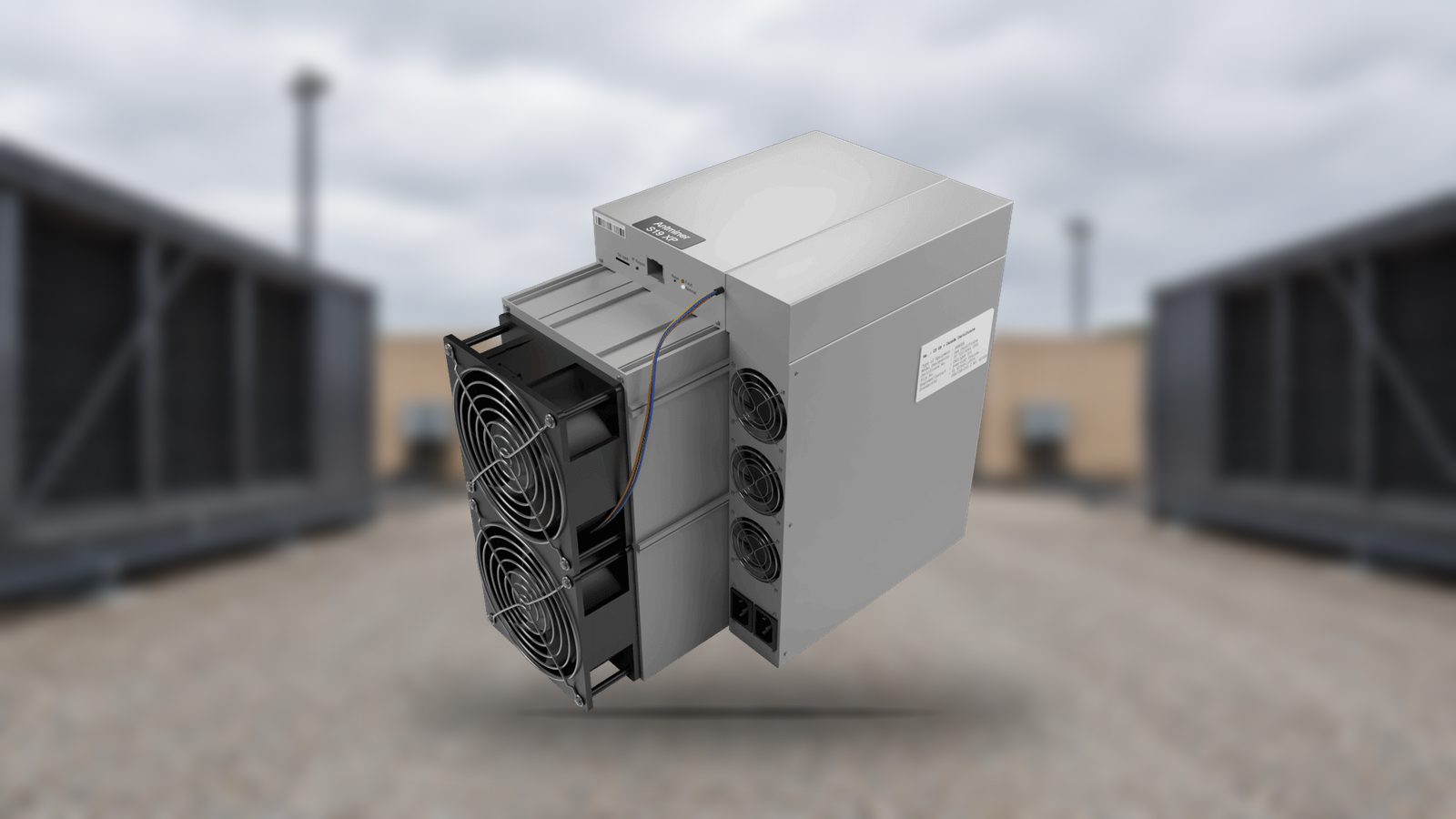
Bitmain Antminer S19 XP (141 TH/s)
A new chip, shipped into the worst market ASICs have seen
Bitmain revealed the Antminer S19 XP in November 2021, built around the company's first bitcoin ASIC on TSMC's 5-nanometre process — 140 TH/s from 3,010 W, air-cooled, at 21.35 J/TH. It was a genuine jump in efficiency for its time. The market it actually shipped into, through 2022, was the worst ASIC hardware has ever traded in: new-generation machine prices fell roughly 85% over that single year as the broader bear market gutted miner economics everywhere.
We bought ours in January 2024, at the price the market had settled on by then rather than the launch number, for $2,341 — $3,743 landed at our Argentina site once freight, duty, customs and setup were added. That is the number this article's figures start from, and it is more than two years and 952 days ago now.
The halving landed in the middle of the run, not at the start or the end
This machine's whole first leg — 763 days at our Argentina site — straddled the April 2024 halving squarely in the middle of it, rather than catching it at the start of the run or missing it altogether. It kept mining through the subsidy cut on exactly the terms every S19-era machine had to accept: half the reward per block, the same 21.35 J/TH it shipped with, and difficulty that did not wait for anyone's hardware to catch up.
It is not the most efficient way to have spent those years — the S21 family that followed it is a third or more cheaper per terahash to run — but 21.35 J/TH was a genuine improvement over anything Bitmain had shipped before it, and at our Argentina rate it kept clearing its own power the whole way through.
What the aluminium hashboards actually cost an owner
The S19 XP's real reliability story is not about fan failures, it is about a hardware decision. Bitmain moved this generation's hashboards from PCB to aluminium plating and, at the same time, removed the per-board controller that let each of a machine's three boards be addressed individually. Compass Mining flagged both changes in March 2023, on the record: "We've found this to be the case with our S19 XP 141 TH units, which have failed completely when only one board is having issues," and separately called the aluminium switch "a net negative — one that will increase ASIC failure and underhashing while increasing service and maintenance costs."
That is a real design regression, and worth saying plainly rather than around. What it costs an owner here is a hashboard swap rather than a whole-unit write-off: hosted with us, a repair is billed at the cost of the part, and Argentina repairs on site rather than shipping a unit anywhere. A fault that can take out the whole machine at once is a worse fault than most — it is still a line item, not a catastrophe, once you are not the one holding the spare parts.
Where it stands today, and why it only just crossed
By 25 March 2026, 763 days into its life, this machine had kept 0.0840 BTC worth $7,096 against $3,839 of electricity — 87% of its full landed cost, a cashflow of $3,257. It did not cross to Nigeria the moment Argentina's economics turned unremarkable; it crossed once a full trailing year said the cheaper site was decisively ahead, which is the same rule every machine we run follows, and it is why the move only happened in March 2026, nearly two years after the halving it mined straight through.
It has now spent 189 days at Nigeria's 3.9¢, and today it makes a bitcoin there for about $44,045 against $67,762 back at its old site — the gap that justified the move in the first place, still open. Between now and the 2028 halving it has another 0.028 BTC left in it.
It kept clearing at 6¢ long after the halving. It crossed to Nigeria only once the trailing year said Argentina no longer won.
What we would tell ourselves
Buy the efficiency you can afford, not the newest chip for its own sake — 21.35 J/TH was genuinely good in 2022 and is merely fine now, and that gap is exactly why this machine's second act is in Nigeria rather than a third one in Argentina. The aluminium hashboard decision is the other lesson: a design change nobody outside a handful of operator reports actually caught before it shipped at scale is a real risk in this industry, and the honest defence against it is not picking perfectly, it is hosting somewhere that treats a bad board as a parts bill rather than a crisis.
None of that changes what the machine actually did. It mined through the worst market its whole generation ever saw, carried its owner through a halving without missing a day, and is still working two and a half years later. That is what a reasonable purchase in this business actually looks like — not spectacular, just still running.
Which machines this covers
Disclosure
Firsthand Bitcoin sells and hosts mining hardware, including this machine. No manufacturer, distributor or affiliate programme paid for or reviewed this page and we take no commission on the links above. Historical figures are computed from daily bitcoin price and network hashprice, each day valued at its own prices. Nothing here is investment advice.