Home / Blog / Bitmain Antminer S23
Outlook · Sep 21, 2026 · 6 min read
What the Antminer S23 will do, judged by what the S19 and S21 did
The base air-cooled model of each Bitmain generation has followed the same arc for three cycles. Here is where the S23 lands if it follows the fourth — and on the numbers, it lands well.
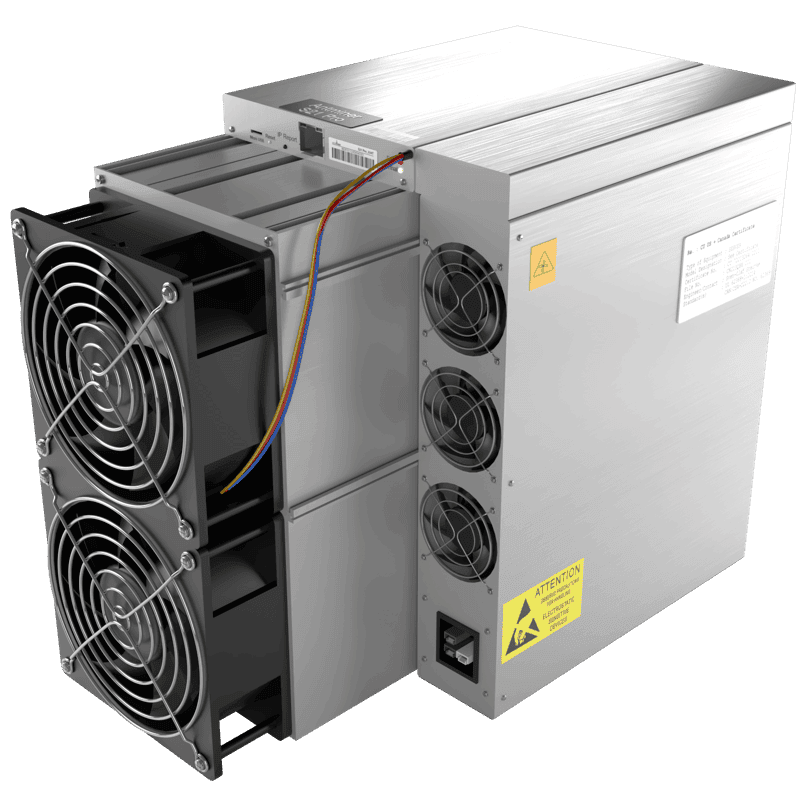
Bitmain Antminer S23 (318 TH/s)
Three generations of the same machine
Bitmain’s base air-cooled model is the most predictable product in mining. The S19 did 95 TH/s at around 34 J/TH. The S21 did 200 TH/s at 17.5. The S23 does 318 TH/s at 11. Each generation roughly halves the power per terahash and roughly doubles the output of the box.
That consistency is what makes an outlook worth writing. We do not have to guess what an S23 will do, because we have measured what the two machines directly upstream of it did at our own sites, in our own conditions, over their full lives.
What the previous two actually did
The S21 we have tracked since March 2024 has mined 0.106 BTC, covered about 63% of its landed cost in cashflow already, and lands near 1.25× by the 2028 halving. It never moved site and never stopped clearing at 6¢.
The generation before it is where the pattern shows. The S19-era machines paid for themselves too, but only by relocating to cheaper power, because at 23 to 34 J/TH they ran out of headroom at 6¢. The S21 at 17.5 did not need that rescue.
The direction is consistent across both: each generation clears its hardware, and each one needs less help from a cheap site to do it. The S23 at 11 J/TH sits two full steps further along that line.
Both covered their hardware. Both are still running. Neither needed anything to go unusually right.
Where the S23 lands
At our Argentina site the S23 makes a bitcoin for about $34,600 of electricity and returns roughly 32% in its first year at its current pre-order price. On the run we have tracked since June 2025 it has banked $3,088 of cashflow, with another 0.087 BTC and roughly $7,865 in it before April 2028.
The part that matters more than any of those figures: at 11 J/TH the 2028 halving does not end it. The subsidy halves, the cost of a coin doubles, and a machine at 11 J/TH is still clearing at 6¢ on the other side — where the S21 becomes marginal and everything from the S19 era is long gone.
That is the whole case for buying the front of a generation rather than the discounted back of the last one. The cheap machine wins on payback percentage; the efficient machine is the one still working in 2030.
What would have to go wrong
Two things, and both are worth naming. The first is difficulty rising faster than the generation’s efficiency gain, which compresses everyone’s margin — but that hurts the 17.5 J/TH machines long before it touches an 11.
The second is the entry price. Buying at the front of a generation means paying before the market has finished repricing it, and every previous generation has been cheaper a year after launch than at release. If your horizon is short, waiting has historically paid. If you are buying to hold through the halving, the runway is worth more than the discount.
- Bitmain Antminer S23 XP Hyd (600 TH/s) — 8.9 J/TH, Pre-order, $29,057 of electricity per bitcoin, 26% year one
Which machines this covers
Disclosure
Firsthand Bitcoin sells and hosts mining hardware, including this machine. No manufacturer, distributor or affiliate programme paid for or reviewed this page and we take no commission on the links above. Historical figures are computed from daily bitcoin price and network hashprice, each day valued at its own prices. Nothing here is investment advice.