Home / Blog / How to think about mining
Guide · Sep 11, 2026 · 9 min read
A machine crosses to cheap power once
Everyone agrees that ageing machines should move to cheaper electricity. The hard part is when: not in a lull, not after the machine starts losing money, and never back again when the market turns.

Two kinds of site
Our sites are not interchangeable, and they are not meant to be. They are a ladder, and a machine climbs down it once in its life.
At the top are the sites where machines spend their good years. Argentina, at 6¢ a kilowatt-hour, is where air-cooled machines start, and it keeps them hashing around 99% of the time. The UAE, also at 6¢, is built around water and immersion, with a manufacturer warranty centre nearby, and it is where hydro machines start.
Nigeria is the other kind of site. It is our largest by capacity, which is how its power comes in at 3.9¢, and its uptime is lower than the other two. It mines fewer coins per machine than Argentina, and it mines each of them for about a third less electricity. That trade — fewer coins, much cheaper coins — is good for some machines and bad for others, and which it is depends almost entirely on how old the machine is and what the market is doing.
Uptime wins while a terahash earns well
It is tempting to think cheaper power always wins. It does not, and it is worth seeing why.
When hashprice is high, what a machine earns in an hour dwarfs what it costs to run for that hour. The thing that matters most is how many hours it runs, and a site that keeps a machine hashing nearly every hour of the year mines more coins than one that loses a real share of them to downtime — enough more to outweigh the difference in the power bill. Through a strong market, a machine sent to cheap power early would have mined less.
When hashprice falls, the balance flips. Revenue per hour shrinks towards the cost per hour, and at that point a third off the electricity is worth more than the extra hours. For an old, inefficient machine that point arrives early. For a new, efficient one it may not arrive for years.
So the question is never simply "which site is cheaper". It is "which site pays this machine more, at this point in its life".
In a strong market the expensive site is genuinely the better site.
Why not move in a lull
Here is the trap. In any weak month, cheap power looks better. Margins are thin everywhere, the power bill is a larger share of the cost of every coin, and the site with the lowest rate wins the month. If you moved machines every time a month looked like that, you would move a great many machines, and then watch the next rally reward the site you just left.
A month is a mood. So is a quarter. What tells you a machine has genuinely outgrown the site it is on is a whole year: the weak months and the strong ones, the rally and the retreat, all in one comparison. If cheap power wins that — not narrowly, but decisively — the machine has moved into a different phase of its life, and it is not coming back out of it.
The rule we use
Every machine on this site is run through the same rule, and every move date you read in our field reports comes out of it.
A machine settles at its home site for at least six months before a move is even considered, and it is judged on a trailing year of its own figures. It moves when the cheaper site would have paid it at least 35% more over that year, and when the difference is worth at least 15% of what that year’s electricity cost it at home — so the gain is real money for that particular machine, not a rounding error on a big one.
The first condition makes sure the cheaper site is ahead through the rallies as well as the lulls. The second makes sure the move is worth the trip. When both are true, the machine crosses — and the date it crossed is the one date in its life we write down in the past tense: "moved to Nigeria on" a particular day, never two.
Decisively better, over a year that includes the good months. Then once, and for good.
Before it turns negative, not after
The obvious alternative is to wait until a machine stops paying its way at home, and move it then. It sounds prudent. It costs money.
By the time a machine is losing money at 6¢, cheap power has usually been the better home for it for many months. Every one of those months was mined at the wrong site. The crossing is made while the machine is still clearing its power at home — because that is when a year of figures first says, decisively, that 3.9¢ is worth more to it.
And a machine that has already stopped paying at home is still a candidate. Moving it is simply how it goes back to work.
What a crossing actually costs
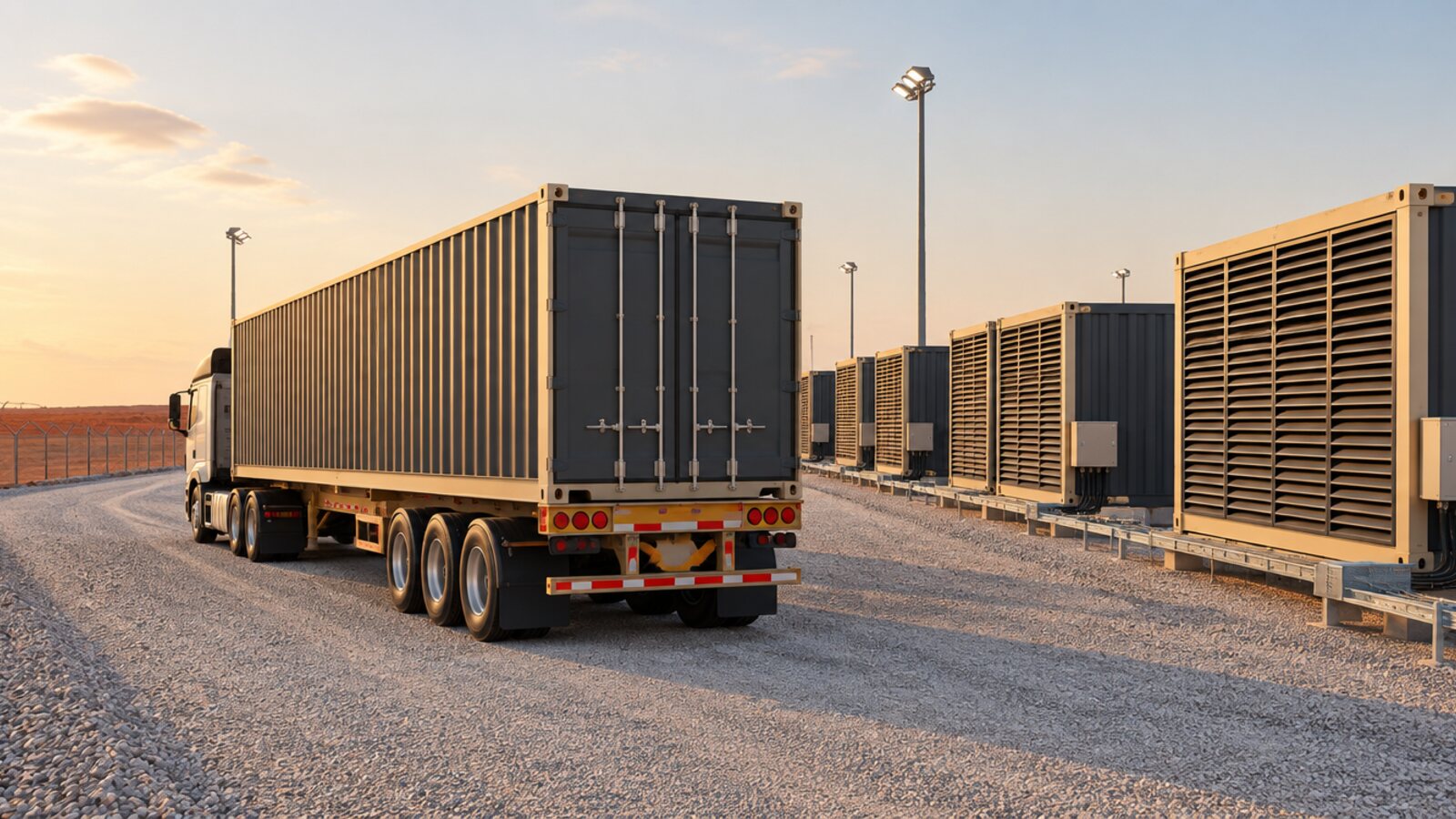
A relocation is not a line in a spreadsheet. The machine is switched off, unracked, inspected and packed — and a water-cooled machine has to be drained and sealed first, because coolant left in a cooling plate can freeze in transit and crack it. It is freighted to the other site, cleared through customs at the other end — with duty where the destination charges it — then unpacked, racked, cabled and configured. For all of that time it mines nothing. There are hands on it at both ends, and every handling is another chance for a knock.
None of that is a reason not to move. It is the reason to move once. A machine shuttled to cheap power in a lull and back to high uptime in a rally pays for two crossings to chase one swing of the market, and a single swing is rarely worth that much.
Why never back
Suppose a big rally arrives a year after a machine has crossed. For a while, high uptime might pay it better again. Why not send it home?
Because the machine only ever moves in one direction relative to the network. Every month, newer and more efficient hardware is switched on, and every four years the subsidy halves. The machine that crossed is older at the next rally than it was at the last one, and the next weak market will find it further from its break-even line than the previous one did. The verdict a full year delivered does not reverse; at most, a strong stretch hides it for a while. Paying for a second crossing to catch that stretch — and a third to come back — costs more than the stretch is worth.
When nothing pays, switch off
Eventually some machines reach a point where no site we run pays for them, even at 3.9¢. They are not mined at a loss. They are switched off where they stand, and switched back on when the best site’s trailing month pays again.
Old generations can spend their last years exactly like that: working through the rallies, resting through the weak stretches, never costing more than they earn. A machine is only retired when it is off today — and its coins are never retired at all. Every coin it mined along the way is still there.
The short version
Start where uptime is highest, because that is where a young machine earns most. Move to cheap power once, when a full year of figures says it is decisively the better home — before the machine starts losing money, not after. Never shuttle back. Switch off when nothing pays, and on again when something does.
It is the same logic as efficiency and the halving: cheaper power does for an old machine what better silicon does for a new one. And it is the same logic as the roof and the building: a part that no longer suits one house serves another for years.
Disclosure
Firsthand Bitcoin sells and hosts mining hardware, including this machine. No manufacturer, distributor or affiliate programme paid for or reviewed this page and we take no commission on the links above. Historical figures are computed from daily bitcoin price and network hashprice, each day valued at its own prices. Nothing here is investment advice.