Home / Blog / Mining, generally
Guide · Sep 20, 2026 · 11 min read
Machines are the roof, not the building
A mining operation is a property. The machines in it are the roof — they wear out on a schedule, and a working operation replaces them out of the income the old ones produced. Nobody calls a roof a failed investment. Here is the arithmetic of the roof fund, with a real machine that paid for its own.
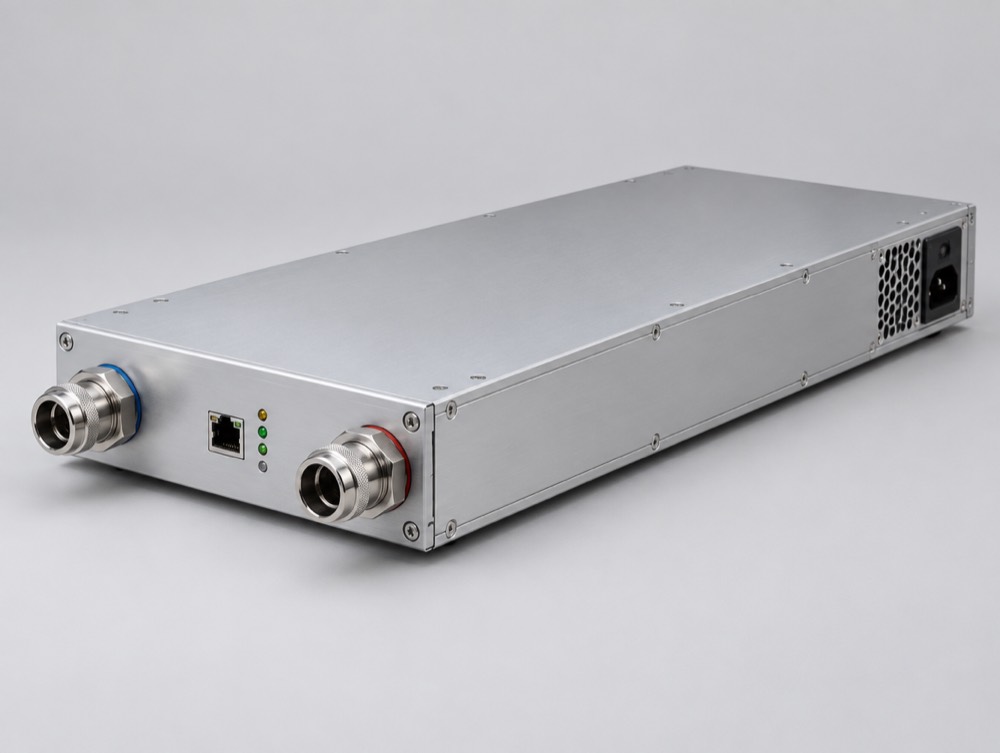
Bitmain Antminer S19K Pro (120 TH/s)
The property is the operation. The machines are the roof
People keep trying to think about a miner the way they think about a stock — a position you take, hold, and mark to market. It is the wrong unit of analysis and it produces wrong conclusions. The right comparison is a rental property, but not at the level most people assume. The property is not the machine. The property is the operation: the power contract, the site, the racks, the people. The machines are the roof, the boiler and the tiles.
A roof lasts twenty years. Nobody calls it a failed investment because it needed replacing after twenty years — that was always the deal. You collected rent the whole time, you set aside part of that rent, and when the roof went you bought a new one out of what the old one earned you. The building keeps producing. The roofs come and go.
Mining hardware runs the same cycle on a four-year clock instead of a twenty-year one. A machine goes in, produces for a few years, gets overtaken by better hardware and cheaper competition, and comes out. If it produced enough in that time to buy its own replacement, it did its job. That is the entire test, and it is a much kinder test than the one people apply, which is whether the hardware held its resale value. Roofs do not hold their resale value either.
Nobody calls a roof a failed investment because it needed replacing after twenty years.
Which makes reinvestment the actual business
A landlord who spends every dollar of rent and sets nothing aside owns a building that slowly becomes unrentable. A miner who takes every coin off the table and never buys new hardware owns a farm that slowly stops producing. The mechanism is identical and so is the fix: a share of what the fleet earns has to go back into the fleet.
This is why we think the interesting number about any machine is not its resale price but whether its lifetime output covers the next one. A machine that returns its purchase price once over its life has paid for its own replacement and kept the operation whole. Anything beyond that is profit. Anything short of it is capital you have to find somewhere else, which is where operations quietly go under — not in a dramatic collapse, but in a series of years where nothing was set aside and the fleet aged out.
Judged that way, a lot of hardware that reads as a disaster on a price chart did its job perfectly well. And some hardware that looked cheap never covered its own replacement, which is the real failure and is invisible if you are only watching resale.
The roof fund, with real numbers
Take a machine nobody would call a good one. An Antminer S19K Pro, bought in August 2023 for $1,820 and $3,257 landed in Argentina once freight, import duty and customs were in. Three years later it has mined and kept 0.1151 BTC, burned $4,209 of electricity, and those coins are worth about $9,354. Subtract everything — power and the full landed cost — and it is up roughly $1,888.
Now ask the roof question. The machine that replaces it costs what a current-generation air-cooled unit costs today. The retired one has handed back its entire landed cost plus $1,888, and it still has a resale value and roughly $844 of earning left before the next halving. The replacement is substantially funded by the machine being replaced. That is a roof paid for out of rent, on a box with a 3-out-of-10 build record and an efficiency the halving made marginal eight months in.
This is what people miss when they look at the resale chart and see a 79% collapse. The hardware did lose 79%. The hardware was never the asset. The asset was the stream of coins it produced while it was worth running, and that stream covered the box, the electricity, the duty and the freight, and left change.
The machine did not just pay for itself. It paid for itself and left most of the next one on the table.
What the reinvestment rate actually has to be
A landlord who spends every dollar of rent and sets nothing aside owns a building that quietly becomes unrentable. A miner who takes every coin off the table and never buys new hardware owns a farm that quietly stops producing. Same mechanism, faster clock, and the fix is the same: a share of what the fleet earns has to go back into the fleet.
The share is not arbitrary. If a machine has a useful life of roughly three to four years at your power rate, then across that life it has to produce at least its own replacement cost, or the fleet shrinks. Everything above that line is yours to keep. Everything below it is capital you will have to find somewhere else — and finding it is how operations quietly die, not in a dramatic collapse but in a run of years where nothing was set aside and the fleet simply aged out.
Which makes the useful question about any machine very simple, and very different from the one most buyers ask. Not "what will this be worth later" — later it will be worth very little, and that was always the deal. The question is whether the coins it produces first, at your rate, cover the machine that takes its place.
And the reason we score machines on coins kept rather than cash taken is that this is a capital account, not an income statement. A miner who sells to cover the power bill is converting the asset into operating expense at whatever the price happens to be that week. A miner who pays for power out of pocket, pre-pays the site, or borrows against the stack keeps the whole position — and the roof fund is the position, not the cash.
Relocation is maintenance, not retirement
There is one more move the property analogy gets right, and it is the one operators outside the industry find strangest. When a machine stops clearing its own electricity, that is a statement about the electricity, not about the machine.
The S19K Pro above stopped covering its power at 6¢ in February 2026. It was not scrapped. It was moved to a site at 3.9¢, where it still clears, and at today’s difficulty it has about 0.025 BTC and $844 of net left in it before the 2028 halving. Same box, same boards, same failure risk, different bill. The move bought it another two years of useful life for the cost of the freight.
This is why ageing fleets migrate rather than retire, and why a machine’s resale price is such a poor guide to what is left in it. Every machine eventually runs out of rates cheap enough to carry it — that is the trip they are all on, and no amount of maintenance stops it. Most get there years after the secondary market has written them off, and the difference between those two dates is where a lot of the money in this business is made.
The one place the analogy breaks
Land does not get diluted. A building in a good street keeps its position no matter how many buildings open elsewhere. Mining has no such floor: your share of the network shrinks every time somebody plugs in a better machine, and the block subsidy halves on a published schedule roughly every four years.
So the honest version is a property in a neighbourhood where the rent is contractually reduced over time and new buildings keep opening across the street. Reinvestment keeps you in business. It cannot keep the rent per machine from falling. Both are true at once, and it is why the reinvestment cycle is faster and less optional in mining than in property.
It also means the useful question about a machine is never "what will this be worth later". Later it will be worth very little, and that was always the plan. The question is how much it produces first, at your electricity rate, before difficulty and halvings make it not worth running.
How we judge a machine
Write down the landed cost, not the sticker price: hardware, freight, import, customs, infrastructure, setup. That is the number a payback clock runs against and it is usually a third higher than the price you were quoted.
Work out what it produces per day at your electricity rate — not at the 10¢ a public calculator assumes, and at the uptime your site actually achieves rather than the one in the brochure.
Then ask the roof question. Over the horizon you expect to run it, does it produce enough to buy the machine that replaces it? If yes, the operation stays whole and everything above that line is yours. If it only gets there by selling the hardware at the end, it does not count — you are relying on finding a buyer who has not done this arithmetic.
And budget the repairs. A model with a known failure rate is not disqualified by it; it is priced by it. A machine that loses 6% of its hashboards in the first year is one you buy 6% more of, or buy cheaper, or run somewhere with a repair bench on site. That is a line item, not a dealbreaker — and it is the roof analogy again, because a building with a known-bad roof is not a bad building, it is a building you pay less for.
Why hosted machines age differently
Most landlords do not replace their own roofs. Most miners should not be resoldering hashboards in a spare room. A machine at a site with technicians, spare boards and a bench has a materially longer working life than the same machine in a garage, because the failures that end a home miner are routine work for someone who does them weekly. The failure rate does not change; what changes is whether a failure is the end of the machine or a Tuesday.
And when a machine stops clearing its electricity at one site, that is a statement about the electricity, not the machine. Cheaper power extends the working life of hardware that is finished elsewhere, which is why ageing fleets migrate rather than retire. Every machine eventually runs out of rates cheap enough to carry it. Most get there years after their resale price implies, and most have bought their own replacement long before then.
The other side of this machine
Bitmain Antminer S19K Pro review — Mediocre hardware that made money anyway — if you bought it on day one and kept the coins. The launch-day unit is up 25% on everything that went into it. The same machine bought six months later, for $300 less, is down 12%.
Disclosure
Firsthand Bitcoin sells and hosts mining hardware, including this machine. No manufacturer, distributor or affiliate programme paid for or reviewed this page and we take no commission on the links above. Historical figures are computed from daily bitcoin price and network hashprice, each day valued at its own prices. Nothing here is investment advice.