Home / Blog / 27 September 2026
News · Sep 29, 2026 · 4 min read
Bitcoin today: regulators start writing the crypto rules Congress wouldn't pass
The Senate let the Digital Asset Market Clarity Act die in a procedural vote on 15 September. In the two weeks since, the CFTC, the SEC and the Federal Reserve have each moved to write their own version of the rules anyway, one piece at a time.
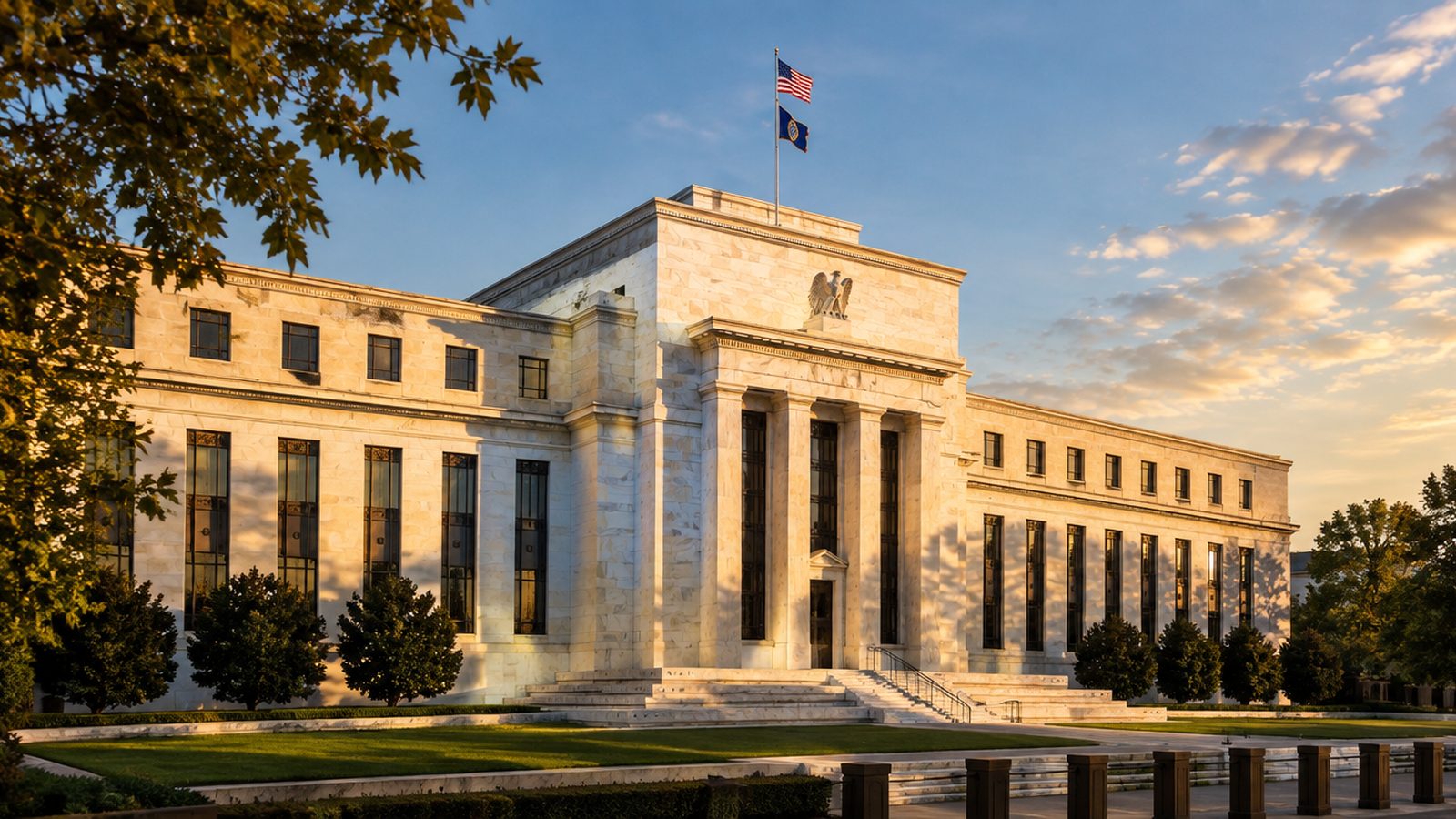
Congress failed, so the regulators moved without it
On 15 September the Senate brought the Digital Asset Market CLARITY Act to a cloture vote and it fell 49–50, eleven votes short of the 60 needed to advance, with several Republicans voting no alongside the Democratic caucus. It was the most serious attempt yet at a single federal law covering crypto market structure, and it did not survive its first real test.
The regulators did not wait for a second attempt. On 17–18 September the CFTC filed two draft rules — "Regulation Crypto Asset Transactions" and "Regulation Crypto Asset Markets" — with the White House's Office of Information and Regulatory Affairs for review, the standard first step before a public rulemaking. Neither draft has been made public yet; once OIRA finishes its review the CFTC still has to vote on it and open a comment period, so nothing here is law. In the following week CFTC Chair Michael Selig told an industry conference the agency would use its existing statutory authority to build a crypto market-structure framework itself rather than wait on Congress, describing preparation for a shift toward round-the-clock, on-chain trading.
The SEC opened its own doors, one exemption at a time
On 17 September the SEC issued a five-year conditional "innovation exemption" letting approved trading venues run permissioned markets in tokenized versions of real, already-listed US stocks — full dividend and voting rights attached — without registering as a stock exchange. SEC Chair Paul Atkins called it a way for firms to operate in a permissioned environment while the commission works out something more lasting. The same day, CFTC staff said it would not pursue enforcement against providers of passive, non-custodial wallet software for failing to register as brokers, extending relief it had previously given to a single company to the whole category.
The SEC kept going through the month: on 24 September its staff updated guidance on how firms can hold tokenized assets and rely on blockchain recordkeeping, and on 25 September it published new FAQs on how existing securities law applies to staking-receipt tokens, wrapped tokens and buybacks — explicitly staff views only, with no legal force. Two days earlier, at a industry conference, SEC Commissioner Hester Peirce had used one of her final speeches in the job to call for regulators to accept cryptographic proofs of age, citizenship or accreditation instead of firms collecting and storing raw identity documents — her own position, not a rule that has changed.
The Fed asked how it should watch a stablecoin issuer
On 24 September the Federal Reserve opened a 60-day public comment period on two proposed rules for implementing the GENIUS Act, the law passed earlier this year that lets banks issue payment stablecoins. One rule sets reserve, capital, custody and risk-management standards for stablecoin issuers the Fed supervises, limiting what reserves can be held in to things like short-term Treasury bills; the other lays out how a bank applies for permission to issue one, and how it appeals if refused.
Separately, people familiar with internal discussions told Bloomberg and CoinDesk that the Treasury, the State Department and the US International Development Finance Corporation are weighing joint ventures with private stablecoin issuers to promote dollar-backed stablecoins abroad, partly as a way to support demand for US Treasuries. Nothing has been announced; this is reported as an idea under discussion, not a decision.
Washington and Beijing traded tariff relief, not crypto rules
Away from crypto, the US and China agreed on 26 September to more favourable tariff treatment on $30 billion of goods moving each way, following Xi Jinping's Washington visit and talks with President Trump. American agricultural products, wood products and cosmetics get relief heading into China; Chinese small appliances, toys and decorations get it heading into the US. China also agreed to buy 20 million metric tons of American coal, and the two countries set up a new bilateral board of trade and an AI dialogue. It is a trade story rather than a bitcoin one, but it is the kind of broad de-escalation that keeps risk appetite calm going into the fourth quarter.
What it means for miners
None of this changed the price much. Bitcoin closed at $83,528 on 27 September, in a narrow band either side of $84,000 for the better part of a week and down from the $86,600 close it printed on 22 September at the top of last month's short squeeze and ETF-driven rally. The Fear & Greed Index has sat in Greed territory, at 70 today, for the whole stretch.
What is notable is what has not happened alongside that Greed reading: funding on the bitcoin perpetual has been flat to slightly negative all week, nowhere near the level that shows up when a rally is being driven by borrowed longs. Hashprice is holding in the low $40s per petahash-day, comfortably above where it sat in August before the rally, without the leverage that usually accompanies a run this far into Greed.
The regulatory news this week is groundwork, not a catalyst: tokenized-stock venues, stablecoin reserve rules and CFTC market-structure plans are all still drafts, exemptions or proposals. None of them mine a coin or move a difficulty adjustment. What they point toward, if any of it becomes durable rule rather than a temporary exemption, is a financial system built with more on-chain rails under it — which is a reason to keep mining through the drafting, not a reason to change anything about how a machine is run today.
Sources and further reading
- Crypto's biggest Senate push falls flat as the Clarity Act fails to clear a crucial procedural vote — CoinDesk, 15 Sep 2026
- CFTC sends crypto rules to White House to review as Congress stalls on Clarity Act — CoinDesk, 18 Sep 2026
- Morning Minute: Selig Says 'It's Go Time' for CFTC Crypto Rules — Decrypt, 23 Sep 2026
- SEC rolls out long-awaited 'innovation exemption' for tokenized securities venues — CoinDesk, 17 Sep 2026
- CFTC Staff Issues No-Action Position To Providers Of Passive Software — CFTC, 17 Sep 2026
- U.S. commodities firms can invest in tokenized assets, use blockchain records: CFTC — CoinDesk, 24 Sep 2026
- In Her Final Weeks, SEC's Peirce Calls for Ending the KYC 'Panopticon' — Yahoo Finance, 23 Sep 2026
- U.S. Federal Reserve moves on proposals to implement GENIUS Act for stablecoins — CoinDesk, 24 Sep 2026
- Trump administration mulls weaponizing stablecoins to cement dollar's dominance — CoinDesk, 24 Sep 2026
- China, U.S. agree to $30 billion tariff cut, AI dialogue during Xi visit, Beijing says — CNBC, 26 Sep 2026
Disclosure
Firsthand Bitcoin sells and hosts mining hardware, including this machine. No manufacturer, distributor or affiliate programme paid for or reviewed this page and we take no commission on the links above. Historical figures are computed from daily bitcoin price and network hashprice, each day valued at its own prices. Nothing here is investment advice.