Home / Blog / Bitmain Antminer S19K Pro
Machine review · Sep 20, 2026 · 9 min read
Bitmain Antminer S19K Pro review
Mediocre hardware that made money anyway — if you bought it on day one and kept the coins. The launch-day unit is up 25% on everything that went into it. The same machine bought six months later, for $300 less, is down 12%.
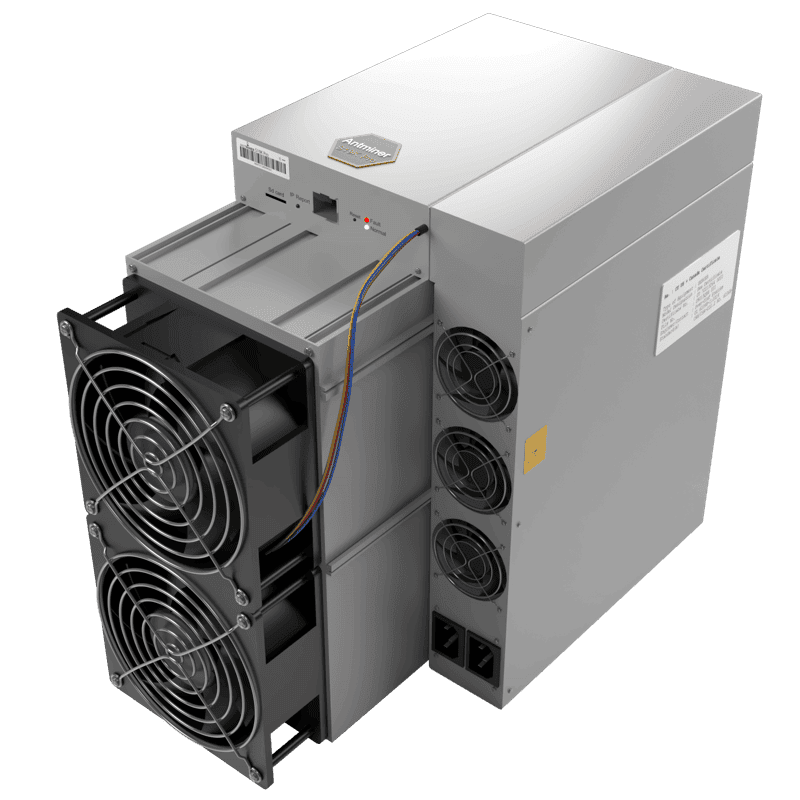
Bitmain Antminer S19K Pro (120 TH/s)
The bottom line
Start with the outcome, scored the way an owner actually operates: never selling a coin, paying the power bill out of pocket, and counting the hardware in full. A 120 TH S19K Pro bought the week it launched for $1,820 — $3,257 landed in Argentina once freight, import duty and customs are in — has mined and kept 0.1151 BTC over 1,131 days, burned $4,209 of electricity, and those coins are worth about $9,354 today. Net: up roughly $1,888, a 25% return on every dollar that went in. It passed the only test we think matters — it earned more than enough to buy the machine that replaces it.
Now the part that should stop anybody buying one today on this record alone: the same machine bought six months later, when it had fallen to $1,513, is down about $767 — a 12% loss on the same site, same uptime, same three years minus six months. A year later, at $1,279, it is down 31%. Buying the hardware cheaper made the outcome worse, every time, because the coins it missed were the pre-halving ones and those are the coins that matter when you never sell. Nothing about the machine changed. Only the calendar did.
The hardware itself deserves the criticism it gets. 23 J/TH was merely acceptable in August 2023 and marginal eight months later when the halving doubled the electricity cost of every coin it made, and owners running batches reported hashboard failures in the single-digit percent within the first year. It succeeded in spite of its build quality, on a following wind from bitcoin and a site at 6¢ that we moved it off when it stopped clearing its own power. Today, at around $400, it is a straightforward cheap-power machine with real repair risk: buy it for what it produces under about 4.5¢, budget for a dead board, and count the hardware as worth nothing.
Scores
| Criterion | Score | Why |
|---|---|---|
| Quality control | 3/10 | Operators running multiple batches reported hashboard failures in the single-digit percent inside six months, and repair shops pointed at solder quality rather than bad luck. |
| Durability | 4/10 | Boards reported failing at three to four months, and at least one owner had all three fail in a fortnight just after warranty; the survivors tend to keep going. |
| Efficiency | 4/10 | 23 J/TH was mid-pack at launch and is roughly twice the draw per terahash of a current machine, which is the whole reason it now only works on very cheap power. |
| Cashflow | 8/10 | Returned 147% of its purchase price in cash over three years at 6¢, and 282% if the coins were held — it bought its own replacement with room to spare. At 10¢ it is negative every day, which is the one caveat. |
| Serviceability | 5/10 | Parts and third-party repair guides are everywhere because so many were sold, but it shipped with more than one hashboard construction and they do not share a repair path. |
| Resale value | 2/10 | About $1,820 at launch to under $400 today, most of it lost in a single year. Score it low, then ignore it — the output already covered the purchase. |
Weighted toward what this machine produced over a full hold and what stopped it producing. Build quality drags the score down hard and deserves to; the cashflow record pulls it back up, because on the only test that matters — did it earn enough to buy the machine that replaces it — the S19K Pro passed comfortably.
Buy it if
- Your electricity is under roughly 4.5¢/kWh, where it stays positive through normal bitcoin swings. Our Nigeria site at 3.9¢ is the only one of ours where we would still rack one today.
- You are buying several and can absorb a dead unit as a cost of doing business rather than a crisis.
- You want mining cashflow with the entry cost already near the floor — the machine cannot fall much further than it already has.
- You have somewhere to run an air-cooled, 75 dB, 2,760 W box that is not a house.
Walk away if
- You pay more than about 4.5¢/kWh. Between 4.5¢ and 6¢ it is marginal and depends on bitcoin cooperating; above 6¢ it burns cash every day it is plugged in and no purchase price fixes that.
- You are buying one unit and need it to work, because a single failure is 100% of your fleet.
- You are counting the hardware as part of your return. Assume it is worth nothing in two years and see if the numbers still work.
- You need it still earning after the 2028 halving. Plan on this one being retired or relocated well before then.
What Bitmain actually shipped
The S19K Pro arrived in August 2023 as the budget end of the S19 family: 120 TH/s from 2,760 W on the top variant, 23 J/TH, air-cooled, 75 dB, in the same 400 × 195 × 290 mm case the line had used for years. It also shipped as 105, 110 and 115 TH variants, which are the same machine binned differently — same boards, same power supply, same failure modes. A price difference between variants is a price-per-terahash question and nothing more.
The pitch was reasonable at the time. The S19 XP existed and was far more efficient, but it was expensive and supply-constrained. The S19K Pro was what you bought when you had cheap power and wanted terahashes on the floor this quarter. On that narrow basis it delivered. What it could not do was survive a halving, which was eight months away when the first units shipped.
The halving maths nobody wanted to do in 2023
Efficiency sets the electricity cost of every coin a machine produces, and a halving doubles that cost overnight. At 23 J/TH the S19K Pro was already spending roughly twice the power per terahash of the machines that landed a year later. The halving did not break it; it moved the break-even power rate down to a level most hosting contracts never reach.
You can watch the market reprice it. The 120 TH variant held through the end of 2023, peaked near $1,857 that December, then fell in a straight line — about $1,427 by February 2024, $1,205 by that November, $898 by May 2025, under $700 by November 2025, and briefly $271 in spring 2026. That is not a machine going out of fashion. That is the market recalculating what a 23 J/TH box is worth once the subsidy halved, and then doing it again as better hardware arrived.
What makes this one particularly unforgiving is that the date was known. The halving schedule is published years in advance, and the S19K Pro shipped into the last eight months before one. Every buyer had the information needed to price it and most annualised a pre-halving day rate instead.
The halving did not break the machine. It moved the break-even power rate below where most hosting contracts live.
The reliability problem, in owners’ own words
In July 2024 a Bitcointalk thread titled Bitmain S19K PRO failure rate collected what operators were seeing at scale. The original poster reported roughly a 6% failure rate inside six months across multiple batches, with hashboards dying at three to four months, and noted that some failed again after warranty repair. Another owner described all three hashboards failing in sequence over about a fortnight, landing just after their warranty closed.
The repair trade in that thread was less diplomatic than the owners, attributing the pattern to a regression in board design and to solder quality causing intermittent faults even after repair. A second thread that September, S19K PRO missing board, shows the problem from the owner’s side: a board that reports a fan fault on stock firmware while showing a full chip count, runs fine once disabled, and turns out under magnification to be a solder defect.
Put a number on it in cash terms. A 6% first-year failure rate across a hundred machines is six dead boxes and a repair queue you can budget for. On one machine it is a 6% chance your entire operation stops and your payback clock stops with it. That asymmetry is the single most important thing for a small buyer to understand, and it is why the quality control score is a 3. It is also worth knowing the S19K Pro shipped with more than one hashboard construction — Bitmain publishes guidance on telling them apart precisely because the repair handling differs, which matters when you are buying used units of unknown provenance.
What it pays, and what it costs to keep paying
Run the S19K Pro through the test we apply to everything we stock — landed cost, your real power rate, every coin kept, hardware assumed worthless at the end — and the launch-day unit passes by $1,888. Over its whole run the electricity cost of each coin it made averaged about $36,600; at today’s difficulty a coin costs it far more than that, which is the difference between a lifetime average and a snapshot and the reason the table further down does not match this number. If this way of scoring a machine is unfamiliar, it is the whole argument of machines are the roof, not the building.
The part specific to this model is the repair line. A 6% first-year hashboard failure rate is not a reason to avoid the S19K Pro, but it is a number that has to appear in your arithmetic somewhere. Across a hundred machines it is six dead boxes and a bench queue you can budget for. Across one machine it is a 6% chance your entire operation stops and your payback clock stops with it. Small buyers consistently underprice that asymmetry, which is why we would rather sell somebody two of these than one.
The chart below is the one we use internally: cumulative cash produced against what was paid, for a unit bought at launch and run at one of our sites. Where the line crosses, the machine has covered itself. Everything after is profit, for as long as the boards hold — and on this model, how long the boards hold is the live question.
That is also why this machine no longer lives in Argentina. In February 2026 its trailing month stopped clearing its own power at 6¢ and we moved it to Nigeria at 3.9¢, where it still clears. At today’s difficulty and price it has roughly 0.025 BTC and $844 of net left in it before the 2028 halving — not a forecast, just today’s conditions held flat. That is not the machine wearing out. It is the rent falling to the point where only the cheapest sites still clear it.
Buy 6% more of them than you need, or buy them 6% cheaper. What you cannot do is price the repair bill at zero.
Where it still makes sense in 2026
Strip away the investment framing and a real case remains. At roughly $400 a unit the machine costs less than two months of its own electricity at industrial rates. It is not an asset you are protecting; it is a converter with a limited service life, and you should evaluate it the way you would a generator — how much does it produce before it dies, and what did the entry cost.
On very cheap power that arithmetic works. Public calculators assuming 10¢/kWh show it losing several dollars a day, and they are right for the person paying 10¢. Under 4¢ the same machine produces bitcoin well below spot, and because the purchase price has collapsed, the capital at risk per terahash is as low as it has ever been for a working SHA-256 machine.
The figures below are ours, live, at real sites rather than a generic rate, and computed at today’s difficulty rather than averaged over the machine’s life. Two of our three sites are at the same 6¢ and land in the same place; the one that matters is Nigeria at 3.9¢. That gap between 3.9¢ and 6¢ is the entire investment case for this machine — there is nothing else to it.
Our two cents
The S19K Pro was a good purchase and a mediocre machine, and both halves of that are worth sitting with. It made money because it was bought early, run somewhere cheap, moved somewhere cheaper when it had to be, and never sold. It made money in spite of a 3-out-of-10 build record and an efficiency that the halving made marginal — which is a lot of things going right to rescue a box that did not deserve rescuing.
The lesson is not that the S19K Pro was good. It is that timing and power rate did more work than the hardware choice did, and an S19 XP bought the same week did all of it better and will still be running after the next halving. If you are buying one today, buy it as a consumable with very cheap power and a two-year horizon, buy more than one, and do not pay up for a "like new" unit — the failure data does not support a premium and a spare machine beats a warranty.
If you want to see what running one has actually been like rather than what we think of it, we tracked one from launch day: Mining bitcoin with an Antminer S19K Pro for 3.1 years.
What people are saying online
So far about 6% failure rate in <6 months usage... (warranty repaired, but some failed again)
The report that opened the thread, from an owner running multiple batches.
Bitmain regressed back to the S17 nightmare design. Even after repairing them the poor quality solder can cause problems like intermittency
A repair shop on why the boards fail, and why repairs do not always hold.
Yeah Bitmain seems to be pumping out quantity not great quality. Even the S21’s are requiring repasting already which is just silly...
The complaint generalised past this model — worth weighing when reading it.
the issue is on the hashboard preventing other hashboards to run
The common symptom: a board that reads as a fan fault and takes the whole miner down until disabled.
Sources and further reading
- Bitmain S19K PRO failure rate — operator thread — Bitcointalk, 2024-07
- S19K PRO missing board — troubleshooting thread — Bitcointalk, 2024-09
- How to distinguish S19k Pro hashboard types and the repair related precautions — Bitmain Support, 2024
- Antminer S19K Pro BHB56902 hash board repair guide — Zeus Mining, 2024
- Antminer S19k Pro (120Th/s) specifications and live profitability — ASIC Miner Value, 2023-08
Which machines this covers
- Bitmain Antminer S19K Pro (120 TH/s)
- Bitmain Antminer S19K Pro (115 TH/s)
- Bitmain Antminer S19K Pro (110 TH/s)
- Bitmain Antminer S19K Pro (105 TH/s)
The other side of this machine
Mining bitcoin with an Antminer S19K Pro for 3.1 years — here is how much it actually mined — Bought the week it launched, racked in Argentina at 6¢, run through a halving, moved to Nigeria when it stopped clearing its power. Not one sat sold. 0.1151 BTC kept, $4,209 of electricity paid, and about $1,888 up on everything that went in.
Disclosure
Firsthand Bitcoin sells and hosts mining hardware, including this machine. No manufacturer, distributor or affiliate programme paid for or reviewed this page and we take no commission on the links above. Historical figures are computed from daily bitcoin price and network hashprice, each day valued at its own prices. Nothing here is investment advice.