Home / Blog / Bitmain Antminer S23e Hyd 2U
Outlook · Sep 21, 2026 · 7 min read
The Antminer S23e Hyd 2U is suspiciously cheap. Is it too good to be true?
Same generation as the S23 Hyd, almost the same efficiency, and a fraction of the price per terahash. We went looking for the catch.
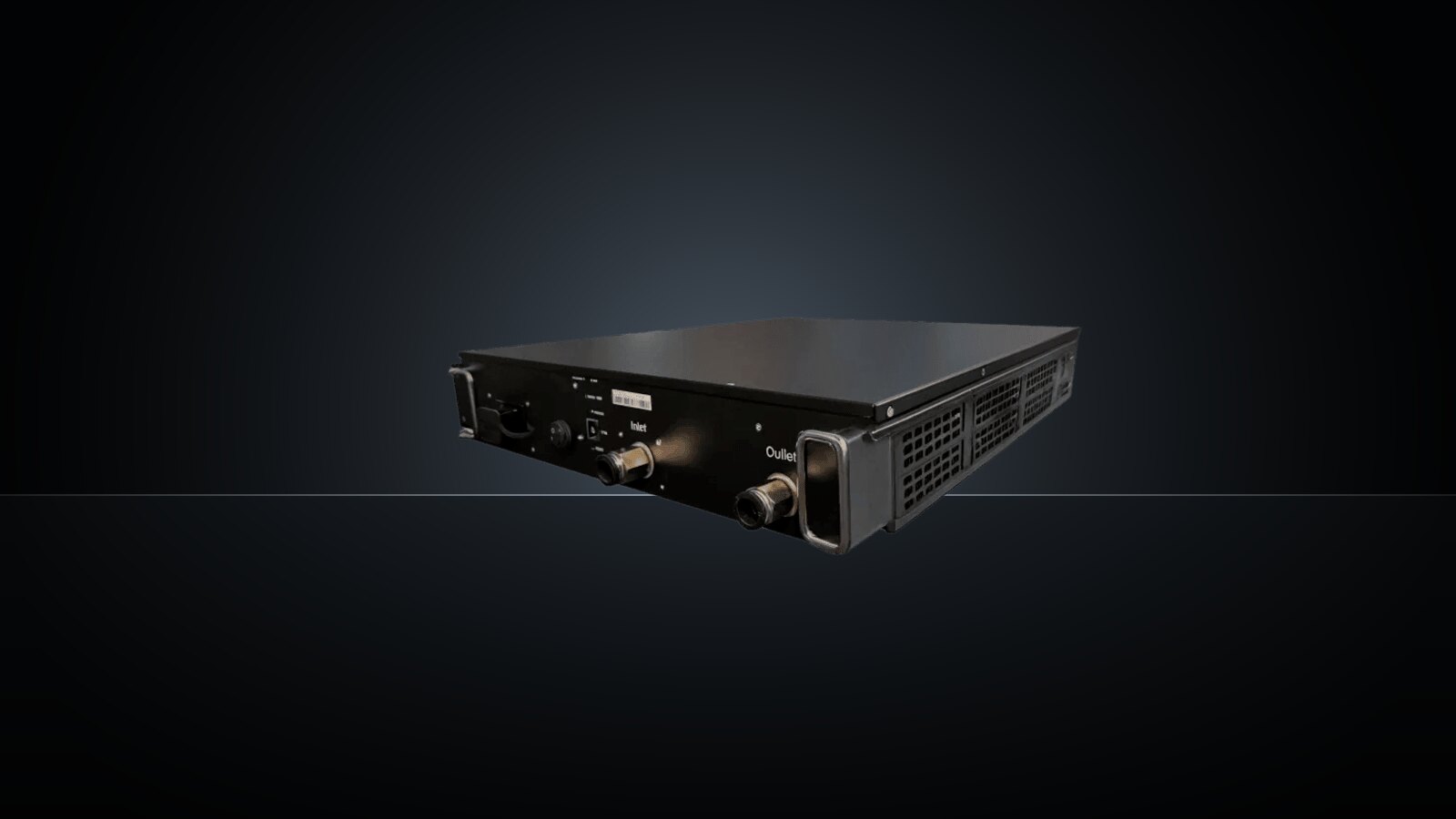
Bitmain Antminer S23e Hyd 2U (865 TH/s)
The number that makes people nervous
The Antminer S23e Hyd 2U is 865 TH/s from 8,650 W — 10 J/TH, water-cooled, from Bitmain’s current S23 generation. In Hong Kong it is trading at about $10.66 a terahash, which puts a whole unit a little over $9,200.
Now put it next to the S23 Hyd, the machine we measured making the cheapest bitcoin we have ever seen. Same generation, 9.5 J/TH against 10, and it costs $22.65 a terahash to the S23e’s $10.66. Half a joule per terahash of difference, and roughly half the price.
The S23e did not start there. It launched in January at about $22.50 a terahash — right where the S23 Hyd still sits — and it has become the cheapest way into this generation in the eight months since. When a machine that good gets that cheap, the natural question is what is wrong with it.
865 TH/s at 10 J/TH, for about $10.66 a terahash. Its own sibling costs twice that.
What it actually is
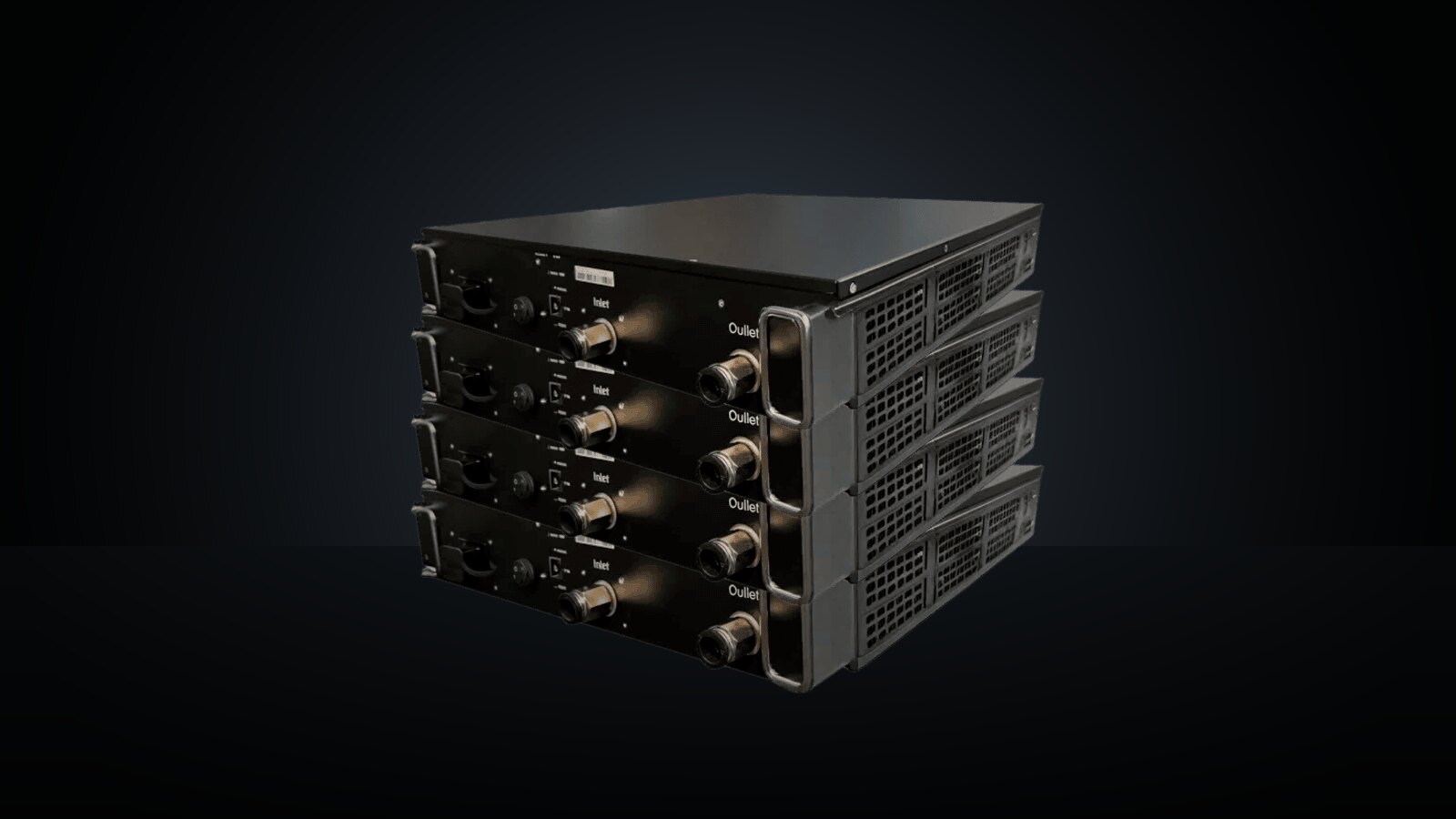
The answer starts with the dimensions. Bitmain’s launch lists it as the S23e U2H: 600 × 483 × 86 mm. 483 millimetres is the width of a standard 19-inch server rack, and 86 is two rack units. This is not a miner that sits on a shelf. It is a rack-mount server that happens to mine bitcoin, with a coolant inlet and outlet on its front panel where a fan would normally be. The launch thread on Bitcointalk from January puts it plainly as a hydro 2U design.
Do the rack arithmetic and the point of it becomes obvious. A standard 42U rack holds 21 of them: 18.2 PH/s and 182 kW in one cabinet. No fan on earth moves that much heat out of that little space. A water loop does it without noticing.
So why is it so cheap?
Our read is that nothing about the price points to a fault in the machine. It points to who can buy it.
An air-cooled machine can be racked almost anywhere with power and a fan wall. This one needs a site that already runs coolant distribution to the rack, heavy power at the cabinet, and a plant that can carry 8.65 kW out of every two rack units. Most buyers do not have that, so most buyers cannot use it at any price — and a machine with a smaller pool of buyers clears at a lower price than its specification alone would earn.
Size helps too. Spreading one chassis, one control board and one power supply across 865 terahashes is a cheaper way to build a terahash than doing the same across 300. The price per terahash is low partly because there are so many of them in the box.
Neither of those is a catch. Both are reasons the same silicon costs less in this shape.
Too good to be true? Only without the right site
For an operator without a water loop, the price is irrelevant; the machine will not run. For a site built around water, it is the cheapest way into 10 J/TH that exists right now.
That is exactly what our UAE site is: the one we built around hydro and immersion, running at better than 99% uptime, with a manufacturer warranty centre close enough that an in-warranty board is a short trip rather than a shipment. The S23e is designed for that room.
Racked there at 6¢, it makes a bitcoin for about $32,300 of electricity and returns roughly 66% in its first year at today’s price. The S23 Hyd, a slightly more efficient machine at twice the price per terahash, returns about 34% in the same room. The cheaper box wins the first year because the entry price does the work.
The catch is not in the machine. It is in the building you put it in.
Judged by the hydro machines before it
We cannot show three years of this machine, because it has not existed for three years. What we can show is what Bitmain’s water-cooled line has done every generation before it, on our own floor.
The S19 XP Hyd made the cheapest coin of its generation and paid for its own hardware with years to spare. The S21+ Hyd is one of the strongest returns we host. The S23 Hyd makes the cheapest bitcoin we have ever measured. Three generations, three machines that did exactly what their specification said they would.
The S23e is the same family, from the same generation as the last of them, at close to the same efficiency. The pattern it has to follow is a good one.
What we will learn first
The honest unknown is the form. A 2U chassis packs 865 terahashes into a very small volume, and how the boards age in that density is something only field time answers. It was only announced in January 2026, so the long record does not exist yet for anyone.
That is the kind of question a hosted machine answers cheaply. In a room built for water, with coolant at the right temperature and a warranty centre nearby, a board that needs attention is a routine job — and a machine this efficient has a long runway at 6¢ while the record builds.
Our read
It is not too good to be true. It is a very good machine sold at the price its narrower market will bear, and a site built around water is exactly the buyer it was priced for.
At $9,221 a unit and 10 J/TH, it is the cheapest way we know into the most efficient generation Bitmain has shipped — and on the lineage it comes from, one of the best entries into hydro mining we have seen.
Sources and further reading
- BITMAIN launches ANTMINER S23e U2H — Bitmain, January 2026
- BITMAIN Launches ANTMINER S23e U2H (launch thread) — Bitcointalk, January 2026
Which machines this covers
Disclosure
Firsthand Bitcoin sells and hosts mining hardware, including this machine. No manufacturer, distributor or affiliate programme paid for or reviewed this page and we take no commission on the links above. Historical figures are computed from daily bitcoin price and network hashprice, each day valued at its own prices. Nothing here is investment advice.