Home / Blog / Bitdeer SealMiner A2 Pro Air
Machine review · Sep 21, 2026 · 6 min read
Bitdeer SealMiner A2 Pro Air review
Bitdeer’s first genuinely competitive air-cooled machine: 14.9 J/TH, quieter and lighter than the Antminers it competes with, and it hits its rated efficiency. The open question is how it ages, because almost nobody has run one for two years yet.
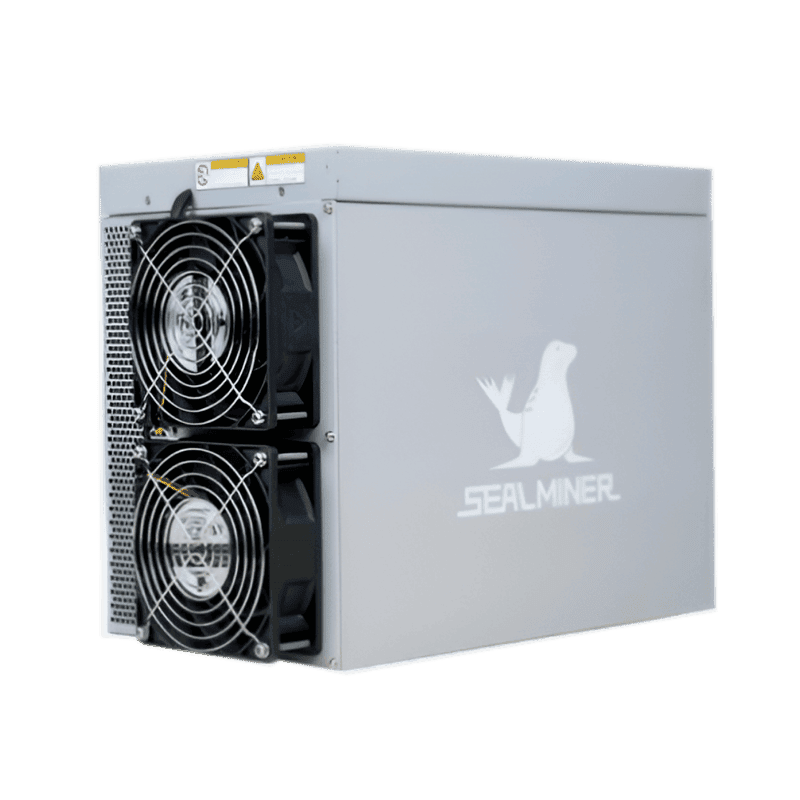
Bitdeer SealMiner A2 Pro Air (256 TH/s)
The bottom line
The A2 Pro Air is 256 TH/s from 3,814 W on 4 nm silicon — 14.9 J/TH, announced March 2025. At our Argentina site it makes a bitcoin for about $46,900 of electricity and returns roughly 32% in its first year, which places it between the S21 Pro and the S21 XP on both counts.
The hands-on reports are genuinely good. It meets its advertised 14.9 J/TH in normal mode, runs at 63–65 dB — noticeably quieter than the comparable Antminers — and is significantly lighter with a footprint closer to an S19 than an S21, which matters more than it sounds if you are racking them by hand. Its stock firmware ships with power targets, over- and under-clocking and real-time tuning natively, which on a Bitmain machine means buying third-party firmware.
What we cannot tell you is how it ages. It has been on our floor since April 2026 — 173 days, 0.021 BTC, $737 of cashflow against a $4,980 landed cost. On the forward figures it covers its hardware about 1.3× by the 2028 halving. But 173 days is a start, not a verdict. There is no equivalent of the S21 repair literature for these boards yet, and that absence is the single biggest thing separating this from a straightforward recommendation.
Scores
| Criterion | Score | Why |
|---|---|---|
| Quality control | 8/10 | Aluminium-backed hashboards with bolt-on heatsinks, and it hits its rated efficiency in testing rather than falling short of it. No pattern of complaints, but also not much time for one to emerge. |
| Longevity | 8/10 | At 14.9 J/TH it clears at 6¢ through the next halving and has real runway at 3.9¢ after it. On the forward figures it covers its hardware about 1.3× by April 2028. |
| Efficiency | 7/10 | 14.9 J/TH on 4 nm silicon, verified in hands-on testing. Behind the S21 XP at 13.5 and well behind current hydro. |
| Cashflow | 8/10 | About $46,900 of electricity per bitcoin at 6¢ and roughly 32% in year one. Solidly mid-table, ahead of a 23 J/TH machine by a wide margin. |
| Serviceability | 6/10 | The repair ecosystem is younger than Bitmain’s, which is the one real caveat. Hosted with us that matters less: Argentina repairs are billed at parts cost and we carry the spares. |
Marked down for the thing we cannot yet know. The specification and the hands-on reports are good, but there is no two-year failure record for this hardware and no established repair supply chain, and both of those cost real money when they go wrong.
Buy it if
- You want current-generation air-cooled efficiency and are buying several, so one unproven unit is not your whole fleet.
- Noise or weight is a real constraint — it is quieter and lighter than anything comparable from Bitmain.
- You value tuning firmware in the box rather than as a paid add-on.
- You are hedging vendor concentration and do not want every machine on site to be a Bitmain.
Walk away if
- You are buying one machine and need a known repair path if it fails. That path exists for S21 boards and does not yet for these.
- You are chasing the lowest cost per bitcoin — the S21 XP at 13.5 J/TH beats it, and hydro beats both.
- Your PDUs are legacy C19/C20 and you plan to run it hard; at 4,112 W in high mode it pushes past what they are comfortable with.
- You want a two-year failure record before committing. Nobody has one for this machine.
What Bitdeer shipped
Bitdeer designs its own silicon, and the A2 Pro is the first generation where that has produced a machine worth putting next to an Antminer rather than underneath one. 256 TH/s from 3,814 W on 4 nm chips, 14.9 J/TH, air-cooled, announced March 2025.
The practical details are where it separates itself. It runs at 63–65 dB in normal mode, which is quieter than the next-generation Antminers by enough to notice on a floor. It is lighter, with a footprint closer to an S19 than an S21 Pro — relevant if you are retrofitting racks built for the older machines. And the stock firmware does natively what miners normally install Braiins or similar to get: custom power targets, over- and under-clocking, real-time tuning.
One practical warning from the same hands-on testing: pushed to its high mode at 4,112 W it goes past what legacy C19/C20 PDUs are comfortable delivering, and 6-pin P33 distribution is the recommendation. Worth checking before you buy a rack of them for an older site.
The thing we cannot tell you yet
Every machine on this site is scored partly on what happens when it breaks, because that is where the money goes. For the S21 family we can point at published domain maps, documented failure modes, third-party repair guides and a parts market. For these boards, that literature does not exist yet.
That is not an accusation — it is what being early looks like, and the same was true of every Bitmain generation at this age. But it means a failed board on an A2 Pro is a different problem from a failed board on an S21: fewer benches will take it, fewer spares exist, and diagnosis takes longer. Price that in, or buy enough of them that one going down is an inconvenience rather than an event.
The efficiency and the build both look right. We are marking the unknown, not the machine.
Serviceability is the weakest score and the honest one. The repair ecosystem for Bitmain boards took years to build and does not transfer.
Does it still make sense in 2026?
It makes sense as one of several, not as your only machine. At 14.9 J/TH it is a genuine current-generation air-cooled unit and it makes a bitcoin for about $46,900 at 6¢ — comfortably better than anything from the S19 era and close enough to the S21 Pro that firmware, noise and weight can decide it.
If the only number you care about is the cost of a coin, the S21 XP beats it and hydro beats them both. If you are building a floor and want current efficiency without putting every unit on one vendor, this is the most credible alternative that exists right now.
- Bitmain Antminer S23 (318 TH/s) — 11 J/TH, Pre-order, $34,617 of electricity per bitcoin, 32% year one
- Bitdeer SealMiner A4 Pro Air (336 TH/s) — 10.9 J/TH, To be released, $34,298 of electricity per bitcoin, 50% year one
- MicroBT Whatsminer M74S+ (332 TH/s) — 12 J/TH, Sold out, $37,764 of electricity per bitcoin, 36% year one
Our two cents
We stock these and we run them, and the machine has done nothing wrong in six months. The score is a 6 rather than a 7 entirely because of what has not been tested — nobody has a two-year failure record and the repair supply chain is thin.
Buy it as part of a mixed floor, or if noise and weight are constraints where you are racking. If you are buying a single machine and want the safest combination of efficiency and a known repair path, the S21 XP is the more conservative purchase and we would not argue with anyone who chose it.
Sources and further reading
- Product review: Bitdeer SealMiner A2 Pro (air cooled) — Altair Technology, 2025
- SEALMINER A2 Pro Air — manufacturer specifications — Bitdeer, 2025
Which machines this covers
Disclosure
Firsthand Bitcoin sells and hosts mining hardware, including this machine. No manufacturer, distributor or affiliate programme paid for or reviewed this page and we take no commission on the links above. Historical figures are computed from daily bitcoin price and network hashprice, each day valued at its own prices. Nothing here is investment advice.