Home / Blog / Bitmain Antminer S21e XP Hyd 3U
Machine review · Sep 13, 2026 · 8 min read
Bitmain Antminer S21e XP Hyd 3U review
Two water-cooled S21e XP machines in one 19-inch rack chassis: 860 TH/s at 13 J/TH. It needs a purpose-built site, and that narrow market is exactly why it is one of the cheapest ways into water-cooled hashrate we can sell.
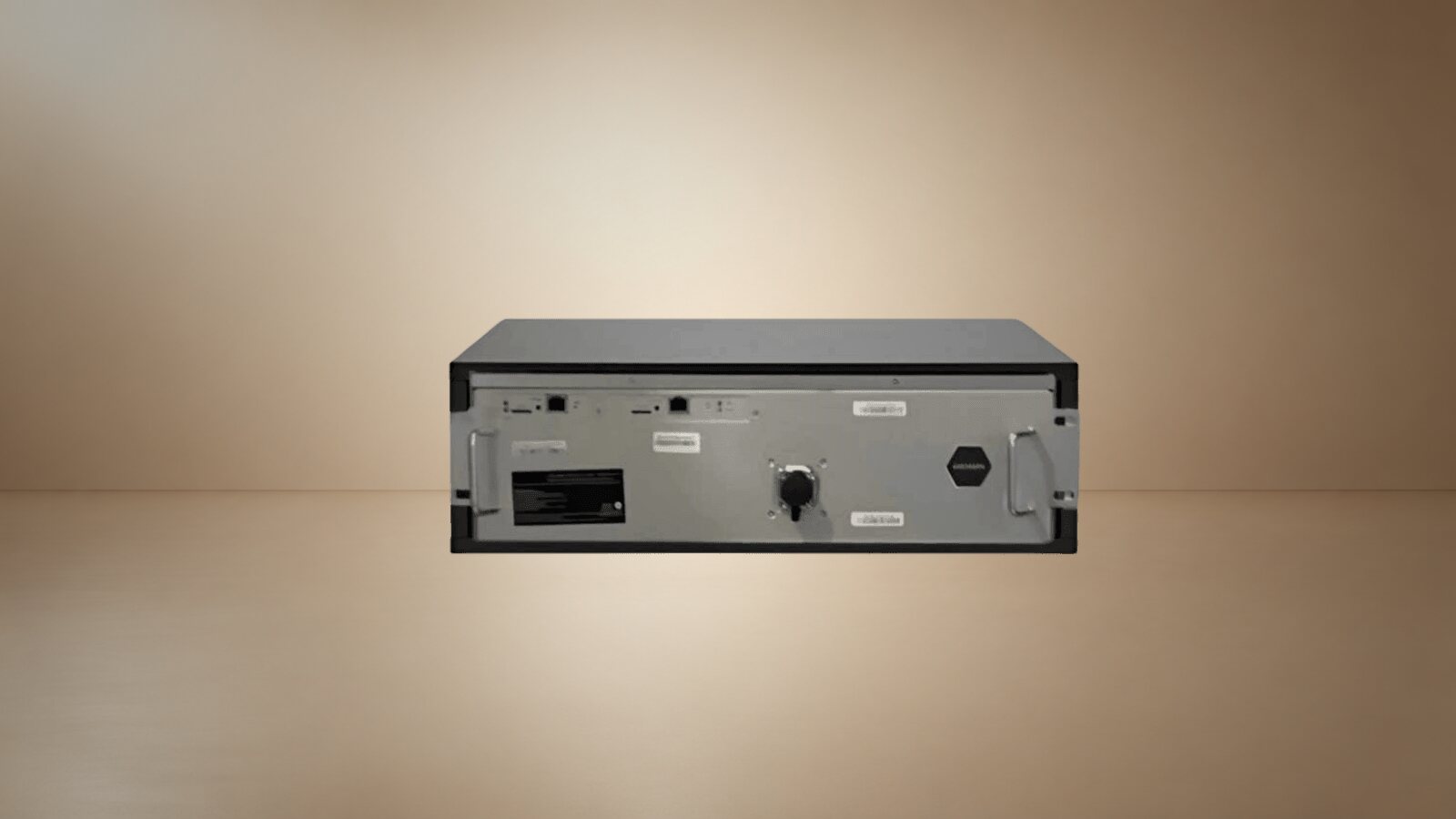
Bitmain Antminer S21e XP Hyd 3U (860 TH/s)
The bottom line
The S21e XP Hyd 3U — Bitmain’s U3S21EXPH — is 860 TH/s from 11,180 W, 13 J/TH, water-cooled, in a 3U chassis that bolts into a standard 19-inch rack. In every published number it is two S21e XP Hyd units in one box. At our UAE site it makes a bitcoin for about $42,000 of electricity and returns roughly 58% in its first year at today’s price, which puts it among the strongest first-year returns of anything we host.
Bought once its price settled, in April 2026, it has mined and kept 0.0643 BTC for $2,648 of power — $2,917 of cashflow against a $13,080 landed cost, which is what the first months of a four-year machine look like. Between now and the 2028 halving it has another 0.234 BTC in it, worth about $29,156 with bitcoin back at its previous high: roughly 2.5× its hardware by the halving, still running afterwards.
What you are buying is density at a settled price. What you are not buying is the longest runway: the S23 generation makes a coin for noticeably less electricity and will outlast it. And none of it matters without the right room — three-phase 380–415 V power, a coolant loop and racks built for 43 kg units. Ours in the UAE is that room.
Scores
| Criterion | Score | Why |
|---|---|---|
| Cashflow | 9/10 | Makes a bitcoin for about $42,000 of electricity at 6¢ and returns roughly 58% in year one at today’s price — among the highest first-year returns of anything we host. It has covered 22% of its hardware so far and is on track for about 2.5× by the 2028 halving. |
| Longevity | 7/10 | 13 J/TH keeps it well above the line at 6¢ today and at 3.9¢ for years beyond the 2028 halving. At 6¢ after the halving it depends more on the price of bitcoin than the S23 generation will. |
| Efficiency | 7/10 | A good 13 J/TH, but a full generation behind the 9.5 J/TH S23 machines that share its exact chassis. |
| Quality control | 6/10 | Scored as unknown rather than as good. The S21-generation silicon inside it is mature and well understood; this 3U chassis simply has not built up a multi-year public failure record yet. |
| Serviceability | 7/10 | Bitmain lists an out-of-warranty 3U hashboard repair at $210, and sells extended warranty for it up to two years from shipment. Hosted in the UAE, a warranty centre is close by. The catch is the format: 43 kg, rack-mount, three-phase only. |
Weighted on what an owner gets back per dollar over the next four years. The entry price carries it: at 13 J/TH it is not the most efficient water-cooled machine we sell, but it is among the best returns on the money, and efficiency still sits comfortably above the line at our sites.
Buy it if
- You want the most first-year cashflow per dollar you can get on water today — the entry price is doing most of the work here.
- Your power is at or below 6¢. At 6¢ it makes a coin for about $42,000; at 3.9¢, about $27,300.
- You are buying several machines’ worth of hashrate and would rather rack, cable and monitor one chassis than two.
- You plan to hold through the 2028 halving and cross to cheaper power once, later in its life, when the figures say so.
Walk away if
- You have no coolant loop, no three-phase 380–415 V supply or no 19-inch racks rated for 43 kg units. Without all three it will not run at all.
- You are planning well past 2028. At 13 J/TH it clears comfortably at 6¢ today and will be closer to its line after the halving; if runway matters more than year one, the 9.5 J/TH S23 generation is the better spend.
- Your power is well above 6¢. Up to about 6¢ it has room; between there and 8¢ it still clears today but leans on the price of bitcoin after the halving; above that, choose a more efficient machine.
- You want a long public failure record before you buy. The silicon generation is mature, but this chassis has not been in the field for years yet.
What Bitmain shipped
The U3S21EXPH was introduced in September 2024 as Bitmain’s first miner sold at scale in a rack-mount form with the coolant taken directly to the chips. It is 860 TH/s from 11,180 W — 13 J/TH at a 35 °C coolant inlet — in a chassis 482.6 mm wide and 130 mm tall: a standard 19-inch rack width, three rack units high, 900 mm deep and 42.7 kg.
The easiest way to understand it is as two machines in one box. The single-unit S21e XP Hyd is 430 TH/s from 5,590 W; the 3U is exactly twice both. What changes is everything around the silicon: one chassis, one power feed, one pair of coolant connections, one network port, and a shape that belongs in a server rack rather than on a shelf. Bitmain has since put the S23 generation into the identical shell — the S23 Hyd 3U, 1,160 TH/s at 9.5 J/TH — which makes this machine the S21-generation version of a format Bitmain is clearly committed to.
Built for the rack, not the shelf
The density is the whole idea. Racked sixteen to a cabinet, the way the first large sites run them, that is about 13.8 PH/s and 179 kW in one rack — a load no fan could move out of a cabinet, and one a water loop handles without drama. The largest deployment we know of is a single site in Texas running roughly seventeen thousand of them in one building. It is a machine for facilities designed around it.
The requirements are specific, and they are not optional. It runs on three-phase 380–415 V at up to 24 A, so sites wired for other voltages need new transformers before it will start. It wants 16–20 litres a minute of antifreeze, pure water or deionised water at the chemistry Bitmain specifies, delivered through OD14 connections at no more than 3.5 bar, with the inlet between 20 °C and 50 °C. And at 42.7 kg it needs racks and people rated for it.
That is also why it lands on our quote the way it does. A rack unit like this draws the load of several ordinary machines from one position in the loop, so we count it as two standard hydro positions of infrastructure — three only above 12 kW, which it stays just under. Spread across 860 terahashes, that is still a small infrastructure cost per terahash.
Sixteen to a rack: roughly 13.8 PH/s and 179 kW in a single cabinet.
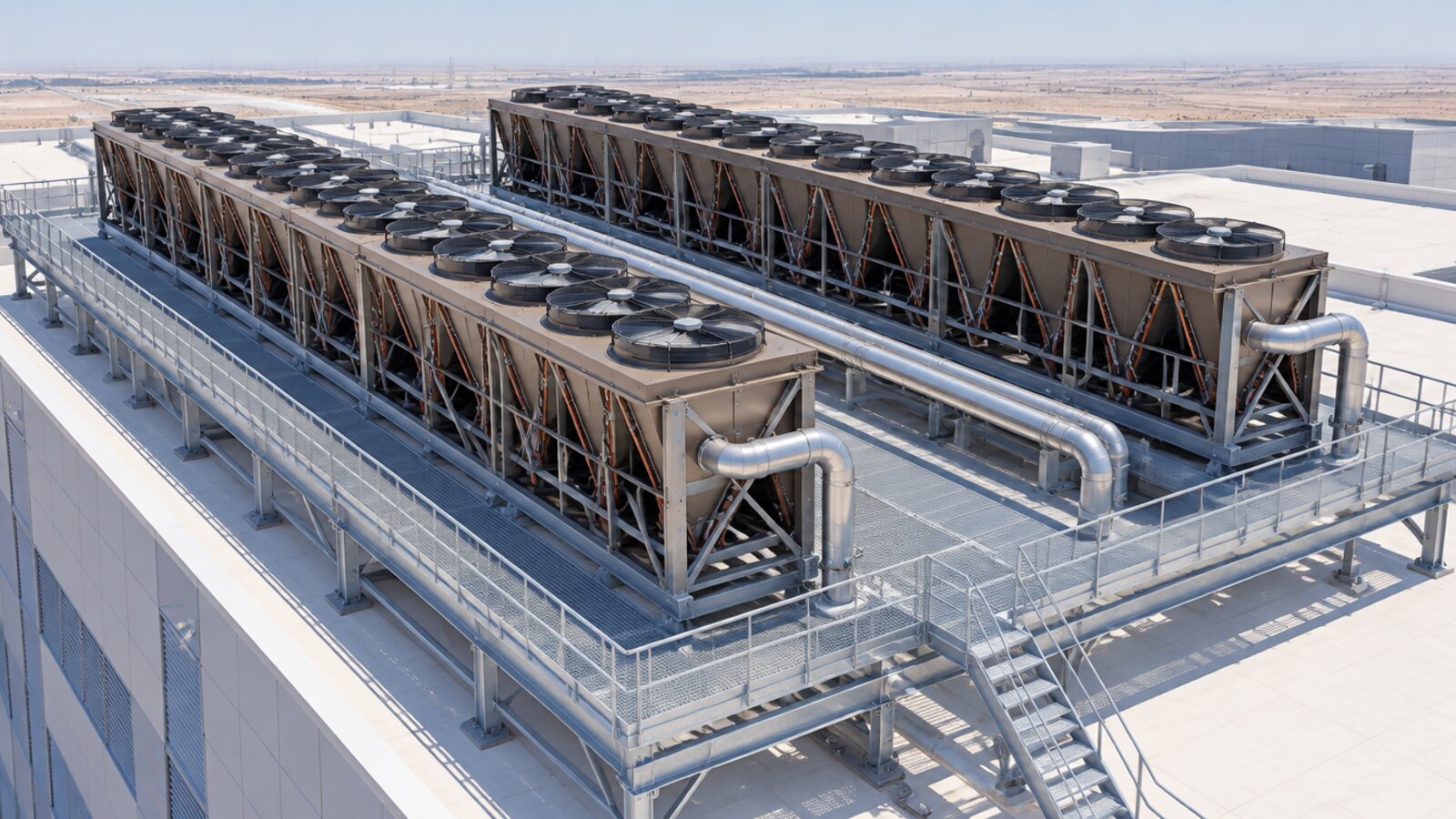
Hot water, full hashrate
One detail of Bitmain’s performance curve matters a great deal in a hot climate. The machine holds its full 860 TH/s across the whole permitted inlet range, from 20 °C to 50 °C. What it gives up as the coolant warms is efficiency, not hashrate: 13.0 J/TH up to 35 °C, then about 13.4, 13.8 and 14.2 J/TH at 40, 45 and 50 °C on water, a little more on antifreeze.
Dry coolers deliver their warmest water on the hottest afternoons, which is precisely when an air-cooled machine starts throttling. This one keeps hashing at full rate and simply draws a little more power for a few hours. For a machine racked in the Gulf, that is the right way round.
The one start-up rule to know is the other end of the range: coolant below 20 °C has to be warmed before the machines start. That is a commissioning detail for a site, and not something an owner ever has to think about once it is running.
Why it is priced where it is
The first price we hold for it, in November 2025, was a little under $18 a terahash. It is $9.02 today — $7,757 a unit — for the same 860 TH/s at the same 13 J/TH. That is the best entry price it has ever had.
Nothing about the machine explains that. The market does. A water-cooled, three-phase, 43 kg rack unit can only be bought by operators with a loop, the right power and the right racks, and a machine with that few possible buyers clears at a lower price than its specification alone would earn. For anyone who already has the room, that narrow market is the opportunity.
What a coin costs it
At 6¢ it makes a bitcoin for about $42,000 of electricity today. The S23 Hyd, a generation ahead at 9.5 J/TH, does it for about $31,300 in the same room — cheaper coins, as it should be. But it costs $22.96 a terahash against this machine’s $9.02, and so returns roughly 34% in its first year to this machine’s 58%.
That is the trade in one line. The S23 buys a longer runway; this buys more cashflow now. For an air-cooled comparison, the S21 XP — the most efficient air machine we sell — makes a coin for about $42,800 at 6¢. Water at 13 J/TH edges out air at 13.5 even after the pumps are paid for, and it does it in a fraction of the floor space.
Over its run so far, since April 2026, electricity has averaged $41,200 a coin. That is a short lifetime average; the figure to plan on is today’s.
What owning one is like
Every machine on this site develops faults eventually, and a rack unit is no exception. The honest position on this one is that the S21-generation silicon inside it is mature and well understood, while the 3U chassis has not yet built a long public failure record either way. We score that as unknown rather than as good.
What it costs you here is the part that matters. Bitmain’s own out-of-warranty price for a 3U hashboard repair is $210. The standard warranty runs 365 days from shipping, and Bitmain sells extended cover in 90-day blocks for this model up to two years from shipment. Racked in the UAE, the manufacturer’s warranty centre is close to the facility, so an in-warranty fault is a short trip rather than a shipment.
Two machines in one chassis means one set of fittings, one power feed, and half the things to go wrong.
Our two cents
This is the machine we point people at when they want the most return from the money they are putting into water-cooled hashrate right now, and they are happy to host it where the plant already exists. It is not the most efficient thing we sell. It is 860 TH/s at the best entry price it has ever had, in a format built for the rooms that can take it.
Buy it for the next four years. If you are planning for the halving after that, spend more per terahash on the S23 generation instead.
- Bitmain Antminer S23 Hyd (563 TH/s) — 9.5 J/TH, In stock, $31,279 of electricity per bitcoin, 29% year one
- Bitmain Antminer S23 XP Hyd (600 TH/s) — 8.9 J/TH, Pre-order, $29,302 of electricity per bitcoin, 27% year one
- Bitmain Antminer S23e Hyd 2U (865 TH/s) — 10 J/TH, Pre-order, $32,469 of electricity per bitcoin, 54% year one
Sources and further reading
- How much does a repair cost? — Bitmain Support, 2026
- After-sales extended warranty service — Bitmain Support, 2026
- Bitcoin Miner U3S21EXPH — Bitmain Shop, 2026
Which machines this covers
Disclosure
Firsthand Bitcoin sells and hosts mining hardware, including this machine. No manufacturer, distributor or affiliate programme paid for or reviewed this page and we take no commission on the links above. Historical figures are computed from daily bitcoin price and network hashprice, each day valued at its own prices. Nothing here is investment advice.