Home / Blog / Canaan Avalon A15 Pro
Machine review · Sep 29, 2026 · 4 min read
Canaan Avalon A15 Pro review
Canaan's first machine on our floor: 221 TH/s at 16.6 J/TH, from the company that sold the very first bitcoin ASIC in 2013. A solid, mid-pack air-cooled machine at a genuinely cheap entry price, not the most efficient thing we sell.
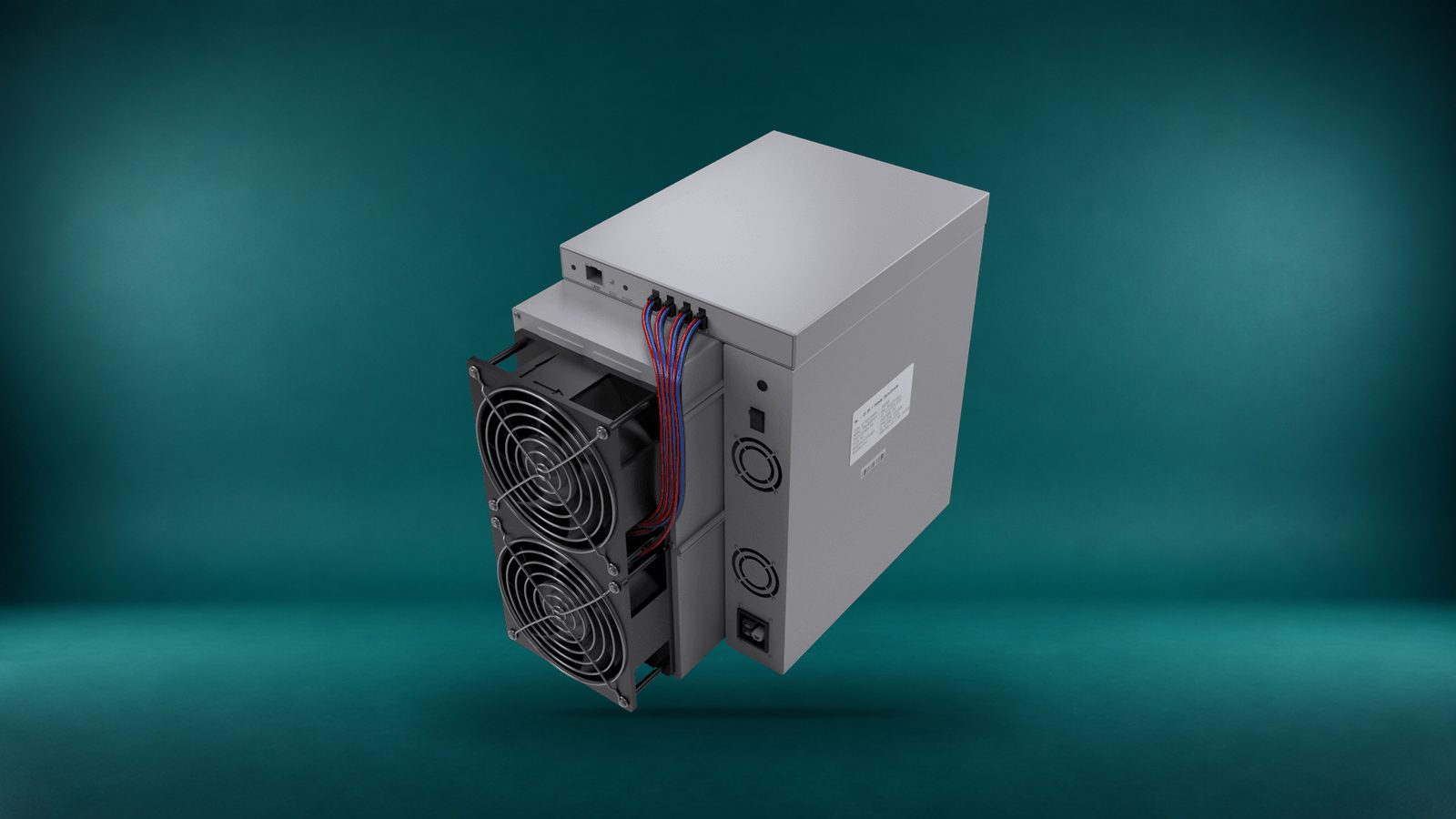
Canaan Avalon A15 Pro (221 TH/s)
The bottom line
Canaan built the first bitcoin ASIC ever sold, back in 2013, and the Avalon A15 Pro is the current, mid-pack result of thirteen years of iteration since. 221 TH/s from 3,669 W at 16.6 J/TH, air-cooled, about $1,540 — this is our first article on any Canaan Avalon machine, and it is a solid one rather than a spectacular one.
At our Argentina site it makes a bitcoin for about $52,700 of electricity and returns roughly 38% in its first year. Racked in December 2025, it has produced $876 of cashflow so far — 21% of its landed cost — and has another 0.059 BTC in it before the 2028 halving.
That is a machine still well short of covering itself, nine months in, and that is normal at this point in its life rather than a mark against it: most machines we stock are somewhere in the middle of a four-year working life, not at the end of one. The number worth focusing on is what it costs to run today, and at 6¢ that number is respectable without being the best we sell.
Scores
| Criterion | Score | Why |
|---|---|---|
| Cashflow | 6/10 | About 38% in year one at 6¢, with 21% of its landed cost covered after 273 days and 0.059 BTC still to come before the 2028 halving. Solid, not the best return we sell. |
| Longevity | 6/10 | 16.6 J/TH clears at 6¢ today with room, but it is a full efficiency class behind the newest air-cooled machines, which shortens how far past the 2028 halving it stays worth running at anything but Nigeria's 3.9¢. |
| Efficiency | 6/10 | Behind the S21 Pro (15.0 J/TH), further behind the S21 XP (13.5) and further still behind the S23 (11). Ahead of anything from the S19 era. A middle-of-the-pack number, priced like one. |
| Quality control | 6/10 | No pattern of complaint found, but also no broad, independent retail owner record to check it against — Canaan's largest known buyers here are institutional. Marked as unproven rather than good; nine months is a real but short base. |
| Serviceability | 6/10 | A smaller repair and parts ecosystem than Bitmain's, though board-level guides exist. Hosted with us, a repair in Argentina is billed at the cost of parts regardless of brand, which is what actually decides what a fault costs you. |
Weighted down from the top tier because 16.6 J/TH is a full efficiency class behind the most efficient air-cooled machines we stock, and up from the middle because the entry price makes the trade worth it below about 6¢.
Buy it if
- Your power is 6¢ or below and you want a lower entry price than the equivalent Bitmain or MicroBT air-cooled machine, at a moderate efficiency cost.
- You are filling rack space and 16.6 J/TH clears comfortably at your power price, even if it is not the frontier.
- You want exposure to a second manufacturer rather than racking everything from one supplier.
- You are comfortable buying a machine whose track record with us is still short — real, but nine months rather than several years.
Walk away if
- Your power costs 8¢ or more. Above that, the gap to a 13.5 J/TH machine starts costing more than the A15 Pro saves you at purchase.
- You want the single most efficient air-cooled box we sell regardless of price — that is currently the S21 XP, a full 3 J/TH ahead of this one.
- You want a machine with a long, independently documented owner history. This one's real-world base is still mostly institutional buyers rather than a broad retail record.
- You have no rack space rated for a 3,669 W air-cooled unit.
A cheap way into 221 terahash, not the fastest one
Canaan announced the A15 Pro in November 2024 as part of a wider refresh of its Avalon A15 line, and units reached buyers through early 2025 — Cipher Mining and a US buyer that ordered more than 50,000 units are the largest confirmed purchasers on record, which tells you the machine skews institutional rather than hobbyist so far.
At our Argentina site it makes a bitcoin for about $52,700 of electricity and returns roughly 38% in its first year. That sits behind our best air-cooled return, the S21 Pro, but the A15 Pro also costs less to buy — Canaan has consistently priced this line a step under Bitmain's closest equivalent, and at $1,540 that gap is real money on a rack full of them.
None of that makes it the machine to chase efficiency with. It makes it the machine for someone who has done that arithmetic and decided the cheaper entry is worth more than the last two points of J/TH — which, at 6¢ power and a rack to fill, is a perfectly reasonable place to land.
Thirteen years after Canaan sold the first ASIC anyone bought, the Avalon A15 Pro is the unglamorous, current result: solid, not spectacular.
Where 16.6 J/TH actually sits
Efficiency decides how many halvings a machine survives, and 16.6 J/TH is a genuinely middling number against 2026's field: a point and a half behind the S21 Pro, three behind the S21 XP, and more than five behind Bitmain's newest S23. It is comfortably ahead of anything left over from the S19 generation.
What that buys you is a machine that clears its power price today without argument, and one whose margin for error shrinks as difficulty rises and as newer, more efficient machines keep entering the network. It is not a bad trade at 6¢. It is a trade that gets worse the more your power costs, which is exactly what the buy and avoid thresholds above are describing.
What it is like to own — as far as we can tell
Canaan built the first ASIC bitcoin miner ever sold, back in 2013, and the Avalon line is thirteen years of iteration on that head start. That history does not automatically transfer to the A15 Pro's own record, which is still short: real shipments only reach back to roughly the first quarter of 2025, and the buyers we can identify by name are large institutional operators rather than a broad base of independent owners posting in public. We looked for the kind of forum discussion that has caught real problems on other machines and did not find a comparable body of it here — which is a different thing from a clean bill of health, and worth saying plainly rather than papering over.
What we can say: it is a 75-decibel, 3,669 W air-cooled unit built for a rack room rather than anywhere quieter, on the same MM-series board-controller architecture Canaan has used across recent Avalon generations. Hosted with us, a hashboard fault is billed at the cost of the part, the same as on every other machine we rack, in Argentina or the UAE — brand does not change that arithmetic, even where the wider parts market for Avalon boards is thinner than it is for Bitmain's.
Does it make sense to buy one?
If your power is at or below our rates and you want to fill rack space without paying Bitmain's or MicroBT's price for the most efficient box available, yes — the A15 Pro's entry price is the actual argument for it, and it is a real one.
If you are chasing the lowest possible cost per bitcoin regardless of what the machine costs to buy, the alternatives below make cheaper coins for a higher price up front, and at anything above about 6-8¢ power that trade starts to win. Below that, the arithmetic in this review is the one that matters, and it holds up.
- MicroBT Whatsminer M74S+ (332 TH/s) — 12 J/TH, In stock, $38,091 of electricity per bitcoin, 35% year one
- MicroBT Whatsminer M73S (560 TH/s) — 13 J/TH, In stock, $41,265 of electricity per bitcoin, 41% year one
- MicroBT Whatsminer M70S (258 TH/s) — 13.5 J/TH, In stock, $42,852 of electricity per bitcoin, 35% year one
Our two cents
This is a fine machine at a genuinely good price, and it is worth knowing Canaan makes something worth stocking — that was not a foregone conclusion before we looked at the numbers, and it is the reason we are covering the brand at all now rather than later. It is not, on today's figures, the machine we would rack first if efficiency were the only thing that mattered.
Buy it if the entry price is the deciding factor at your power rate. Buy the S21 Pro or S21 XP instead if it is not — and expect to see more Avalon machines reviewed here as the rest of the lineup earns its own track record.
Sources and further reading
- Canaan Upgraded Avalon Miner A15 Series with Superior Performance — PR Newswire, 7 Nov 2024
- Canaan Inc. announces 50,000+ unit order for Avalon A15 Pro — SEC filing (Canaan Inc.), 2 Oct 2025
- Avalon hashboard repair — domain map and parts — D-Central, 2026
Which machines this covers
Disclosure
Firsthand Bitcoin sells and hosts mining hardware, including this machine. No manufacturer, distributor or affiliate programme paid for or reviewed this page and we take no commission on the links above. Historical figures are computed from daily bitcoin price and network hashprice, each day valued at its own prices. Nothing here is investment advice.