Home / Blog / MicroBT Whatsminer M50S++
Progress report · Oct 12, 2026 · 4 min read
The Whatsminer M50S++ paused in early 2026 and restarted on Nigeria's cheaper power
Priced in bitcoin, a petahash has earned about the same all year; priced in dollars it more than halved from its 2025 peak, and this 22 J/TH Whatsminer stood switched off for almost two months. It restarted in Nigeria at 3.9¢ and has mined every day since.
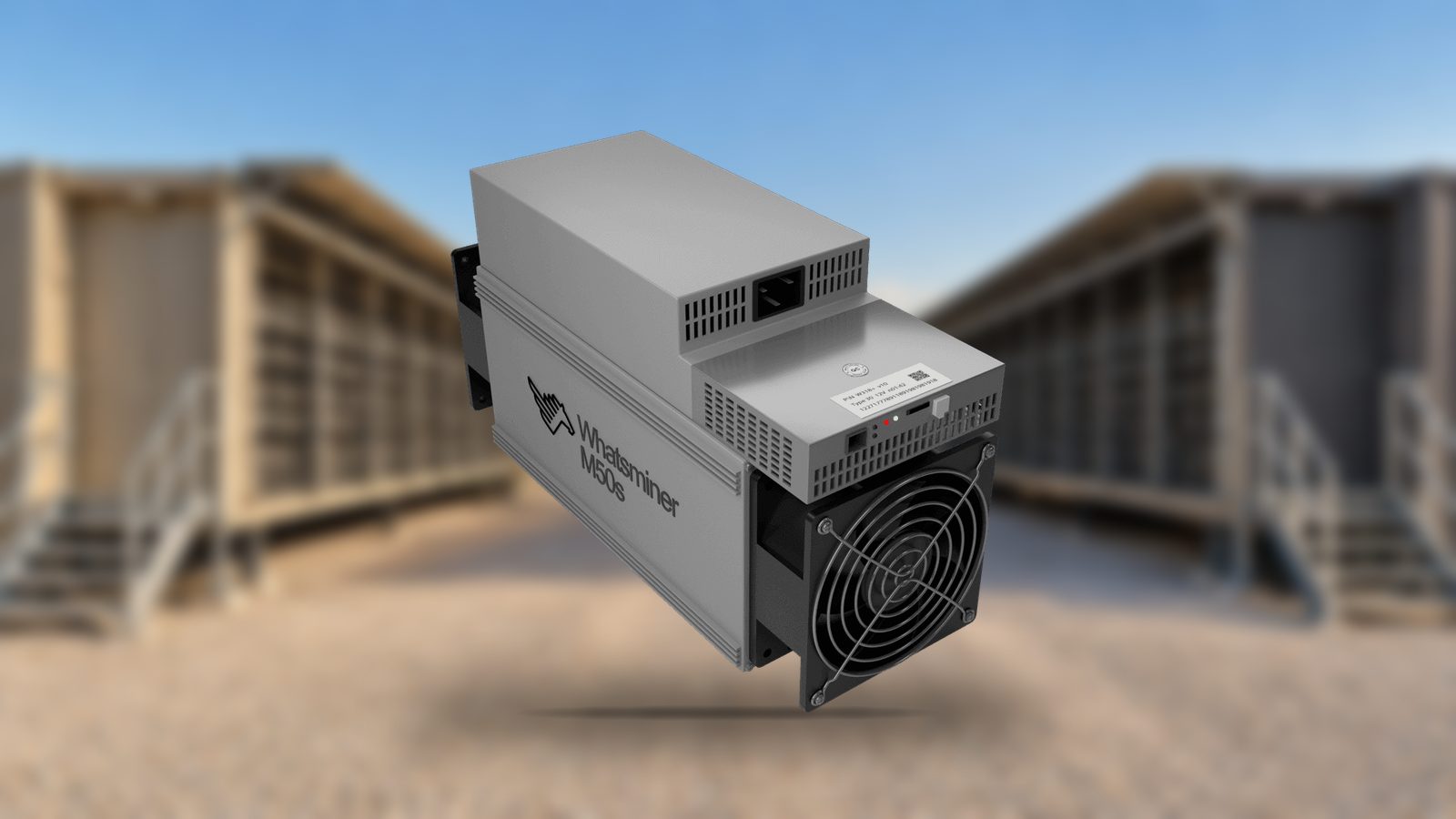
MicroBT Whatsminer M50s++ (160 TH/s)
The air-cooled one in the middle of the M50 line
Reported on 19 May 2023, MicroBT used the Bitcoin 2023 conference to introduce three machines in the M50 line: the air-cooled M50S++, a hydro-cooled sibling and an immersion-cooled one, all at about 22 J/TH. The one in our catalogue is the 160 TH/s bin, drawing 3,520 W.
It sits between two machines we have already written up: the 26 J/TH M50S before it and the M60 after. We bought one in May 2025 at $1,579, landed in Argentina at $2,753, and a buyer today pays about $836 for the same machine.
Our price records for it begin in March 2025, so this is 450 days of history and a progress report rather than a retrospective.
Ten months in Argentina, clearing its power until February
It started hashing in Argentina on 23 May 2025, with bitcoin near $87,000 and the network paying $45.21 per petahash a day on our hashprice chart. For 280 days it mined at 6¢, and the dollar value of a petahash climbed with bitcoin to $63.80 on 11 July 2025, the best day of the 540 since we bought it.
Then the line it had to clear moved. The dollar hashprice slid with bitcoin through the autumn and into early 2026, to $29.75 on 26 February 2026, with bitcoin near $68,000. At 6¢, a machine at 22 J/TH stopped covering its power.
Whatsminers are built to shed heat through the case. As one veteran operator on Bitcointalk put it, "think of it as a large heatsink", and he keeps 5 cm of space between them. On reliability, an owner of a 48-unit M50-series batch sent about three back for warranty and wrote that "the ones that worked are still hashing". That is the M50 family; we found no published failure record for the M50S++ itself, and score it as unknown. A fault at our Argentina site is a parts bill.
A machine at 22 J/TH is not the newest in the room. At a settled price it did not need to be.
The dollar line more than halved. The bitcoin line did not
Priced in dollars, a petahash's daily earnings ran from $63.80 to $27.74 on 6 June 2026, the lowest since we bought the machine, with bitcoin at $60,771 that day. Priced in bitcoin, the same petahash earned between 0.00040 and 0.00055 bitcoin a day across all 540 days, and the high came on 20 September 2026.
The machine's coins never stopped being worth mining. What moved was the dollar value of those coins against a power bill paid in dollars, and that is a question about the electricity. A miner who keeps the coins counts what the work produced in bitcoin, and by that count 20 September 2026 was the best day since the machine was bought.
Dark from 26 February 2026, restarted in Nigeria on 22 May 2026
After 26 February 2026 it stood switched off for 58 days. A machine that nothing we host can pay for is switched off rather than mined at a loss, and the coins it had already mined stayed in the wallet. By 20 April hashprice had recovered to $35.04 a petahash a day, with bitcoin near $75,000.
On 22 May 2026 it restarted in Nigeria, the one crossing a machine makes, and only to cheaper power. Nigeria's 3.9¢ comes with lower uptime than Argentina, which is why a machine goes there only once cheap power is worth more than the hours. At 22 J/TH, in early 2026, it was.
It has mined there for 144 days and was still clearing its power at the June low. A coin now costs it about $45,400 in electricity in Nigeria, against about $69,800 at 6¢, with bitcoin at $83,440.
A machine that no site can pay for is switched off, not mined at a loss, and every coin it has made stays where it is.
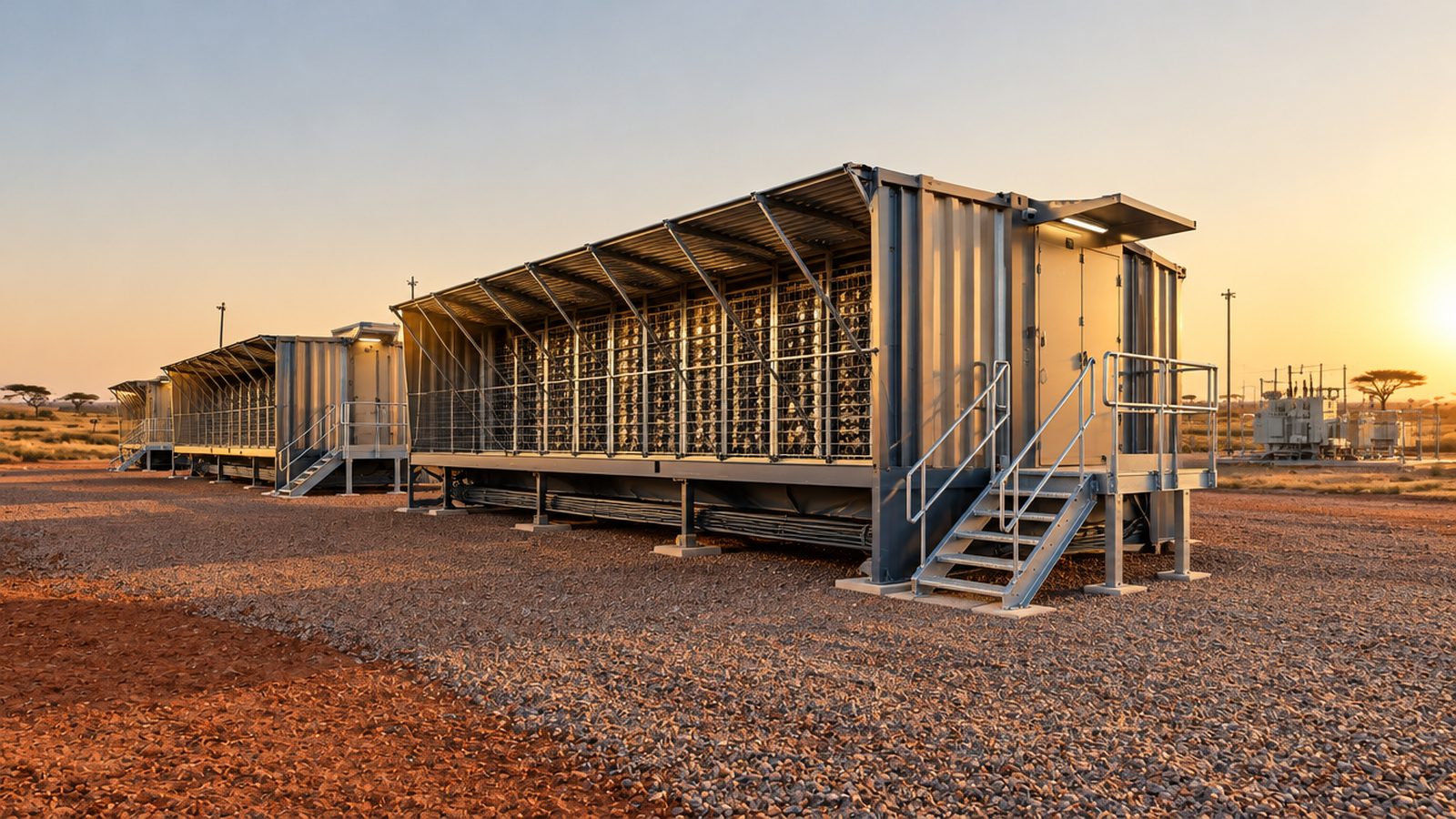
The tally, and the road to the halving
Over 450 days it has mined and kept 0.0306 BTC for $1,974 of electricity, $64,473 a coin averaged over its life so far. The lifetime figure includes the Argentina months at 6¢; today's cost in Nigeria is the one to plan on.
Valued at today's price, those coins less every dollar of power come to $565 of cashflow on a $2,753 landed cost, or 21% of its box. It is 450 days into a four-year working life, about where a machine should be.
Between now and the April 2028 halving it has about 0.031 BTC still in it at today's difficulty, worth roughly $3,880 with bitcoin back at its previous high, which would bring it to about 1.6× its hardware by then. That is today's conditions held flat, not a forecast, and output is not guaranteed.
What it tells a buyer today
The lesson is not that 22 J/TH is the efficiency to buy now. It is that the site decides what a machine like this earns: at Nigeria's rate a unit racked today returns about 37% in its first year, and at 6¢ in Argentina about 18%.
For scale, the most efficient machine in stock, the Antminer S23 XP Hyd at 8.9 J/TH, makes a coin for about $19,100 of electricity at Nigeria's rate, against about $45,400 for this one. The gap is what a newer generation buys; it does not make a proven machine on cheap power a bad one.
Efficiency decides how many halvings a machine survives, so the figure below ranks what the same money buys now by what a coin costs to make. A proven machine on cheap power keeps stacking coins; a more efficient one stacks them for longer.
- MicroBT Whatsminer M74S+ (332 TH/s) — 12 J/TH, In stock, $38,094 of electricity per bitcoin, 35% year one
- MicroBT Whatsminer M73S (560 TH/s) — 13 J/TH, In stock, $41,268 of electricity per bitcoin, 40% year one
- MicroBT Whatsminer M70S (260 TH/s) — 13.5 J/TH, In stock, $42,856 of electricity per bitcoin, 34% year one
What people are saying online
think of it as a large heatsink
Whatsminer cases shed heat through the metal, so the machines want space between them.
I think they are great overall and the ones that worked are still hashing.
An owner of a 48-unit M50-series batch: a few early warranty returns, then steady running.
Sources and further reading
- MicroBT Releases New Line of Whatsminer M50 Series — No Bullshit Bitcoin, May 2023
Which machines this covers
Disclosure
Firsthand Bitcoin sells and hosts mining hardware, including this machine. No manufacturer, distributor or affiliate programme paid for or reviewed this page and we take no commission on the links above. Historical figures are computed from daily bitcoin price and network hashprice, each day valued at its own prices. Nothing here is investment advice.