Home / Blog / Bitmain Antminer S21e XP Hyd
Machine review · Oct 7, 2026 · 5 min read
Bitmain Antminer S21e XP Hyd review: the 13 J/TH water-cooled machine, sold one at a time
The same silicon, the same 13 J/TH and the same water loop as the 3U rack chassis built from two of them, in a box you can buy singly. It is a sound first water-cooled position, and it still needs a room built for water.
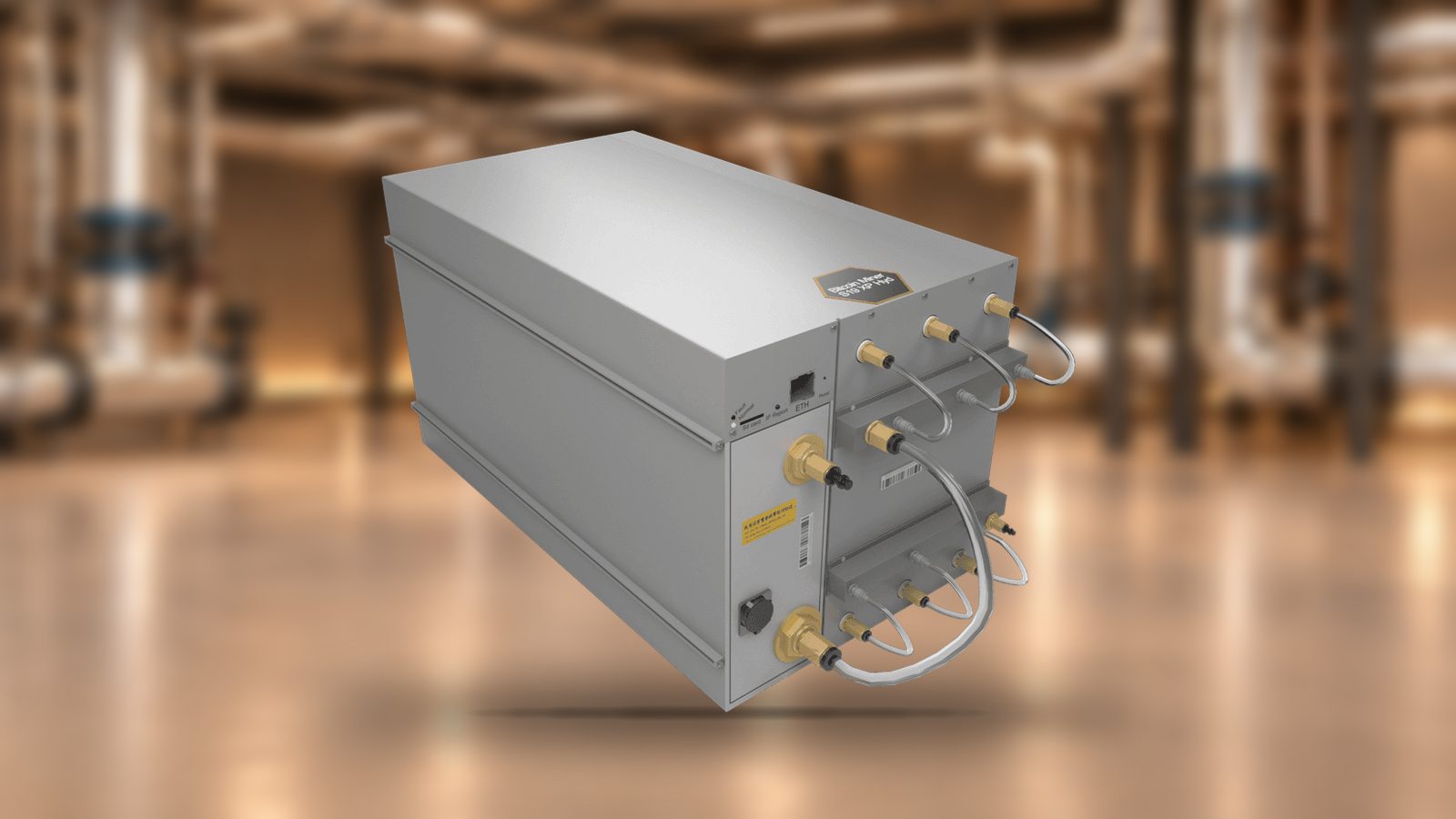
Bitmain Antminer S21e XP Hyd (430 TH/s)
The bottom line
The S21e XP Hyd is 430 TH/s from 5,590 W, 13 J/TH, water-cooled, in a 410 × 170 × 209 mm box that weighs 13.8 kg. It is the single-unit form of the machine Bitmain also sells as the 3U rack chassis. At our UAE site it makes a bitcoin for about $42,700 of electricity and returns roughly 52% in its first year at today’s price, against 38% for the air-cooled S21 XP.
Bought at its settled price in September 2026, it has mined 0.0064 BTC for $269 of power, a short run, so the figures to plan on are today’s. Between now and the 2028 halving it has another 0.114 BTC in it, worth about $14,202 with bitcoin back at its previous high: roughly 2.7× its $5,322 landed cost by the halving, with the machine still running afterwards.
What you are buying is the 3U’s efficiency one machine at a time, at $8.82 a terahash against the 3U’s $9.24. What you are not buying is the longest runway, because the S23 generation makes a coin for less electricity, and you are not buying a room. It needs three-phase 380–415 V power and a coolant loop. Ours in the UAE is that room.
Scores
| Criterion | Score | Why |
|---|---|---|
| Cashflow | 9/10 | Makes a bitcoin for about $42,700 of electricity at 6¢ and returns roughly 52% in year one at today’s price, against 38% for the air-cooled S21 XP. On track for about 2.7× its hardware by the 2028 halving. |
| Longevity | 7/10 | 13 J/TH keeps it well above the line at 6¢ today and at 3.9¢ for years beyond the 2028 halving. At 6¢ after the halving it leans more on the price of bitcoin than the S23 generation will. |
| Efficiency | 7/10 | A good 13 J/TH, a full generation behind the 9.5 J/TH S23 Hyd that shares its box size. |
| Quality control | 6/10 | Scored as unknown rather than as good. The S21-generation silicon is mature and well understood, but this single unit has no multi-year public failure record of its own that we could find. |
| Serviceability | 7/10 | Hosted in the UAE, the manufacturer’s warranty centre is close to the facility, so an in-warranty fault is a short trip. The catch is the format: water, three-phase power, and a loop that has to be kept clean. |
Weighted on what an owner gets back per dollar over the next four years. The entry price carries it: at 13 J/TH this is not the most efficient water-cooled machine we sell, but it is among the best returns on the money, and its efficiency still sits comfortably above the line at our sites.
Buy it if
- You want 13 J/TH on water in a size you can add one machine at a time, rather than 860 TH/s in a single position.
- Your power is at or below 6¢. At 6¢ it makes a coin for about $42,700; at 3.9¢, about $27,800.
- You want the entry price to do the work: roughly 52% in year one at today’s price, from $3,793 a machine.
- You plan to hold through the 2028 halving and cross to cheaper power once, later in its life, when the figures say so.
Walk away if
- You have no coolant loop or no three-phase 380–415 V supply. Without both it will not run at all.
- You are planning well past 2028. At 13 J/TH it clears comfortably at 6¢ today and sits closer to its line after the halving. If runway matters more than year one, the S23 Hyd is the better spend.
- Your power is well above 6¢. Up to about 6¢ it has room; between there and 8¢ it still clears today but leans on the price of bitcoin after the halving; above that, choose a more efficient machine.
- You want a long public failure record for this exact unit before you buy. The silicon generation is mature, but this model has not built a record of its own that we could find.
The 3U’s silicon, one machine at a time
Bitmain announced the S21e XP Hyd in November 2024: 430 TH/s from 5,590 W, 13 J/TH, with the coolant taken straight to the chips. It is a 410 × 170 × 209 mm unit of 13.8 kg that runs on three-phase 380–415 V, with a listed operating range of 20 °C to 50 °C.
It is the same machine as the S21e XP Hyd 3U in everything but the box. The 3U is exactly twice its hashrate and exactly twice its power, 860 TH/s from 11,180 W, in one rack-mount chassis. The 3U is the density answer. This one is for the buyer who wants the same 13 J/TH without putting 860 TH/s into a single position.
A box built for water, and a room to match
A water-cooled machine puts its heat into a loop instead of the air, which is why the room matters more than the miner. It needs three-phase supply, a closed coolant circuit, and somewhere outside to reject the heat. For the sister S21 XP Hyd, D-Central lists a flow of 8 to 10 litres a minute at no more than 3.5 bar, and says Bitmain recommends deionised water, purified water or glycol-based antifreeze, and never tap water.
None of that is an owner’s job. Coolant chemistry, filters, pumps and leak sensors belong to the site, and a machine racked with us in the UAE sits in a hall built around them. It is also the reason a water-cooled machine is a place in a plant as much as a purchase: the room it needs is the expensive part, and it is already there.
The machine is the easy part. The loop around it is what an owner is really buying a place in.
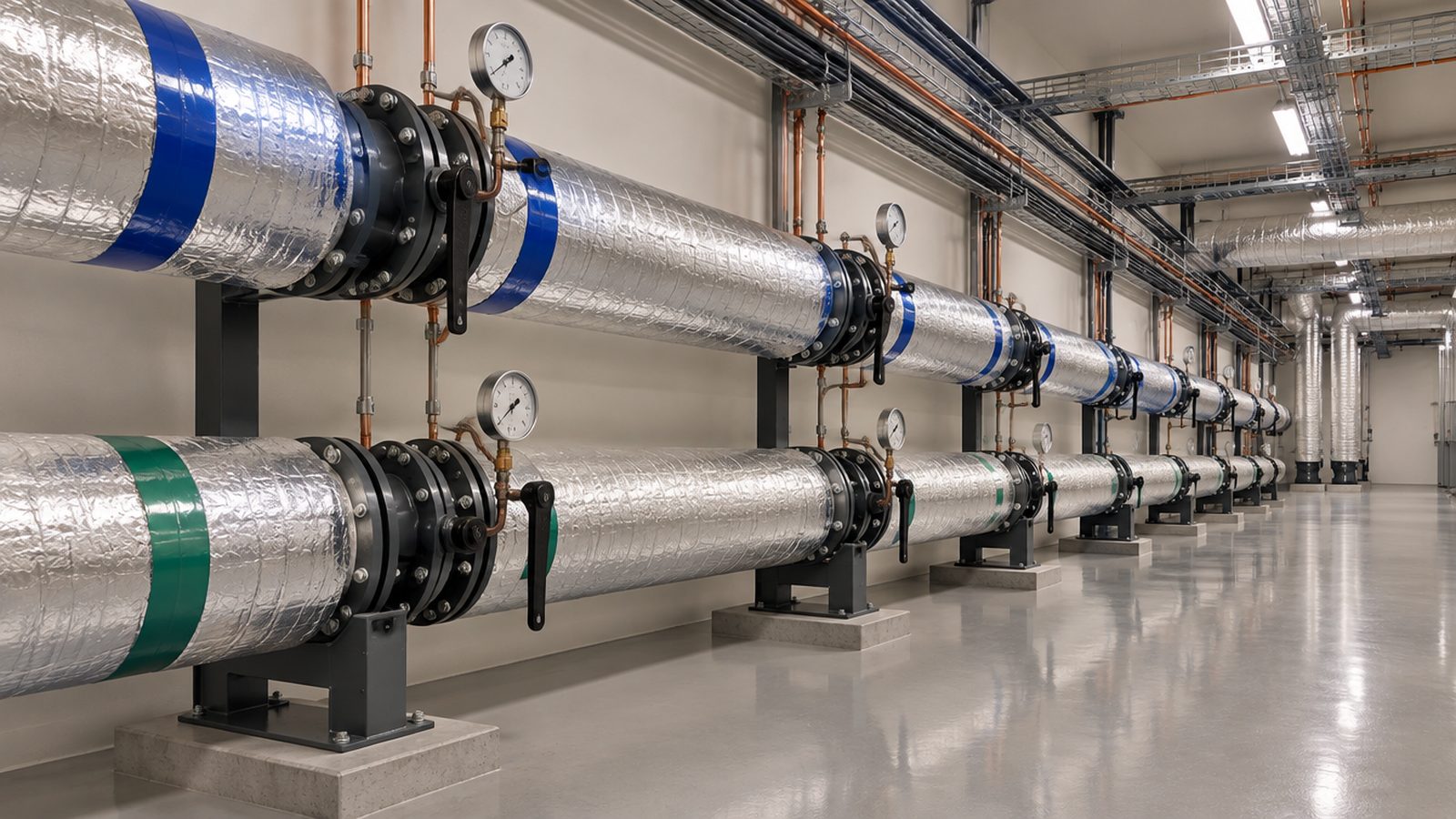
The same box fits the next two generations
Our store records give the S21j XP Hyd and the S23 Hyd the identical 410 × 170 × 209 mm footprint, at 16.2 and 16.5 kg. That makes the room a longer-lived asset than the machine in it: a position built for this unit can take the S21j XP Hyd at 12 J/TH or the S23 Hyd at 9.5 J/TH when it is time to replace it.
That is the roof, not the building in one line. Buying this machine is a decision about the machine for the next four years. The room it sits in is the part that carries over.
Why it is priced where it is
The first price we hold for it, in late April 2026, was $5,824 a unit, about $13.50 a terahash. It is $8.82 a terahash today, $3,793 a unit, for the same 430 TH/s at the same 13 J/TH. That is the best entry price it has ever had.
The machine did not change; the market did. A water-cooled, three-phase machine can only be bought by operators with a loop and the right power, and a machine with few possible buyers clears below what its specification alone would earn. The 3U, the same silicon in the larger box, is $9.24 a terahash today. For anyone who already has the room, that narrow market is the opportunity.
What a coin costs it
At 6¢ the S21e XP Hyd makes a bitcoin for about $42,700 of electricity today. The air-cooled S21 XP, at 13.5 J/TH, makes one for $42,900 at the same rate: about the same electricity per coin. The difference is the price of the box. The S21 XP is $11.55 a terahash; this machine is $8.82. That gap is where its higher first-year return comes from.
The generations either side show the trade. The S21j XP Hyd makes a coin for about $39,400 at $11.55 a terahash. The S23 Hyd, at 9.5 J/TH, does it for about $31,300 at $23.52. Cheaper coins, as it should be, and a longer runway, bought at a higher price per terahash. Year one at 6¢: 52% for this machine, 48% for the S21j XP Hyd and 32% for the S23 Hyd.
Over its run so far, since September 2026, electricity has averaged $41,800 a coin. That is a one-month lifetime average; the figure to plan on is today’s.
What owning one is like
Every machine on this site develops faults eventually, and a water-cooled one has one extra thing to look after. D-Central’s review of the sister S21 XP Hyd puts it plainly: coolant contamination is “the #1 cause of hydro unit failures”, and it adds that “properly maintained systems with quality fittings rarely leak”. That is a plant discipline, and it is the part of the job a hosted owner never touches.
The S21-generation silicon inside is mature and well understood. This single unit has not built a public failure record of its own that we could find, so we score that as unknown rather than as good. What a fault costs you here is the part that matters: racked in the UAE, the manufacturer’s warranty centre is close to the facility, so an in-warranty fault is a short trip rather than a shipment.
Every ASIC develops faults. On water, the thing to get right is the coolant.
Our two cents
This is the machine we point people at when they want a first water-cooled position at a lower price per terahash than the 3U, when the 3U’s 860 TH/s is more than they need. It is not the most efficient thing on water. It is 13 J/TH at the best entry price it has had, in a box that fits the room for the generations that follow it.
Buy it for the next four years of coins at today’s cost per bitcoin. If you are planning for the halving after that, spend more per terahash on the S23 generation instead, and keep the room.
- Bitmain Antminer S23 Hyd (563 TH/s) — 9.5 J/TH, In stock, $31,291 of electricity per bitcoin, 27% year one
- Bitmain Antminer S23 XP Hyd (600 TH/s) — 8.9 J/TH, Pre-order, $29,314 of electricity per bitcoin, 25% year one
- Bitmain Antminer S23e Hyd 2U (865 TH/s) — 10 J/TH, Pre-order, $32,482 of electricity per bitcoin, 51% year one
What people are saying online
Coolant contamination: The #1 cause of hydro unit failures. Poor water quality corrodes water blocks and clogs micro-channels.
Water quality is the main way a hydro machine goes wrong, which is why it is a site job.
Properly maintained systems with quality fittings rarely leak, but preparation is essential.
A well-kept loop rarely leaks.
Sources and further reading
- Antminer S21 XP Hyd Review: 473 TH/s at 12 J/TH — D-Central, 2026
Which machines this covers
Disclosure
Firsthand Bitcoin sells and hosts mining hardware, including this machine. No manufacturer, distributor or affiliate programme paid for or reviewed this page and we take no commission on the links above. Historical figures are computed from daily bitcoin price and network hashprice, each day valued at its own prices. Nothing here is investment advice.