Home / Blog / Bitmain Antminer S23 Hyd
Machine review · Sep 29, 2026 · 5 min read
Bitmain Antminer S23 Hyd review
The second-most efficient hydro machine we stock, 563 TH/s from 5,349 W at 9.5 J/TH, in Bitmain's newest single-box water-cooled chassis. It has run in our UAE water plant since May 2025, and no public failure record exists for it yet — the honest gap in an otherwise strong machine.
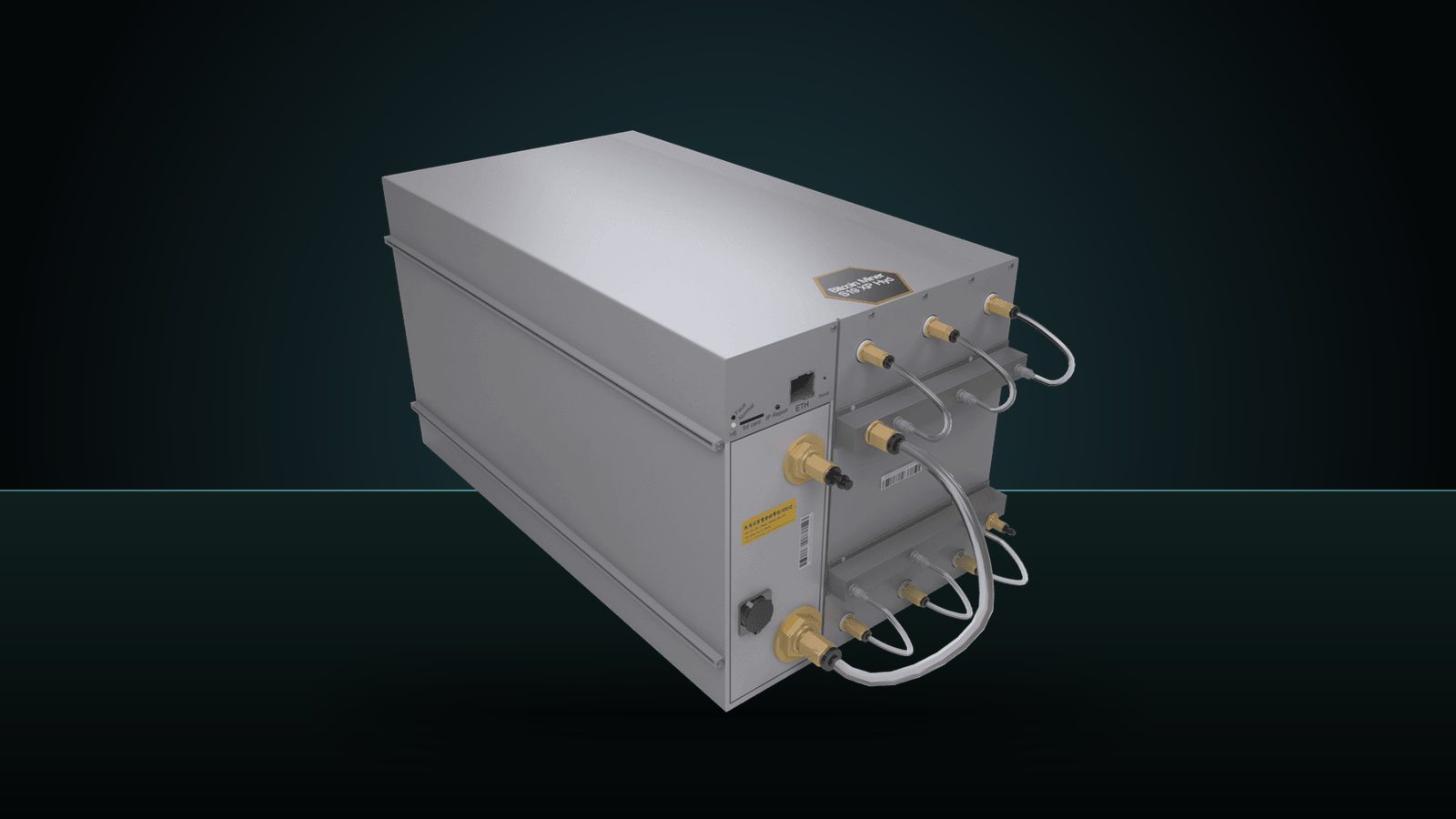
Bitmain Antminer S23 Hyd (563 TH/s)
The bottom line
The S23 Hyd is 563 TH/s from 5,349 W — 9.5 J/TH, water-cooled, in a single-box chassis Bitmain announced in May 2025 and began shipping in batches from January 2026. It sits one place behind the S23 XP Hyd, at 8.9 J/TH, as the second-most efficient hydro machine we stock, ahead of the whole S21e and S21j generation it replaces on our shelves.
Bought once its price settled, in May 2025, it has run at our UAE site since and mined and kept 0.1276 BTC for $4,066 of power — $6,707 of cashflow against a $17,400 landed cost, which is what the first year and a half of a four-year machine looks like. At 6¢ it makes a bitcoin for about $31,300 of electricity today and returned roughly 32% in its first year. Between now and the 2028 halving it has another 0.152 BTC in it, worth about $18,880 with bitcoin back at its previous high — roughly 1.5× its hardware covered by the halving, still running afterwards.
What you are buying is genuine efficiency at a price the market has already worked down, in a box that needs a coolant loop and three-phase power to run at all. What you are not buying is a proven chassis: it is new enough that nobody has a multi-year failure record for it, on any forum we can find. It clears its power with real room at either of our hydro rates and keeps clearing well past them — the ceiling is not the question here. The open question is what the hardware itself does over the next few years, and that is answered by time, not by us.
Scores
| Criterion | Score | Why |
|---|---|---|
| Cashflow | 7/10 | Makes a bitcoin for about $31,300 of electricity at 6¢ and returned roughly 32% in its first year. That is the middle of the hydro machines we currently sell — behind the cheaper, less efficient S21e and S21j XP Hyd, ahead of the pricier S23 XP Hyd — because the entry price paid for the jump in efficiency. It has covered 39% of its hardware so far and is on track for about 1.5× by the 2028 halving. |
| Longevity | 9/10 | 9.5 J/TH keeps it well clear of its power at 6¢ today and for years beyond the 2028 halving at either of our hydro rates. Only the S23 XP Hyd, one generation ahead on efficiency, outlasts it among the machines we stock. |
| Efficiency | 9/10 | The second-most efficient hydro machine we stock at 9.5 J/TH, a full generation ahead of the S21e and S21j XP Hyd it replaces, and within half a joule of the best we sell. |
| Quality control | 6/10 | Scored as unknown rather than as good. The silicon is the same generation shipping in the air-cooled S23, which is a known quantity, but this hydro chassis has been in the field since only January 2026 and has not built a public failure record yet. Bitcointalk's own hydro sceptics have said as much about Bitmain's liquid-cooled line in general — see below. |
| Serviceability | 6/10 | Racked in the UAE, a manufacturer warranty centre is close to the facility. We could not independently verify an out-of-warranty repair price for this specific chassis today — it is too new for one to be publicly documented — so we score the unknown rather than assume it is fine. |
Weighted down from where efficiency and longevity alone would put it, because quality control and serviceability are scored as unknown rather than good: this chassis has not been in the field long enough anywhere to have a public record either way.
Buy it if
- You already have a coolant loop and three-phase 380–415 V power, or are building a hydro site from the start — this bolts into that without asking for anything the S21-generation hydro units did not already need.
- Your power is anywhere up to about 10¢, where it clears with real room to spare — a wider margin than almost anything else we review.
- You want the efficiency of the newest generation without paying for the very top of it: $22.96 a terahash here against $25.73 for the 8.9 J/TH S23 XP Hyd.
- You are comfortable buying into a chassis with no multi-year public track record yet, in exchange for the best entry price this generation has had.
Walk away if
- You have no coolant loop and no three-phase supply. There is no version of this machine that runs on a wall socket, and building a loop for one box is not the economics that make hydro work.
- You want the single most efficient hydro unit we sell rather than the second-most: that is the S23 XP Hyd, for more per terahash.
- Your power is above about 10¢. It still clears comfortably above that and on toward 16¢, but by then it is leaning harder on bitcoin holding its price than on its own efficiency — a more efficient box is the safer buy at that rate.
- You need a long public failure record before committing capital. This chassis has not been running anywhere long enough to have one, and we say so plainly below rather than paper over it.
What Bitmain shipped
The S23 Hyd is 563 TH/s from 5,349 W — 9.5 J/TH at a 35°C coolant inlet — in a single-box chassis 410 x 170 x 209 mm and about 16.5 kg. It runs on three-phase 380–415 V at up to 12 A, and wants 8 to 10 litres a minute of antifreeze, pure water or deionised water through OD10 quick-disconnect fittings, at no more than 3.5 bar. None of that is new to anyone already running S21-generation hydro: it is the same class of loop, the same voltage, a smaller footprint for more terahash.
What changed is the silicon. Bitmain announced the S23 Hyd in May 2025 alongside the air-cooled S23, and started shipping it in batches from January 2026. It sits directly behind the S23 XP Hyd, at 8.9 J/TH, as the second-most efficient hydro machine we stock — a full generation ahead of the S21j XP Hyd (12 J/TH) and S21e XP Hyd (13 J/TH) that shared our hydro racks before it. We have also written up this exact unit's run so far in more depth.
Why it is priced where it is
The price we hold for it settled at $14,773 in May 2025, within days of launch, and held there for the better part of a year. It is $12,926 today — $22.96 a terahash — for the same 563 TH/s at the same 9.5 J/TH. That is the best entry price it has had.
The market did that, not the machine. Bitmain shipped the S23 XP Hyd into the same rack space a few months later at a genuine efficiency step up, and every machine below it repriced to make room. For a buyer who does not need the very top of the range, that repricing is the opportunity: this generation's second-best efficiency, at a price that has already absorbed the newer machine's arrival.
The honest gap: no track record yet
Every ASIC develops faults eventually, and we do not shy from saying so about machines that have earned a reputation one way or the other. This one has not earned either kind yet. It has been shipping for around eight months and running at our own site for sixteen; that is not long enough, on any forum we searched, for a hydro chassis this new to have a public record of what actually breaks on it.
What we did find is scepticism about Bitmain's hydro line in general, from miners who have run plenty of Bitmain's air-cooled hardware and choose not to run the water-cooled kind. "I would not do liquid mining as I do not trust bitmain and the quality of the gear they make. They run them too hard," one long-time Bitcointalk poster wrote about this exact model, before it had shipped. That is an opinion, not a failure count, and we are printing it because a review that only quotes the reassuring lines is not a review.
What a fault costs here is the part that matters, and on that point the machine is hosted the right way regardless of its age: racked in the UAE, a manufacturer warranty centre sits close to the facility, so an in-warranty board is a short trip rather than a shipment. What we cannot yet tell you is an out-of-warranty repair price specific to this chassis — nothing is publicly documented for it — so serviceability is scored as unknown rather than assumed good.
We could find no operator reports for this chassis anywhere, in either direction. That is the honest position, not a good or a bad one.
What a coin costs it
At 6¢ the S23 Hyd makes a bitcoin for about $31,300 of electricity today, and it does not stop clearing its power until rates run well past 16¢ — far above anything any of our sites charge. The question for a buyer here is never whether it clears; it clears with room at every rate we quote. The question is how that compares to the machine either side of it.
One place ahead, the S23 XP Hyd makes a coin for about $29,300 in the same room, for $25.73 a terahash against this machine's $22.96. One place behind, the S21j XP Hyd, a generation older at 12 J/TH, makes a coin for about $39,400 but returned roughly 48% in its own first year, because its price has fallen further. That is the trade in one line: the older, cheaper generation returns more of itself faster; this one costs a little more per coin than the newest silicon, in exchange for a price that has already settled. Efficiency and entry price pull in opposite directions, and this machine sits in the middle of that trade rather than at either end of it.
Does it still make sense at 9.5 J/TH?
Yes, for the buyer who wants the current generation's efficiency without paying for the machine one step above it. The S23 XP Hyd is the more efficient box, and it costs more per terahash for that half a joule; the S23 Hyd is where most of that generational efficiency gain shows up at a price the market has already worked down.
It needs the room built for it. UAE is where we run it, because hosting follows the cooling: a water plant, a manufacturer warranty centre close by, and the highest uptime of our sites. Without a coolant loop and three-phase power already in place, none of the arithmetic above is reachable — that is not a caveat specific to this machine, it is true of every hydro unit we sell.
Our two cents
This is the machine we would put someone into who wants the current generation's efficiency, has the room a hydro site needs, and is comfortable that the chassis itself is still writing its own record. We are not going to pretend that record exists yet, because it does not, and the honest version of this review says so rather than filling the gap with confidence we have not earned.
What we can say with the numbers in front of us is that it clears its power everywhere we host it, by a wide margin, and it does so at the best price this generation has ever had. If the newest chassis matters less to you than a longer public history, our S21j XP Hyd review covers the generation behind it; if the extra half-joule matters more than the price, the S23 XP Hyd is one step up.
What people are saying online
I would not do liquid mining as I do not trust bitmain and the quality of the gear they make. They run them too hard push too much energy into them. The gear does not last in general.
A long-time Bitcointalk miner, who runs plenty of Bitmain's air-cooled hardware, explaining why he avoids Bitmain's water-cooled line in general — posted before this model had shipped.
Sources and further reading
- Bitmain Antminer S23 Hyd Specs & Profit — D-Central, 2026
- Bitmain Antminer S23 Hydro 580 TH/s, 9.5 J/TH — Thoughts? — Bitcointalk, 2025
- The fastest miner yet: S23 3U, 1160 TH/s — Bitcointalk, 2025
Which machines this covers
The other side of this machine
The S23 Hyd makes the cheapest bitcoin we have ever measured — About a third less electricity per coin than anything from the S21 generation. Fifteen months of running one, and what 9.5 J/TH does to the arithmetic.
Disclosure
Firsthand Bitcoin sells and hosts mining hardware, including this machine. No manufacturer, distributor or affiliate programme paid for or reviewed this page and we take no commission on the links above. Historical figures are computed from daily bitcoin price and network hashprice, each day valued at its own prices. Nothing here is investment advice.