Home / Blog / Canaan Avalon 1246
Field report · Nov 7, 2026 · 5 min read
Bought in June 2021, the Avalon 1246 mined almost every coin before the 2024 halving
The Canaan Avalon 1246 was bought when a petahash earned five times its Argentine power bill. It crossed to Nigeria once, stopped in December 2025, ran again for 30 days this autumn and was retired this week with every coin still in the wallet.
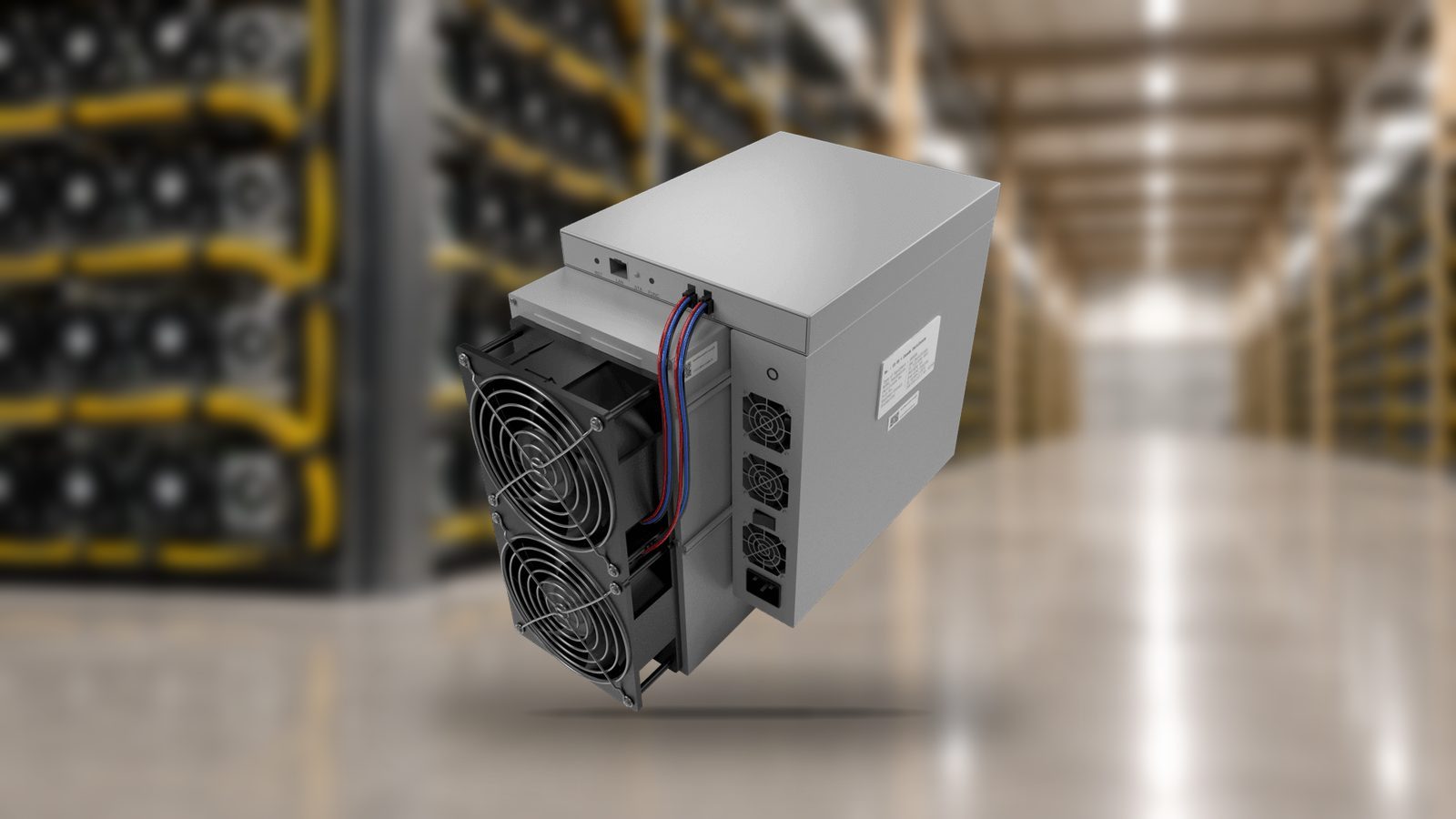
Bought when a petahash earned five times its power
Canaan launched the Avalon 1246 as a 90 TH/s, 38 J/TH machine, and a December 2020 test by Cybtc measured an average of 90.05 TH/s. By April 2021 it was the machine Canaan was shipping to Mawson Infrastructure: 11,760 units, to be shipped and installed through 2021. The unit in our store is the 85 TH/s version at 3,420 W, 40.2 J/TH, and every figure in this report is for that unit.
The first price we hold for it, on 17 June 2021, was $3,843, or $5,354 landed in Argentina with freight, duty and setup. Bitcoin was $38,325 that day. Hashprice, what one petahash earns in a day, was $281, against a power bill of $57.95 for the same petahash at Argentina's 6¢. The machine was bought with nearly five times its power cost coming back.
A 40 J/TH machine has a high line, and the first test came in 2022
A machine's line is the hashprice at which it stops covering its own power. At 40.2 J/TH a petahash uses 966 kWh a day: $57.95 at 6¢ and $37.66 at Nigeria's 3.9¢. The guide to efficiency and halvings shows where every J/TH puts the line.
Argentina's line was cleared on all but ten of the first 534 days. The closest it came was the bear-market low of November 2022: hashprice was $55.86 on 21 November, $2.09 under the line, and the machine was off for 18 days from 2 December 2022. It came back on 20 December, when hashprice was $60.96, and ran 121 more days at Argentina's rate.
One crossing to Nigeria, then 957 days on cheaper power
On 20 April 2023 the 1246 crossed to Nigeria, the one move a machine makes. Hashprice was $76.31 that day, twice the new $37.66 line. The guide to crossing explains why the move happens once and why it comes before the old site turns negative.
It ran 957 days there, to 1 December 2025, and hashprice was above the Nigerian line on 949 of them. The April 2024 halving fell inside that stretch. Hashprice was $103.64 the day before it against a $37.66 line, and the machine kept running.
Before the halving it mined 0.3247 BTC over 1,021 days, 93% of everything it kept. In the 621 days since it has mined 0.0234 BTC. A 40 J/TH machine earns its money while hashprice is high, and the 1246 was bought at the top of one.
At Nigeria's rate the line fell by a third, and hashprice cleared it on 949 of 957 days.
It stopped on 2 December 2025 and ran once more
Hashprice was $36.48 on 1 December 2025, under the Nigerian line, and the machine stopped. It stayed off for 309 days. Hashprice was above $37.66 on 101 of them, in scattered stretches, and it reached its lowest reading since the purchase, $27.74, on 6 June 2026.
On 7 October 2026 hashprice was $40.74 and the 1246 ran again. It ran 30 days. The last day above the line was 22 October, hashprice was $34.29 on 5 November and $32.48 on 6 November, and the machine was retired: a machine is retired when it is off today, and its coins never are. In all it has run 1,642 days and been off for 328.
What it banked, and the one thing it could not do
Over the days it ran, the 1246 mined and kept 0.3481 BTC for $5,785 of electricity. At today's price the coins are worth $26,452, so the machine has covered its $5,354 landed cost 3.9× over: $20,667 of cashflow after every power bill. Electricity averaged about $16,600 a coin over the run. That is a lifetime average over 1,642 running days, and it sits well under bitcoin's price today, $75,773.
The other half of the story is the entry. Our market index put the 1246 at $6,518 in November 2021, 1.7× what we hold as its first price, the one moment a miner's box is worth a multiple of what it cost. The coins were never sold to find out.
Build quality is the usual air-cooled story. D-Central's maintenance guide says that "Fan failure is one of the most common issues with any ASIC miner" and treats a fan swap as a job anyone can do; the ribbon cables between boards and the built-in power supply are the parts it hands to a professional. In Argentina we repair on site and bill parts only, which is what the guide to failed hashboards means by a line item.
Nothing it mined was sold. A machine that is off spends nothing.
What we would tell ourselves
Efficiency sets how many cycles a machine can sit through. At today's conditions a coin from a 1246 in Nigeria costs about $92,600 in electricity, above the $75,773 a coin sells for. At 8.9 J/TH the line is $8.33 at 3.9¢, and the S23 XP Hyd makes a coin in Nigeria for about $21,300.
For a miner the lesson is where the line sits. The 1246 was bought to harvest a high hashprice and did: 93% of its coins came before 2024, and the ones it cost to make were cheap. A machine whose line is a third of hashprice runs through a trough; one whose line is hashprice's own level waits for the next peak. The roof guide says what the earnings are for: the next machine.
Sources and further reading
- Canaan to supply 11,760 bitcoin miners to Mawson's Australian and US operations — CoinDesk, 21 Apr 2021
- AvalonMiner 1246 test report — Cybtc.com via MarketScreener, 7 Dec 2020
- AvalonMiner 1246 maintenance guide — D-Central, 2026
Which machines this covers
Disclosure
Firsthand Bitcoin sells and hosts mining hardware, including this machine. No manufacturer, distributor or affiliate programme paid for or reviewed this page and we take no commission on the links above. Historical figures are computed from daily bitcoin price and network hashprice, each day valued at its own prices. Nothing here is investment advice.