Home / Blog / Canaan Avalon A13
Field report · Oct 7, 2026 · 6 min read
Five joules kept the Avalon A1366 hashing while its sibling sat dark for two months
Canaan launched two Avalons on one day in October 2022, the 25 J/TH A1366 and the 30 J/TH A1346, and we bought both within three weeks of each other. When hashprice hit its low in 2024, five joules decided which one kept hashing.
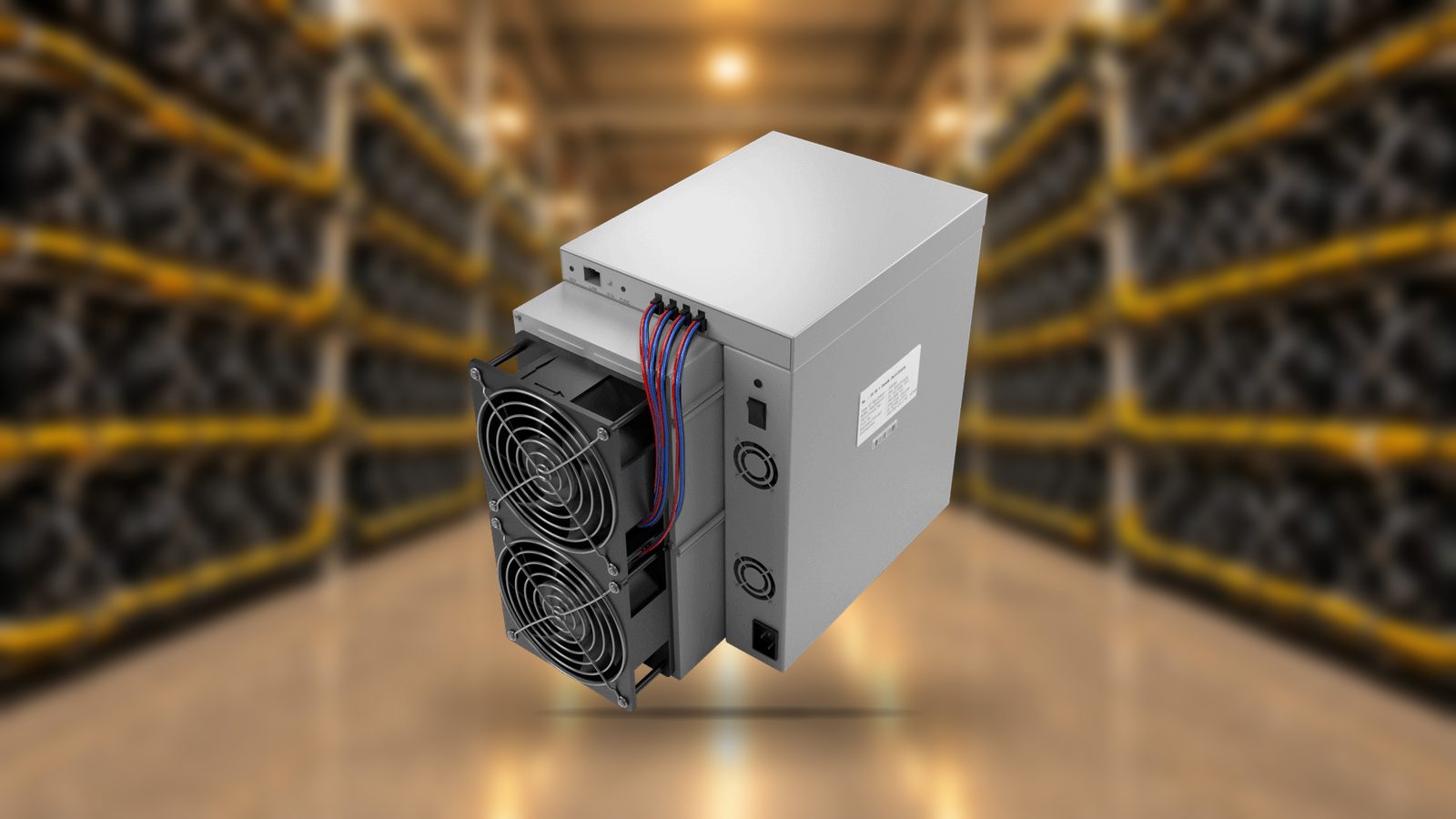
Canaan Avalon A1366 (130 TH/s)
Two Avalons launched into the bottom of the market
On 24 October 2022 Canaan launched its Avalon A13 series with two models: the A1346 at 110 TH/s and 30 J/TH, and the A1366 at 130 TH/s and 25 J/TH. Bitcoin closed that day at $19,355 on our price chart, and it kept falling. By 22 November it was $15,930, and the network's hashprice had dropped to $55.86 per petahash a day.
The maker felt it too. Canaan's fourth-quarter 2022 results showed revenue of US$56.8 million, down 82.1% on a year earlier, with "the further sinking bitcoin price during the quarter" leading to "lackluster market demand for mining machines". Chairman and CEO Nangeng Zhang wrote: "We strive to endure the present arduous period while positioning ourselves for the market's resurgence."
We bought into that market. The A1366 went on our floor in January 2023 at $1,970, landed in Argentina for $3,261, and its twin the A1346 followed three weeks later. Bitcoin was $22,964 on 31 January 2023, hashprice was $74.71, and the whole network was hashing 273.6 EH/s. The machine itself is plain: 130 TH/s from 3,250 W, air-cooled, 13 kg, 75 dB, on a 185 to 285 V supply.
Canaan unveiled two machines on one day. Five joules per terahash was the whole difference between them.
Fourteen months at the old subsidy
It started hashing 445 days before the 20 April 2024 halving, when block 840,000 cut the reward from 6.25 to 3.125 bitcoin. In that stretch it mined 0.1350 BTC, 71% of everything it has mined to date, from 33% of its working life so far.
Hashprice averaged about $80 per petahash a day between our purchase and the halving, and about $46 from the halving to 7 October 2026, on our hashprice chart. The machine was clearing about $5.42 a day over its power before the halving and about $1.73 after. Nothing about it changed; the line it had to clear moved, which is what efficiency decides.
The network quadrupled and Canaan moved on
The network was 273.6 EH/s on 31 January 2023, 642.3 EH/s on the day of the halving and 1,024.6 EH/s on 7 October 2026, after a peak of 1,305.7 EH/s on 25 October 2025. The hashrate chart shows the climb. A fixed 130 TH/s is a share that keeps shrinking, which is why a coin mined on this machine takes more days every year.
Canaan's own answer came seven months after we bought. On 12 September 2023 it unveiled the A14 series in Singapore: the air-cooled A1466 at 150 TH/s and 21.5 J/T, and a liquid-cooled A1466I at 170 TH/s and about 19.5 J/T. That is roughly 14% less power per terahash than the A1366. The A13 was the outgoing model within a year of its launch, and its price settled accordingly.
A machine bought at 273 exahash was soon working in a network of more than a thousand.
Five joules decided which one kept hashing
The two A13s ran side by side at our Argentina site, at 6¢. Through the summer of 2024 hashprice slid after the halving and touched $37.70 per petahash a day on 5 August. The A1346, at 30 J/TH, stopped paying its power and was switched off from 21 August 2024 for 56 days. The A1366, at 25 J/TH, kept clearing its power through the whole trough and was never switched off.
A machine that no site can pay for is switched off rather than mined at a loss, and switched back on when the trailing month pays again. The A1346 was hashing again on 17 October. The coins it had already mined stayed where they were; the 56 days cost it only the coins it would have made.
Argentina to Nigeria, once each
The A1346 crossed to Nigeria on 28 December 2024. The A1366 stayed in Argentina for 796 days, through the halving, the trough and the rally past $100,000, and crossed on 6 April 2025, once a full year of its own figures said 3.9¢ had become decisively the better home. It has been there for 550 days since. A machine crosses once, and only to cheaper power.
On build quality we found no operator thread about the A13 itself, so we score that as unknown. For Avalons in general, an operator hosting about 100 of them among 600 machines wrote in February 2023 that "They're simple to work on and once you understand the kernel log typically pretty easy to figure out any issues." He was describing the 1246 and 1166 Pro. In Argentina a fault is a parts bill, since repairs there are billed at the cost of the parts and nothing else.
The tally
Over 1,346 days it has mined and kept 0.1914 BTC for $5,154 of electricity, $26,924 a coin averaged over its life so far. That lifetime figure is flattered by the months before the halving; today's is the one to plan on. At 3.9¢ in Nigeria a coin now costs about $51,600 in electricity, against bitcoin at $84,024. At 6¢ the same machine would spend about $79,400, which is why it is not at 6¢.
Valued at today's price, those coins less every dollar of power come to $11,264 of cashflow on a $3,261 landed cost: 3.5× its box, from the coins alone. Between now and the April 2028 halving it has about 0.026 BTC still in it at today's difficulty, worth roughly $3,182 with bitcoin back at its previous high, which would bring it to about 4.4× its hardware by then, still running.
What the A13 tells a buyer today
The A1366 paid for itself because it was bought cheaply in a weak market, ran fourteen months before a halving, and sat on the right side of the line when hashprice bottomed. Its sibling shows what five joules are worth: two months dark, and a crossing to Nigeria three months sooner.
A buyer today does not need to rely on timing. The most efficient machine in stock, at 8.9 J/TH, makes a coin for about $19,100 of electricity in Nigeria, against $51,600 for the A1366 at the same site. Canaan's current machine in our catalogue has its own A15 Pro review. The figures below rank what the same money buys now by what a coin costs to make.
- MicroBT Whatsminer M74S+ (332 TH/s) — 12 J/TH, In stock, $38,098 of electricity per bitcoin, 35% year one
- MicroBT Whatsminer M73S (560 TH/s) — 13 J/TH, In stock, $41,272 of electricity per bitcoin, 41% year one
- MicroBT Whatsminer M70S (260 TH/s) — 13.5 J/TH, In stock, $42,860 of electricity per bitcoin, 35% year one
What people are saying online
They're simple to work on and once you understand the kernel log typically pretty easy to figure out any issues.
An operator of about 100 Avalons in a 600-machine hosting site on how easy earlier Avalons are to repair.
Sources and further reading
- Canaan Inc. Launches New Generation of Bitcoin Mining Machines — PR Newswire, 24 Oct 2022
- Canaan Inc. Reports Unaudited Fourth Quarter and Full Year 2022 Financial Results — PR Newswire, 7 Mar 2023
- Canaan Unveils Cutting-Edge Avalon 14 Series Bitcoin Miners — Cryptonews, 12 Sep 2023
- Bitcoin halving: block 840,000 — CoinDesk, 19 Apr 2024
Which machines this covers
Disclosure
Firsthand Bitcoin sells and hosts mining hardware, including this machine. No manufacturer, distributor or affiliate programme paid for or reviewed this page and we take no commission on the links above. Historical figures are computed from daily bitcoin price and network hashprice, each day valued at its own prices. Nothing here is investment advice.