Home / Blog / MicroBT Whatsminer M63S++
Machine review · Oct 11, 2026 · 6 min read
Whatsminer M63S++ review: 15 J/TH on water, and a halving that points it to Nigeria
MicroBT's water-cooled M63S++ makes bitcoin at 15 J/TH in a box about two rack units tall. It clears its power at 6¢ with room today, but with hashprice halved its line sits above that rate. Cheap power is where it belongs, and one step up there are cheaper coins.
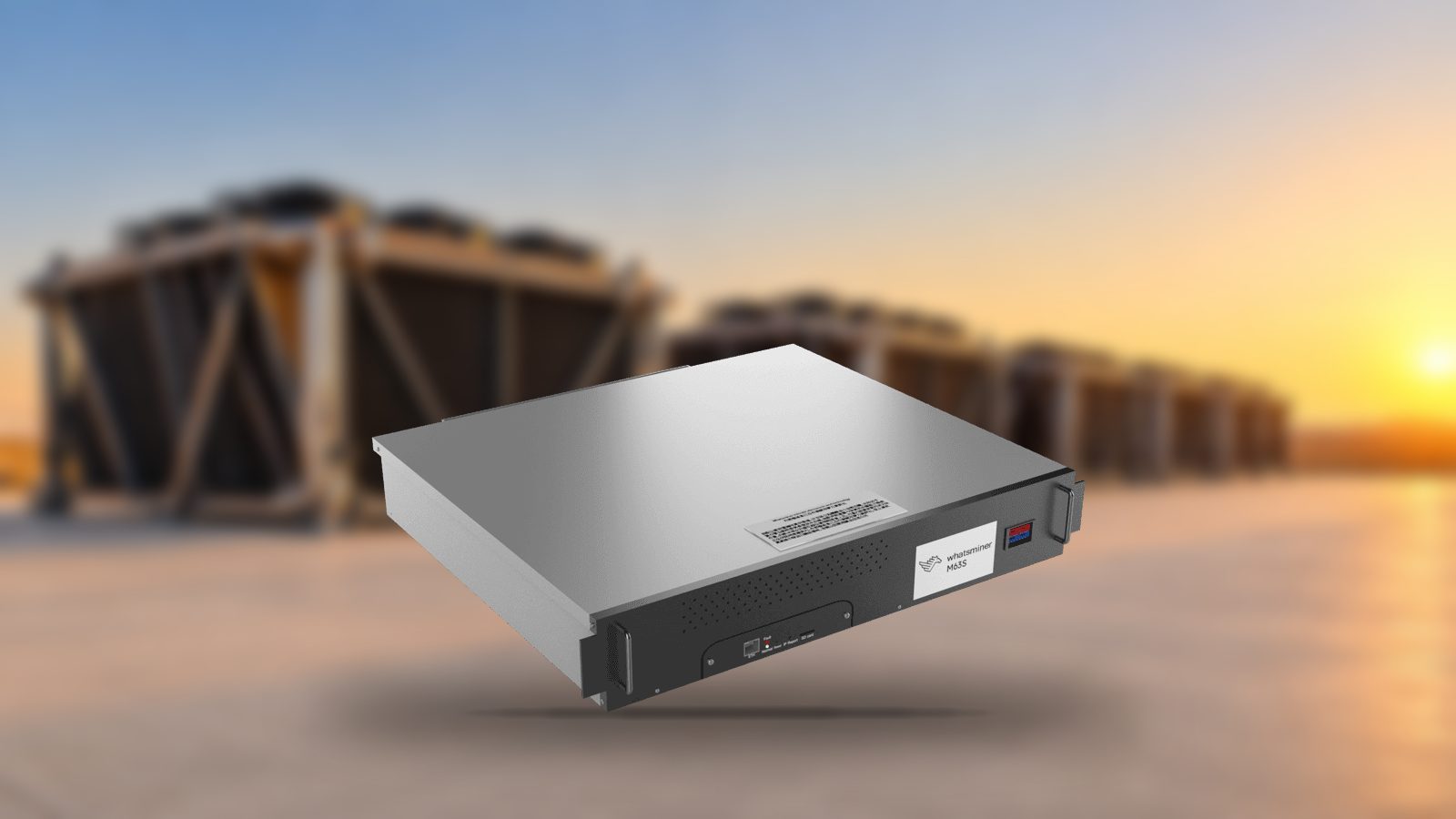
MicroBT Whatsminer M63S++ (488 TH/s)
The bottom line
The M63S++ is MicroBT's water-cooled Whatsminer from its M6XS++ series: 488 TH/s from 7,320 W in the bin we list, 15 J/TH. At our UAE site, at 6¢, it makes a bitcoin for about $48,900 of electricity and returns roughly 45% in its first year at today's price. At Nigeria's 3.9¢ the same coin costs about $31,800.
Bought once its price settled, in April 2026, it has mined and kept 0.0448 BTC for $2,168 of power: $1,534 of cashflow against a $5,772 landed cost, which is what the first months of a four-year machine look like. Between now and the 2028 halving it has another 0.128 BTC in it, worth about $15,994 with bitcoin back at its previous high: roughly 3.0× its hardware by the halving, with the machine still running afterwards.
What you are buying is a settled price per terahash on a machine from a maker with a long hydro record. What you are not buying is the cheapest coin: the S23e Hyd 2U makes one for about $32,500 in the same room against this machine's $48,900, and it needs a water loop, three-phase power and a rack built for 29.5 kg units to run at all.
Scores
| Criterion | Score | Why |
|---|---|---|
| Cashflow | 6.5/10 | Makes a bitcoin for about $48,900 of electricity at 6¢ and returns roughly 45% in year one at today's price. It has covered 27% of its hardware so far and is on track for about 3.0× by the 2028 halving. The S23e Hyd 2U returns about 57%. |
| Longevity | 6/10 | At 15 J/TH its line is $21.60 a petahash a day at 6¢ and $14.04 at 3.9¢. Hashprice halved sits between the two, so after the halving it is a Nigeria machine, which is the move every machine makes once. |
| Efficiency | 6/10 | A good figure for the 2024 generation and a middling one now: the S21e XP Hyd 3U runs 13 J/TH and the S23 generation 9.5 to 10 J/TH on the same kind of loop. |
| Quality control | 5/10 | Scored as unknown rather than as good. We found no operator reports of the M63S++ boards in the field that we could cite. The one review we found is a single unit tested for a few days under a MicroBT partner. |
| Serviceability | 6/10 | MicroBT lists a one-year warranty with repair services within its scope, and it excludes self-directed overclocking. Hosted with us, a fault is a repair queue and a line item. |
Weighted on what an owner gets back per dollar over the next four years. A settled price and a comfortable margin today carry it; 15 J/TH and a reliability record we could not find hold it below the top.
Buy it if
- You are racking in the UAE at 6¢ and want a water-cooled machine from MicroBT rather than Bitmain, at $8.50 a terahash.
- Your power is at or below 6¢. At 6¢ it makes a coin for about $48,900; at 3.9¢, about $31,800.
- You expect to cross to Nigeria once, when the figures say so. At 15 J/TH its line there is $14.04 a petahash a day, well under today's hashprice and under half of it.
- You already have a coolant loop and a three-phase supply, and you add hashrate one 488 TH/s unit at a time.
Walk away if
- You are planning past 2028 at 6¢. Its line there is $21.60 a petahash a day, and today's hashprice halved sits just under that, so those years lean on bitcoin recovering.
- You want the cheapest coin. The S23e Hyd 2U returns about 57% in year one against this machine's 45%, at about $32,500 a coin.
- You have no coolant loop, no 380 to 480 V three-phase supply or no racks rated for a 29.5 kg unit. Without them it will not run.
- You want a long public failure record. The series is under two years old and we found no operator reports of its boards that we could cite, so we score that as unknown.
What MicroBT shipped
MicroBT unveiled the M6XS++ series on 9 December 2024 at the Bitcoin MENA conference in Abu Dhabi. The M63S++ is the hydro-cooled model, announced at up to 478 TH/s at 15.5 J/TH.
Heat Core's review lists it at 434 to 478 TH/s from 7,192 W in a chassis 663 mm deep, 483 mm wide and 86 mm tall, roughly two rack units, weighing 29.5 kg. It takes three-phase 380 to 480 V. Our store lists bins from 440 to 488 TH/s at 15 to 15.5 J/TH, and the figures in this review are the 488 TH/s bin at 7,320 W. That is our store record, because we could not find the M63S++ on MicroBT's own shop pages.
The M63S++ sits above the M63S+ at 17 J/TH and the M63S at 18 J/TH, the earlier water-cooled machines in the same family. It is the same idea with more hashrate for each watt.
A box that wants hot water
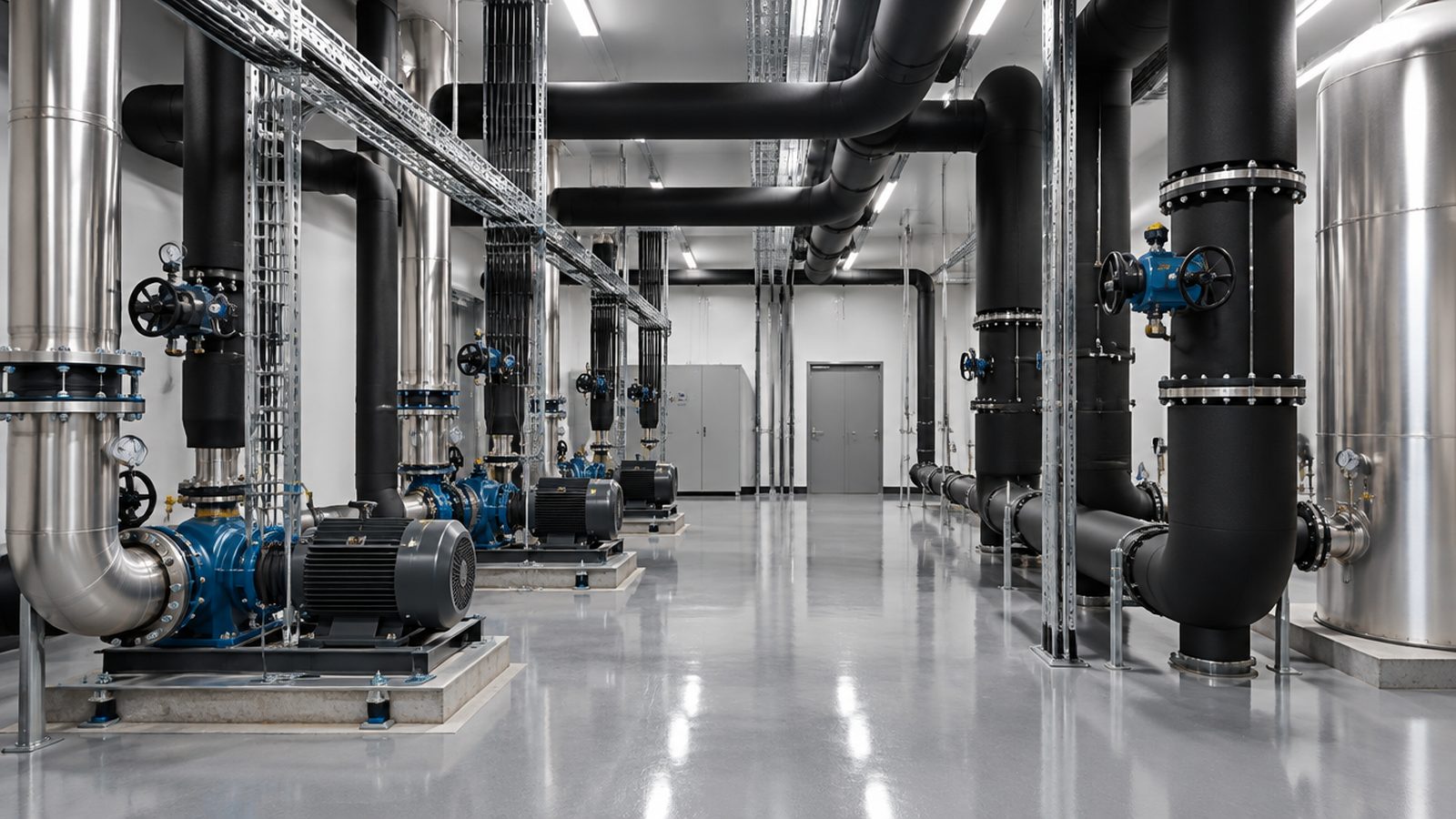
A water-cooled machine moves its heat into a loop instead of the room, and the loop does the rest. Heat Core's review says the best performance comes when the coolant is held at about 50 °C going in and 60 °C coming out. Warm water suits a dry-cooler yard in a hot climate, which is where our UAE site sits.
The machine runs in three modes, normal, low power and high performance. Heat Core describes overclocking it by about a fifth, at a small cost in efficiency. We quote everything here in the normal mode, which is the mode the 7,320 W figure describes.
What the machine asks of a site is specific: a coolant loop, a 380 to 480 V three-phase supply and racks that take 29.5 kg a unit. It is why it is sold to people who host it, and it is why we price its infrastructure as a hydro position rather than a shelf.
Heat Core: keep the coolant at 50 °C in and 60 °C out for the best performance.
Priced like a settled machine
The first price we hold for the 488 TH/s unit, on 24 February 2026, was $4,970. It is $4,150 today, $8.50 a terahash, for the same 488 TH/s at the same 15 J/TH. Since April it has stayed between roughly $4,100 and $4,600, which is what a settled price looks like.
Set against its water-cooled neighbours, the price per terahash is the whole story. The S21e XP Hyd 3U is 13 J/TH at $9.24 a terahash. The S23e Hyd 2U, at about 10 J/TH, is $11.13. The S21+ Hyd is $6.93. A machine's price per terahash settles to where its efficiency, its maker and its age put it, and the guide to what a miner costs all-in shows what sits on top of the box.
What a coin costs it
At 6¢ in the UAE it makes a bitcoin for about $48,900 of electricity today, against a bitcoin price of $83,016. At Nigeria's 3.9¢ the same machine makes one for about $31,800. The S23e Hyd 2U makes one in the UAE for about $32,500, the S21e XP Hyd 3U for about $42,000, and the S21+ Hyd, at 17 J/TH, for about $49,200.
In its first year the M63S++ returns about 45%. The S21e XP Hyd 3U returns 53%, the S23e Hyd 2U 57% and the S21+ Hyd 49%. The M63S++ sits in the middle of its class on both measures, which is what 15 J/TH at a settled price should do.
Over its run since April 2026, electricity has averaged about $48,400 a coin. That is a short lifetime average; the figure to plan on is today's.
Where the halving puts it
A machine's line is the hashprice at which it stops covering its own power. At 15 J/TH a petahash uses 360 kWh a day: $21.60 at 6¢, and $14.04 at Nigeria's 3.9¢. Network hashprice was about $39.30 a petahash a day on 10 October on our hashprice chart, so the M63S++ clears the 6¢ line by nearly a factor of two. Its line was also below the year's low of $27.74 on 6 June.
The 2028 halving halves the coins a petahash earns. At today's price and difficulty that puts hashprice near $19.65, a little under the 6¢ line and well above the Nigerian one. That is today's conditions held flat, not a forecast: it is why every projection we publish assumes the old high returns, and the forward figures here do the same.
So the machine is a UAE machine now and a Nigeria machine after the halving, and the move is made once. The guide to crossing once explains why, and the guide to efficiency and halvings shows where the line sits at every J/TH.
What a fault costs you here
We looked for operator threads and repair write-ups on the M63S++ and found nothing specific to it that we could stand behind. The one review we found, Heat Core's, tested a single unit and reported no hardware failures, but it also says MicroBT is a strategic partner in Heat Core and gave it early access, so we treat it as a spec source and not as a reliability record.
What a fault costs is the part that matters. MicroBT's shop page for the M63S, the machine this one follows, lists a one-year warranty with repair services within its scope, and the warranty does not cover self-directed changes to operating parameters such as overclocking. Hosted with us, a fault is a repair queue and a line item, not a parcel from your own address: a failed hashboard is a line item, not a catastrophe.
We found no operator reports of this machine's boards we could cite. We score that as unknown, not as good.
Our two cents
The M63S++ is a good machine at a settled price. At 6¢ it clears its power by a wide margin today, it carries to the halving, and after that the cheaper power in Nigeria is where its coins are made for the least. A buyer who wants MicroBT hardware on water has a sound reason to pick it.
Most buyers chasing the cheapest coin should look one step up: the S23e Hyd 2U makes it for about $32,500 in the UAE, and the figure below ranks everything that beats this machine on cost per coin and then year-one return, in stock today. A coin that costs less to make is a coin you keep more of.
- Bitmain Antminer S23 Hyd (563 TH/s) — 9.5 J/TH, In stock, $31,268 of electricity per bitcoin, 27% year one
- Bitmain Antminer S21j XP Hyd (495 TH/s) — 12 J/TH, In stock, $39,351 of electricity per bitcoin, 41% year one
- Bitdeer SealMiner A3 Pro Hyd (666 TH/s) — 12.5 J/TH, In stock, $40,608 of electricity per bitcoin, 32% year one
What people are saying online
As a strategic partner in Heat Core, MicroBT has provided Heat Core with early access to the M63S++.
The one hands-on review we found says plainly that MicroBT supplied the unit.
Sources and further reading
- MicroBT Unveils WhatsMiner M6XS++ At Bitcoin MENA 2024 — Apexto Mining, 11 Dec 2024
- Review of M63S++ — Heat Core, 30 Jul 2025
- WhatsMiner M63S — MicroBT shop, 2026
Which machines this covers
- MicroBT Whatsminer M63S++ (488 TH/s)
- MicroBT Whatsminer M63S++ (484 TH/s)
- MicroBT Whatsminer M63S++ (482 TH/s)
- MicroBT Whatsminer M63S++ (480 TH/s)
- MicroBT Whatsminer M63S++ (478 TH/s)
Disclosure
Firsthand Bitcoin sells and hosts mining hardware, including this machine. No manufacturer, distributor or affiliate programme paid for or reviewed this page and we take no commission on the links above. Historical figures are computed from daily bitcoin price and network hashprice, each day valued at its own prices. Nothing here is investment advice.