Home / Blog / MicroBT Whatsminer M21S
Field report · Nov 19, 2026 · 4 min read
The 2020 halving stopped the Whatsminer M21S. Then Nigeria ran it for three and a half years
At 60 J/TH the M21S was the thirsty member of MicroBT's 2019 range. Five weeks after the 2020 halving it could no longer pay for 5.75¢ power and went dark. One crossing to 3.9¢ brought it back, and it mined the whole 2021 bull run from there.
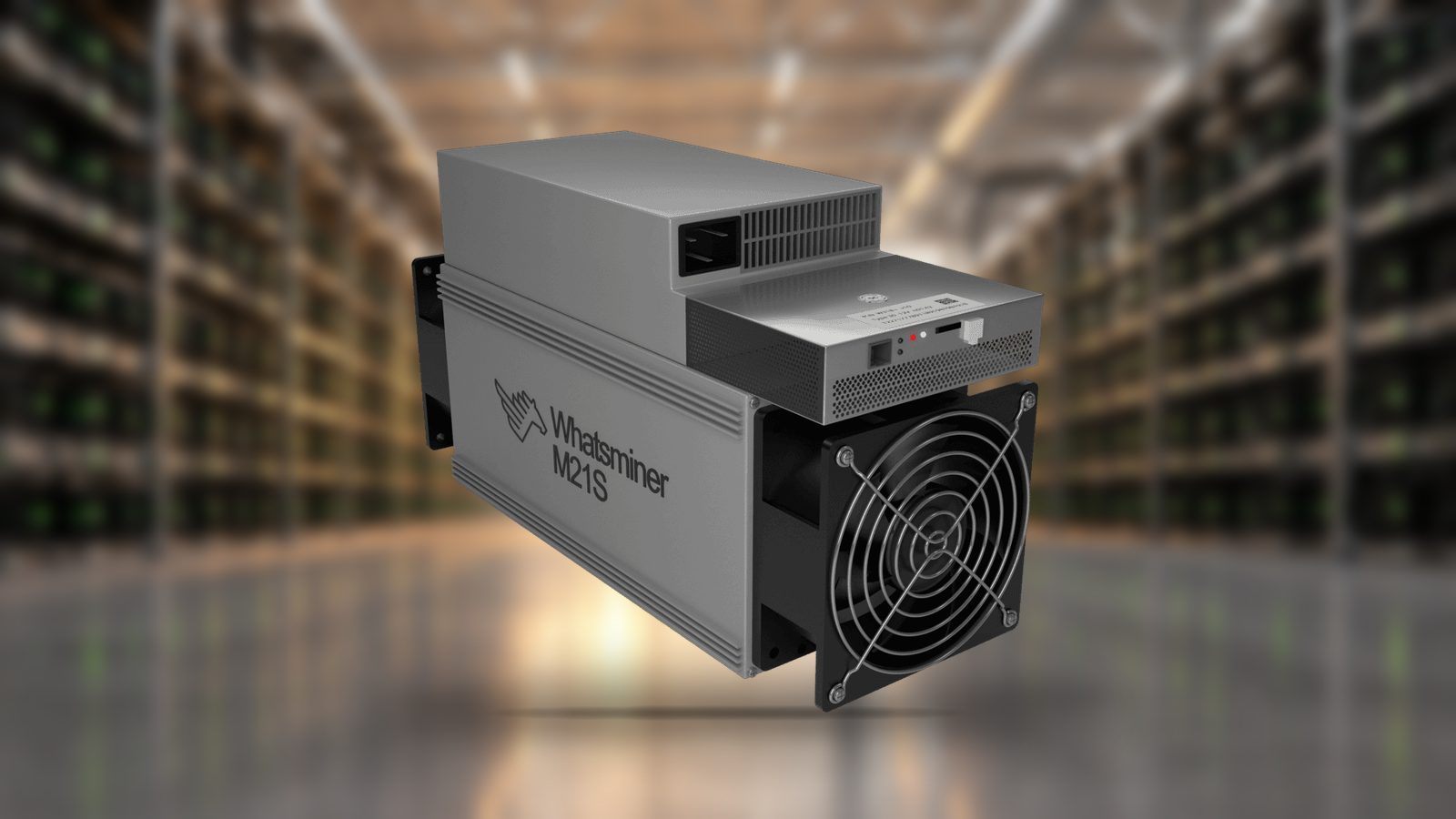
MicroBT Whatsminer M21s (56 TH/s)
TL;DR
- Bought on 30 September 2019 for $1,467, seven months before the 2020 halving.
- Switched off on 15 June 2020, five weeks after the halving, when 5.75¢ power cost more than it mined.
- Crossed to Nigeria on 13 October 2020 and ran there without a stop until 19 May 2024.
- Kept 0.4948 BTC for $4,735 of electricity: $24,995 of cashflow, 10.5× its box.
The thirsty member of the best-selling range of 2019
MicroBT's M20 range was the machine of 2019. The company told an online conference in April 2020 that it had sold 600,000 units of the M20 series that year, enough, by its own count, for 35% of the network's computing power.
The M21S was the cheaper, hungrier sibling of the M20S. Our store record gives it 56 TH/s from 3,360 W, which is 60 J/TH, air-cooled. An owner who tested one at home in 2019 measured it at 54 to 56 TH/s and about 65 watts a terahash on its high setting, a little above the label.
In July 2019 the same owner wrote that the M21S sold for $1,900. By October another buyer in the thread had paid $1,500. Ours is priced at $1,467 on 30 September 2019, and landed at our Argentina site for $2,384 with freight, duty and setup.
Seven months of 12.5 BTC blocks
It started hashing with every block still paying 12.5 bitcoin. Hashprice was $158.69 per petahash per day on the day it was bought, and it stayed above $100 for almost all of the seven months that followed.
Those months produced 0.2257 BTC, 46% of everything the machine would mine in its life. Valued at today's price they are worth $13,561. Nobody sold them to pay the power, so today's price is the one that counts.
46% of every BTC it ever mined came before the 2020 halving.
Five weeks after the halving, it went dark
Block 630,000 was mined on 11 May 2020 and cut the subsidy from 12.5 to 6.25 BTC. Hashprice went with it: $169.75 per petahash per day on 10 May, $86.91 on 12 May.
A petahash of M21S draws 60 kW, so a day of it at Argentina's 5.75¢ costs about $83. Through the summer of 2020 hashprice hovered around $80. On 15 June 2020, with its trailing month no longer covering its power, the machine was switched off.
It came back on 19 August, when a firmer bitcoin price lifted hashprice to $95, and ran for 30 days. On 17 September it stopped again. Nothing about the machine had changed. Efficiency decides how much of a halving a machine can absorb, and at 60 J/TH the answer at 5.75¢ was none of it.
Nothing about the machine had changed. The line it had to clear had doubled.
Cheap power, before the bull run
On 13 October 2020 it crossed to Nigeria. It is the one crossing a machine makes, and for most machines it comes late in life. For the M21S it came a year in, because the halving had already done the work a trailing year usually does.
At 3.9¢ the same petahash costs about $56 a day in power instead of $83. Nigeria runs 73.6% uptime against Argentina's 98.7%, so it mines fewer hours, but an hour that pays beats an hour switched off. From 13 October 2020 it ran without a stop until 19 May 2024.
That stretch held the whole 2021 bull market. Hashprice peaked at $412.85 on 20 October 2021, when a petahash earned more than seven times its power at 3.9¢. It also held the 2022 low: on 21 November 2022 hashprice touched $55.86, a whisker under its line, and the trailing month still covered its power, so it kept running.
The box itself fetched 3.7× its price
The 2021 market lifted the price of machines along with bitcoin. By March 2021 an M21S was changing hands at $5,400, 3.7× the $1,467 this one cost.
A seller at that point would have had 0.2982 BTC of mining, worth $17,919 today, plus $5,400 for the box: $23,319, or 9.8× its landed cost, eighteen months after buying it. That is the replace-the-roof move. This run kept the machine and kept mining.
The 2024 halving finished what 2020 started
The subsidy halved again on 20 April 2024. By 19 May hashprice was $52.56, under its Nigeria line, and the machine stopped. It ran twice more for 30 days, from 8 December 2024 and from 26 July 2025, each time when the trailing month briefly paid again.
Its last day of mining was 24 August 2025, and it has been retired since 25 August 2025. Hashprice has not reached $56 since; it stood at $29.85 on 19 November 2026. A machine is retired when it is off today. Its bitcoin never is.
The tally: 0.4948 BTC for $4,735 of electricity
Over 1,665 running days the M21S mined and kept 0.4948 BTC for $4,735 of electricity: $9,571 one BTC, averaged over its life. At today's price those BTC are worth $29,731.
That is $24,995 of cashflow against a $2,384 landed cost, 10.5× its box. 99% of those BTC came before the 2024 halving, nearly half of them before the 2020 one.
The lifetime average describes a machine that met most of its blocks at 12.5 and 6.25 BTC. At today's difficulty one BTC from an M21S in Nigeria would take about $125,700 of electricity, against a bitcoin at $61,406, which is why it stays off.
10.5× its box, from a machine the 2020 halving switched off.
What the M21S says about buying now
Two things carried this machine. It met a halving with seven good months already banked, and when that halving took its margin away, cheaper power gave it back. The second is the one a buyer can plan for: a machine that can move once to 3.9¢ has a second act built in.
Efficiency decides how long that act lasts. At 60 J/TH it lasted until the next halving and no further. MicroBT's current air-cooled Whatsminer M74S+ needs 12 J/TH, a fifth of the power for every terahash, and makes one BTC in Nigeria for about $25,100 of electricity today.
The April 2028 halving is the next test. A machine bought for it should be able to lose half its subsidy and still clear 3.9¢ comfortably, the thing the M21S could never do. Every BTC it made is still kept.
- MicroBT Whatsminer M74S+ (332 TH/s) — 12 J/TH, In stock, $25,131 of electricity per bitcoin, 21% year one
- MicroBT Whatsminer M73S (560 TH/s) — 13 J/TH, In stock, $27,225 of electricity per bitcoin, 25% year one
- Bitmain Antminer S21 XP (270 TH/s) — 13.5 J/TH, In stock, $28,272 of electricity per bitcoin, 24% year one
What people are saying online
high speed was 54-56th 65 watts a th
An owner who ran an M21S at home measured it close to its 56 TH/s label, at about 65 watts a terahash.
Sources and further reading
- Bitmain rival MicroBT launches 3 new bitcoin miners ahead of halving — The Block, 17 Apr 2020
- Bitcoin records its third-ever block reward halving — The Block, 11 May 2020
- Whatsminer m21s arrives… (owner thread) — Bitcointalk, Jul–Oct 2019
Which machines this covers
Disclosure
Firsthand Bitcoin sells and hosts mining hardware, including this machine. No manufacturer, distributor or affiliate programme paid for or reviewed this page and we take no commission on the links above. Historical figures are computed from daily bitcoin price and network hashprice, each day valued at its own prices. Nothing here is investment advice.