Home / Blog / Bitmain Antminer T19
Field report · Nov 18, 2026 · 5 min read
The Antminer T19 mined five years without a day off, until the 2026 trough
Bitmain sold the T19 in 2020 as a cheaper S19. Ours, bought in November that year, cleared its power through the whole 2022 bear market, crossed to Nigeria once in October 2023 and outlasted the 2024 halving. Its first day off came in February 2026, and every bitcoin it mined is still kept.
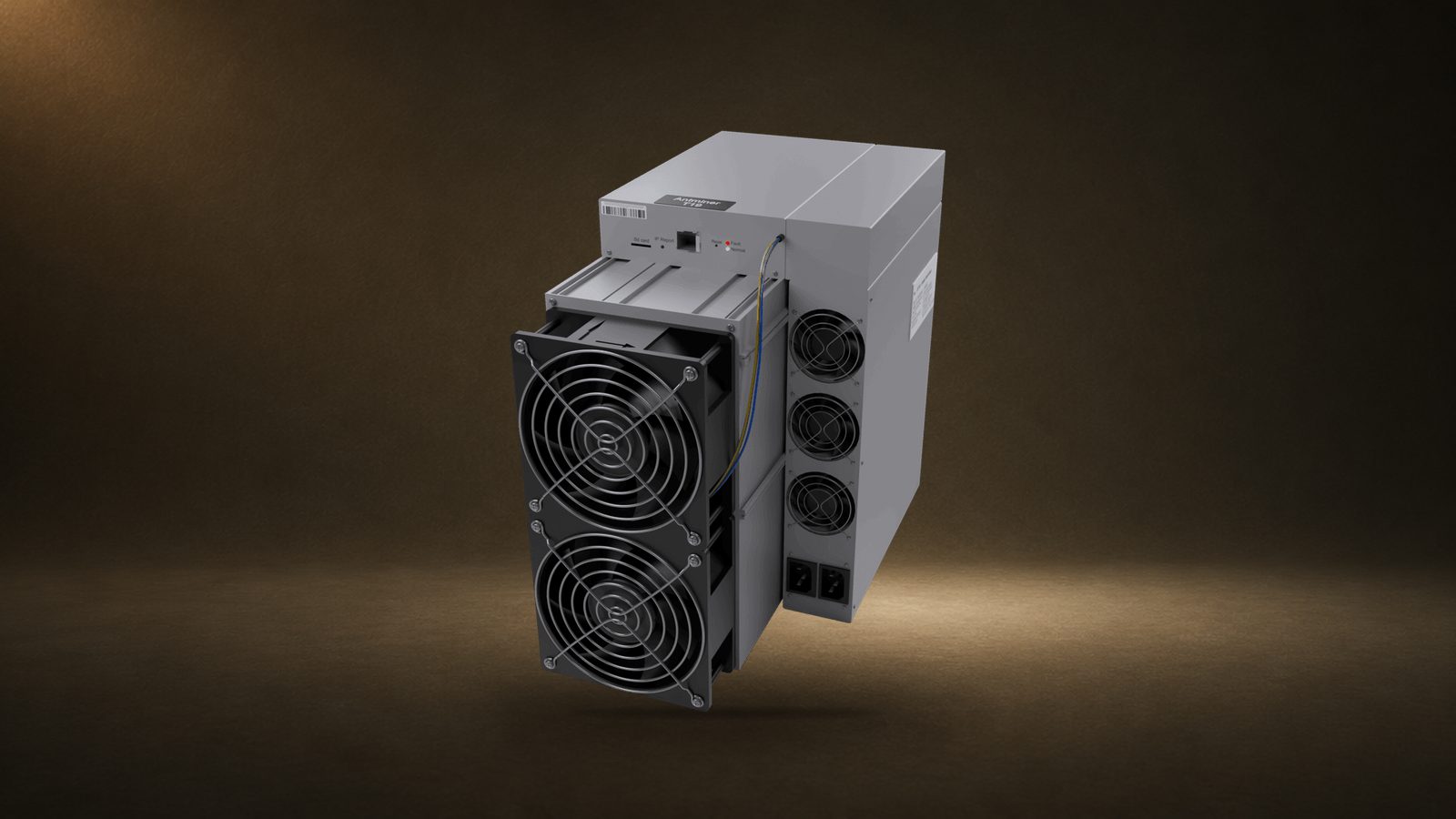
Bitmain Antminer T19 (88 TH/s)
Bitmain's cheaper S19, bought in November 2020
Bitmain launched the T19 in June 2020 as "a cheaper version of its more efficient bitcoin mining machine Antminer S19", The Block reported at the time: 84 TH/s at 37.5 J/TH, for about $1,750. Our store record holds the later 88 TH/s bin, drawing 3,150 W for 35.8 J/TH in a 14.2 kg air-cooled chassis. Bitmain no longer lists the machine, so the record is our spec source.
We bought ours on 3 November 2020 at $3,567, landed it at $5,009, and racked it at our Argentina site, where air-cooled machines start. A petahash earned $107.12 that day on our hashprice chart, with bitcoin just under $14,000. At 35.8 J/TH the machine needed about $49 a petahash to cover its power at Argentina's rate. It went in earning more than twice its electricity.
Four months in, the box was worth nearly three times its price
The 2021 bull market reached the hardware quickly. By March 2021 a T19 sold for $10,494, 2.9× the $3,567 we had paid, and ours had already mined 0.0776 BTC. That is the one resale story worth telling about a machine that lived through a cycle: an owner could have sold the box at the top for $15,158 with its bitcoin, 3.0× the purchase price, or sold it to buy the next generation.
We kept it running, as the roof analogy says a working operation does. What it did next is the reason this report exists.
The 2022 bear market never reached its line
Through the whole of 2022, as bitcoin fell from its 2021 high, the T19 kept clearing its power in Argentina. The lowest hashprice of its Argentina years was $55.86 on 21 November 2022, still above the roughly $49 its electricity cost. Older and hungrier machines beside it were switching off that winter; the T19 never did.
It ran 1,076 days in Argentina without one day off. On 15 October 2023 it made the only move it would ever make, crossing to Nigeria because a full year of its own figures said 3.9-cent power had become decisively better for it. A petahash earned $59.79 that day. At Nigeria's rate the T19's line fell to about $33.50, and the rule behind the date is in a machine crosses to cheap power once.
The lowest day of 2022 paid $55.86 a petahash. The T19 needed about $49.
The 2024 halving halved its margin, and it kept running
In its 1,264 days before the April 2024 halving the T19 mined 0.4760 BTC, 94% of everything it would ever mine, clearing about $9.55 a day after electricity. In its 774 days since, it has mined 0.0288 BTC at about $0.85 a day.
That is what 35.8 J/TH looks like after a halving: a machine still above its line on cheap power, but by a thin margin. It kept running at 3.9 cents for almost two years after the halving without a single day off. Why the line arrives later for every joule saved is the subject of efficiency deciding how many halvings a machine survives.
February 2026 was its first day off
The first time the trailing month stopped paying was 20 February 2026, more than five years after we bought it. A petahash earned $29.58 that day, under the T19's line even at Nigeria's rate, and it was switched off rather than mined at a loss.
2026 then turned it on and off with the market. It came back on 6 May, when a petahash earned $38.96, ran a month, and went dark again on 5 June, the day before June's low. It came back on 2 September and ran until 11 November 2026, when a petahash earned $31.45. This morning a petahash earns $30.35, so it stays off. It has been off 174 days in all, every one of them in 2026.
We found no operator thread on the T19 we could open. The fault a repair shop lists first for it, a hashboard the control board reads as having "0 chips on one or more chains", is a repair-bench job: in Argentina we fix machines on site and bill the parts only, and a failed hashboard is a line item, not a catastrophe.
The tally: every bitcoin kept
Over 2,038 days of running the T19 mined and kept 0.5048 BTC, worth about $30,330 at today's price of $61,242, for $7,039 of electricity. That is about $13,900 a bitcoin, averaged over the whole run, most of it mined in Argentina before the 2024 halving.
Valued at today's price less every dollar of power, it has produced $23,291 of cashflow against the $5,009 it cost to land: 4.7× its box. It is switched off, not retired for good: the engine turns it back on when the trailing month at Nigeria's rate pays again.
What replaced it makes a bitcoin for a fraction
At today's difficulty a T19 would make a bitcoin for about $75,000 even at Nigeria's rate. Bitmain's own air-cooled successors do it for far less: the Antminer S21+ for about $34,600 in Nigeria and the Antminer S21 XP for $28,300, with MicroBT's Whatsminer M74S+ at $25,100.
The T19's lesson is not a warning. A cheaper version of a flagship, bought in a good month and run while it paid, went more than five years before it needed a day off and covered its own box 4.7×. That is what the next machine is bought with.
Five years without a day off covered its box several times over. The next machine is bought out of that.
- MicroBT Whatsminer M74S+ (332 TH/s) — 12 J/TH, In stock, $25,131 of electricity per bitcoin, 21% year one
- MicroBT Whatsminer M73S (560 TH/s) — 13 J/TH, In stock, $27,226 of electricity per bitcoin, 25% year one
- MicroBT Whatsminer M7DS (672 TH/s) — 13.5 J/TH, In stock, $28,273 of electricity per bitcoin, 27% year one
Sources and further reading
- Bitmain releases cheaper bitcoin miner as it loses market share to MicroBT — The Block, 1 Jun 2020
- Antminer T19 – Hashboard Not Detected (ERR_NO_HASHBOARD) Fix — D-Central, 29 Aug 2026
Which machines this covers
Disclosure
Firsthand Bitcoin sells and hosts mining hardware, including this machine. No manufacturer, distributor or affiliate programme paid for or reviewed this page and we take no commission on the links above. Historical figures are computed from daily bitcoin price and network hashprice, each day valued at its own prices. Nothing here is investment advice.