Home / Blog / 21 November 2026
News · Nov 21, 2026 · 4 min read
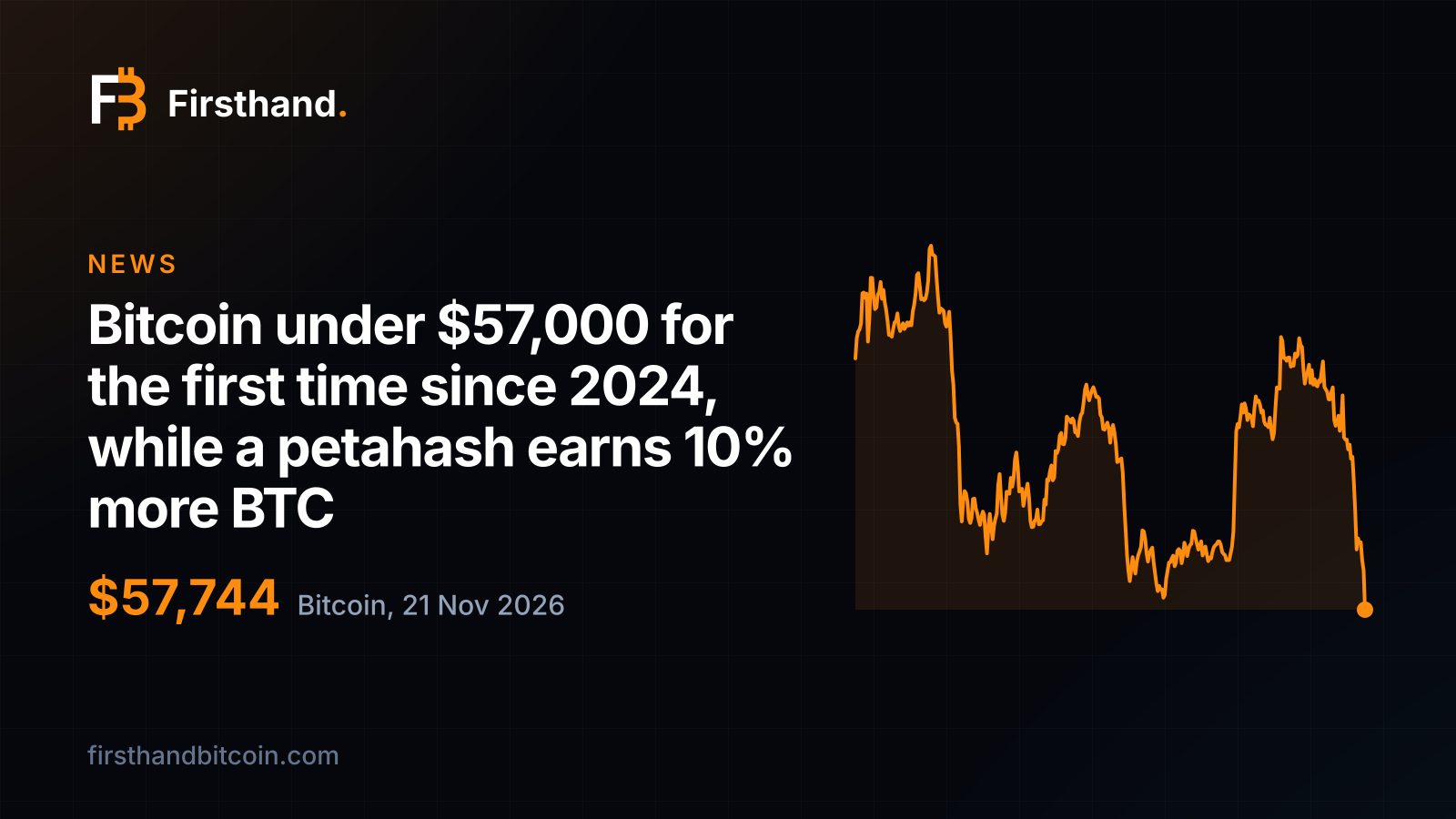
Bitcoin under $57,000 for the first time since 2024, while a petahash earns 10% more BTC
Bitcoin fell under $57,000 overnight, its lowest since September 2024. The number a miner lives by moved the other way: a petahash now earns 10% more BTC than a fortnight ago, and the best machine at the cheapest power makes one for about $17,700.
Bitcoin fell under $57,000 for the first time since September 2024
Bitcoin traded below $57,000 late on 20 November in New York, the early hours of 21 November in Europe, its lowest level since September 2024, CoinDesk reported. The same report puts the move inside a wider sell-off: the Nasdaq fell more than 4% on Friday, and gold, copper and Asian shares fell over the week, with analysts pointing to rising real Treasury yields and a firmer Federal Reserve.
Our bitcoin price chart read $57,744 on the morning of 21 November, against $61,894 a day earlier and $73,931 on 12 November. The last daily reading that low was $56,917 on 11 September 2024. This year’s previous low, at the end of June, was $59,014. The day before, prices were already at a four-month low, covered in our 20 November recap.
Leveraged longs were closed out for the second week running
Futures exchanges force-closed $672 million of bitcoin long positions on 20 November, the third-largest day in the eight months of liquidation data we hold, after 2 June and 13 November. Another $376 million followed by the morning of 21 November. Across all cryptocurrencies, CoinDesk counted $2.40 billion of futures positions closed in 24 hours, more than $1 billion of them in bitcoin. The first wave, a week earlier, is in our piece on 13 and 14 November.
The funding rate turned negative, at −0.0102% per eight hours on 21 November, the lowest since 4 June: traders betting on further falls are now paying the ones still long. The Fear & Greed Index has read between 10 and 12 every day since 15 November.
The forced selling was borrowed money being closed, not BTC being mined and sold.
A petahash earns 10% more bitcoin than it did a fortnight ago
A machine is paid in bitcoin, and how many it earns depends on difficulty, not on the price. Difficulty fell 9.1% on 14 November, the cut covered in our 14 November data piece. Since then a petahash per second has earned 0.000470 BTC a day on our hashprice in bitcoin chart, up from 0.000427 on 13 November.
That 10% is the same on every machine, at every site. The price fell by more than that over the same week, so a day of mining is worth fewer dollars. It is worth more BTC, and the BTC are what an owner keeps.
A bitcoin still costs about $17,700 to make
The most efficient machine we stock, the Antminer S23 XP Hyd at 8.9 J/TH, running at our Nigeria rate of 3.9¢ per kWh, makes one bitcoin for about $17,725 of electricity at today’s difficulty. Before the 14 November cut the same machine needed about $19,500. A bitcoin bought in the market costs $57,744: making one costs 31% of buying one.
The cost of making a bitcoin follows difficulty and the power rate, not the price, which is why it barely noticed this week. The cost to mine chart shows the same gap for a current air-cooled machine at each of our rates. Electricity only: the machine itself, its freight and the pool fee are not in that figure.
The price of a bitcoin fell 22% in nine days. The cost of making one fell too.
What it means for miners
A miner who keeps the BTC does not need a high price on any given day. The power bill is the same number of dollars this week as last, the machine mines more BTC per day than it did a fortnight ago, and none of them has to be sold at $57,744. Why serious miners hold the BTC and pay the power separately is set out in our guide to keeping them.
The next difficulty adjustment is about six days away, and its running estimate has swung between a 2% cut and a 10% rise this week, so the gain is not fixed. Output is never guaranteed: it moves with difficulty every two weeks. What does not move with the price is the cost of making a bitcoin on an efficient machine at cheap power, and this week that cost was about a third of what the market asked for one.
Sources and further reading
- Bitcoin tanks below $57,000 for the first time in two years, and it’s not alone — CoinDesk, 21 Nov 2026
Disclosure
Firsthand Bitcoin sells and hosts mining hardware, including this machine. No manufacturer, distributor or affiliate programme paid for or reviewed this page and we take no commission on the links above. Historical figures are computed from daily bitcoin price and network hashprice, each day valued at its own prices. Nothing here is investment advice.