Home / Blog / Canaan Avalon 1066
Field report · Nov 20, 2026 · 5 min read
Bought after Black Thursday, the Avalon 1066 went dark for a summer, then mined the bull run
Canaan's 2019 workhorse was bought on 17 March 2020, five days after bitcoin nearly halved in a matter of hours. The halving switched it off within a month. It came back in November, mined every day of the 2021 bull run in Argentina, then crossed to Nigeria at the 2022 low.
TL;DR
- Bought on 17 March 2020 for $753, five days after bitcoin's March 2020 crash.
- Switched off on 7 June 2020, four weeks after the 2020 halving, and dark until 11 November 2020.
- Then 604 days in Argentina without a stop, through the whole 2021 bull run.
- Crossed to Nigeria on 25 December 2022; kept 0.2900 BTC for $4,465 of electricity, $12,960 of cashflow, 8.7× its box.
Canaan's best seller of 2019
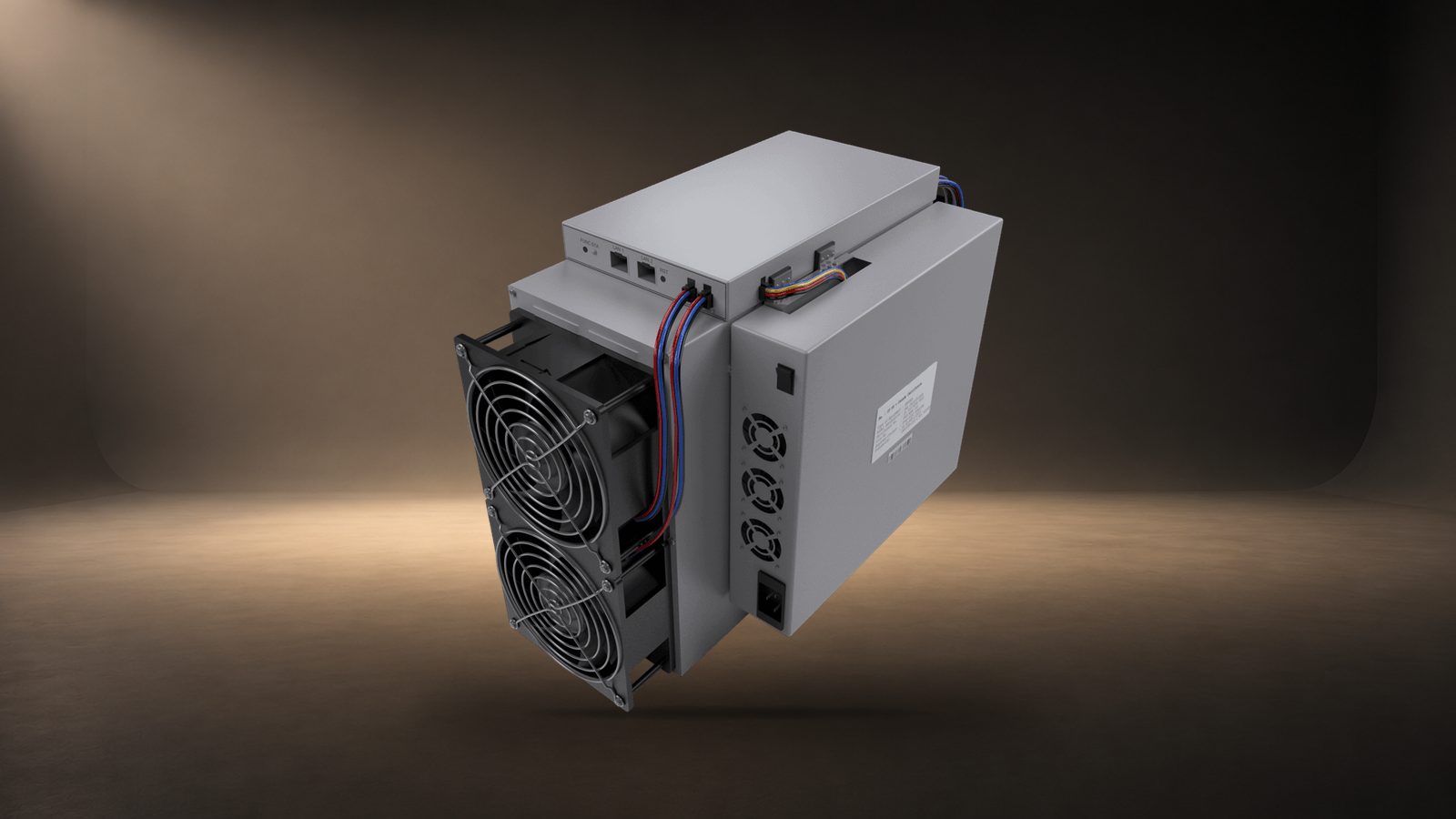
Canaan launched the AvalonMiner 1066 in the autumn of 2019 as the top of its A10 range. Bitcoin.com reported in October 2019 that it claimed 50 TH/s from 3,250 watts at the wall, that pre-orders would ship in November, and that it cost $1,390 a unit. Our store record gives the same 50 TH/s and 3,250 W: 65 J/TH, air-cooled, 11.4 kg.
It sold. In its annual report for 2019, Canaan counted 122,134 A10-series machines sold that year at an average of RMB 7,082, a series it says was mainly the A1047 and the A1066. That was a quarter of every machine Canaan shipped in 2019, in the year its A10 range first went on sale.
Bought in the week of the crash
On 12 March 2020, as markets panicked over the pandemic, bitcoin's price was nearly slashed in half within a matter of hours, falling as low as $4,600 during the day. On our price chart it closed at $7,351 on 11 March and $5,420 on 17 March.
Canaan felt it too. Its annual report says that "On March 13, 2020, the Bitcoin price saw a significant drop and has been turbulent since then," and that in the first months of 2020 "we experienced a decrease in product demand and pricing".
This 1066 was bought on 17 March 2020 for $753, a little over half what Canaan asked at launch, and landed at our Argentina site for $1,491 with freight, duty and setup. Hashprice was $115 per petahash per day that day. A petahash of 1066 draws 65 kW, which at Argentina's 5.75¢ is about $90 of power a day, so it started out clearing its power with room to spare.
Bought at a little over half its launch price, in the week bitcoin nearly halved in hours.
Four weeks after the halving, it went dark for five months
Block 630,000 was mined on 11 May 2020 and cut the subsidy from 12.5 to 6.25 BTC. The 1066 had eight weeks of 12.5 BTC blocks behind it, worth 0.0467 BTC, 16% of everything it would ever mine.
Hashprice went from $169.75 on 10 May to $86.91 on 12 May, under the machine's $90 line. On 7 June 2020 it stood at $71, the trailing month no longer covered the power, and the machine was switched off.
It stayed off for five months, while hashprice averaged about $82 through the summer. On 11 November 2020, with bitcoin near $15,900 and hashprice back at $111, it was switched on again. Nothing on the machine had changed in between; the line it had to clear was the same $90 a day.
604 days in Argentina, through the whole bull run
From 11 November 2020 the 1066 ran 604 days without a stop, all of them at Argentina's 5.75¢. That stretch made about three-fifths of every BTC it mined in its life.
It held the whole of the 2021 market. Hashprice averaged about $262 per petahash per day over those 604 days and peaked at $412.85 on 20 October 2021, more than four and a half times what the machine's power cost. A machine at 65 J/TH was still comfortably worth running at 5.75¢, because the hashprice it was earning was far above its line.
There was no reason to move it then. Argentina's uptime is close to 99%, against Nigeria's 74%, and through a bull run the site that runs more hours earns more. The crossing to cheap power waits until a full year of figures says otherwise.
At the 2021 peak, a petahash of 1066 earned more than four and a half times its power.
The box itself fetched 6.4× its price
The 2021 market lifted the price of machines along with bitcoin. By March 2021 a 1066 was changing hands at $4,822, 6.4× the $753 this one cost a year earlier.
A seller at that point would have had 0.0999 BTC of mining, worth $6,000 today, plus $4,822 for the box: $10,822, or 7.3× its landed cost. That is the replace-the-roof move: sell the old machine at the top and buy the next generation. This run kept the 1066 and kept mining.
It crossed to Nigeria at the bottom of 2022
The 2022 bear market brought hashprice down to $92 by 7 July, close to the Argentina line, and the machine stopped. It ran again from 29 July to 8 September and stopped once more. Hashprice touched its low of $55.86 on 21 November 2022.
On 25 December 2022 it crossed to Nigeria, where the same petahash costs about $61 a day in power instead of $90. It ran there for 258 days, paused through the autumn of 2023, and ran again from 30 October 2023 through the April 2024 halving.
That halving was the end. Hashprice was $103.64 on 19 April 2024 and $52.34 on 16 May, under even Nigeria's line. Its last day of mining was 16 May 2024, and it has been retired since 17 May 2024. A machine is retired when it is off today. Its bitcoin never is.
The tally: 0.2900 BTC for $4,465 of electricity
Over 1,187 running days the 1066 mined and kept 0.2900 BTC for $4,465 of electricity: $15,397 for one BTC, averaged over its life. Nobody sold them to pay the power, so today's price is the one that counts, and at today's price they are worth $17,425.
That is $12,960 of cashflow against a $1,491 landed cost: 8.7× its box. All but a sliver of it came before the 2024 halving.
The lifetime average describes a machine that met its blocks at 12.5 and 6.25 BTC. At today's difficulty one BTC from a 1066 in Nigeria would take about $136,100 of electricity, against a bitcoin at $61,242, which is why it stays off.
8.7× its box, from a machine that spent its first summer switched off.
What the 1066 says about buying now
Three things carried this machine: a low entry price, a bull run it was switched on for from start to finish, and cheap power for its last act. The entry price raised the multiple on the box. It did not mine a single extra BTC; the hours did that.
Efficiency decided how many of those hours there were. At 65 J/TH the 1066 could not clear 5.75¢ for a summer after one halving, and could not clear 3.9¢ at all after the next. Efficiency decides how many halvings a machine survives, and that is the number to buy on.
Canaan's current air-cooled machine, the Avalon A15 Pro+, needs 15.5 J/TH, less than a quarter of the 1066's power for every terahash. Today it makes one BTC for about $47,900 of electricity in Argentina and $32,500 in Nigeria; our review has the full case. The April 2028 halving is its test, and the 1066's record shows what passing one buys: every BTC it made is still kept.
- MicroBT Whatsminer M74S+ (332 TH/s) — 12 J/TH, In stock, $25,131 of electricity per bitcoin, 21% year one
- MicroBT Whatsminer M73S (560 TH/s) — 13 J/TH, In stock, $27,226 of electricity per bitcoin, 25% year one
- MicroBT Whatsminer M7DS (672 TH/s) — 13.5 J/TH, In stock, $28,273 of electricity per bitcoin, 27% year one
Sources and further reading
- 4 New High-Powered Bitcoin Miners Revealed — Bitcoin.com News, 11 Oct 2019
- Canaan Inc. annual report on Form 20-F for the fiscal year ended 31 December 2019 — US Securities and Exchange Commission, 2020
- Bitcoin Black Thursday One Year Later: What Happened and What's Next — Decrypt, 12 Mar 2021
- Bitcoin records its third-ever block reward halving — The Block, 11 May 2020
Which machines this covers
Disclosure
Firsthand Bitcoin sells and hosts mining hardware, including this machine. No manufacturer, distributor or affiliate programme paid for or reviewed this page and we take no commission on the links above. Historical figures are computed from daily bitcoin price and network hashprice, each day valued at its own prices. Nothing here is investment advice.