Home / Blog / Canaan Avalon A15 Pro+
Machine review · Nov 13, 2026 · 7 min read
Avalon A15 Pro+ review: 15.5 J/TH on air, Canaan's best air machine, no record yet
Canaan's A15 Pro+ is 240 TH/s from 3,720 W, 15.5 J/TH, air-cooled, in stock since August. It is the most efficient Avalon you can buy, a touch behind the Antminer S21 Pro, and it has been shipping for three months, which is not long enough for anyone to know how its boards age. Here is what it makes a bitcoin for, and who it is for.
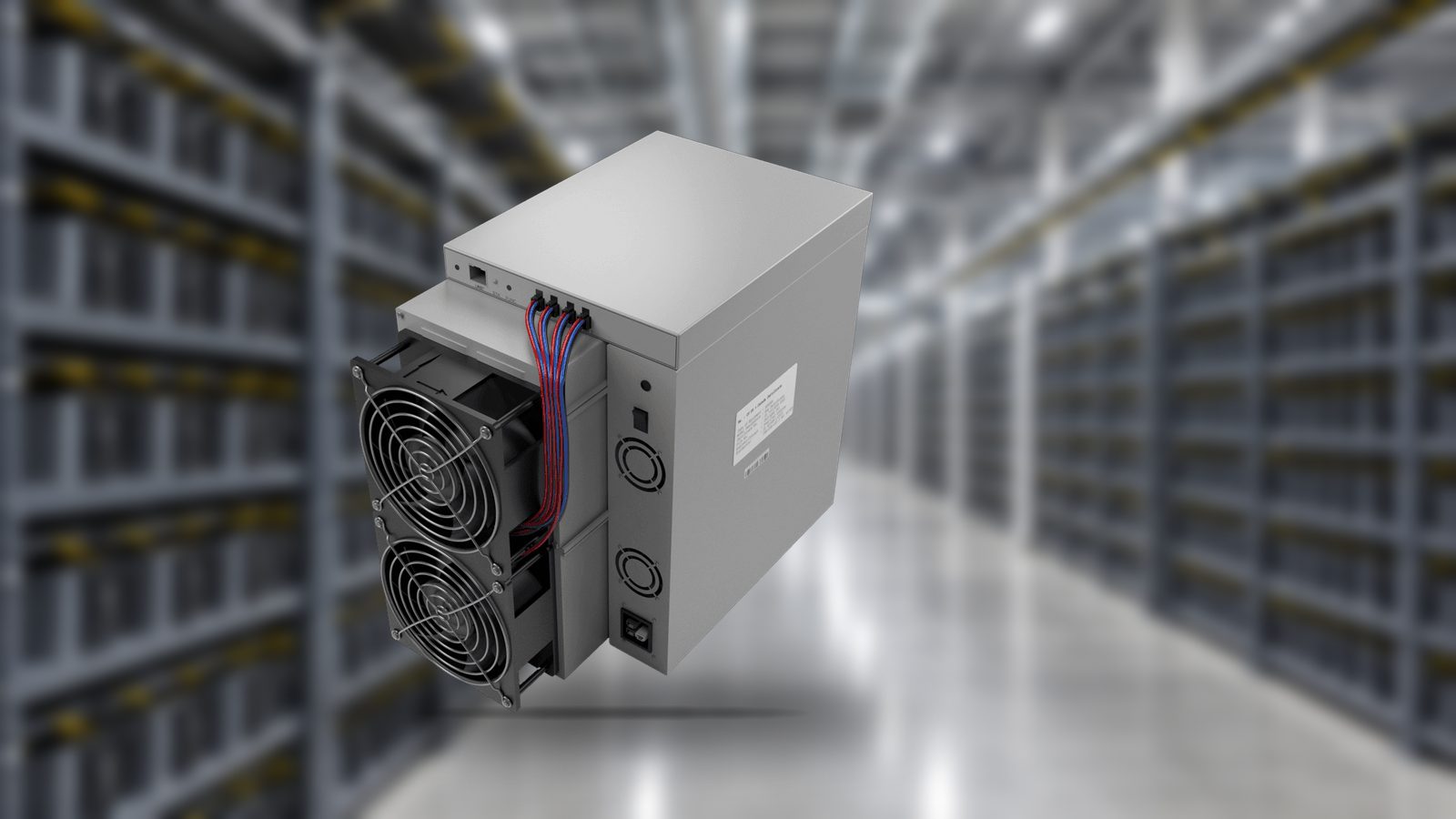
Canaan Avalon A15 Pro+ (240 TH/s)
The bottom line
The Avalon A15 Pro+ is 240 TH/s from 3,720 W, 15.5 J/TH, air-cooled, announced on 28 July 2026 and in stock since 10 August. At our Argentina site, where air-cooled machines start, it makes a bitcoin for about $52,600 of electricity and returns roughly 16% in its first year at today's price of $69,262. At Nigeria's 3.9 cents the same machine makes one for about $35,700 and returns roughly 24%.
It is Canaan's most efficient air machine and it sits a point and a half behind Bitmain's 15 J/TH S21 Pro, which makes a bitcoin for $50,900 at the same site, and two points behind the 13.5 J/TH S21 XP, at $45,800. What you are buying is 240 terahash of air-cooled hashrate at $9.98 a terahash, $2,394 a unit, from the maker that has sold air machines cheaper than Bitmain for two generations.
The reason to buy it is the price per terahash against the Antminers of the same efficiency class. The reason to hesitate is that nobody, including us, has a year of its boards behind them, and a machine with no record is scored as unknown here, not as good. Neither reason is a reason to buy a less efficient machine instead.
Scores
| Criterion | Score | Why |
|---|---|---|
| Cashflow | 6/10 | Makes a bitcoin for about $52,600 of electricity at 6 cents and returns roughly 16% in year one; at Nigeria's 3.9 cents it is $35,700 and 24%. Behind the S21 Pro's 21% at the same site. |
| Longevity | 6/10 | At 15.5 J/TH it clears 6-cent power today, and after the April 2028 halving it needs Nigeria's 3.9 cents to keep clearing. One crossing, then years of life on cheap power. |
| Efficiency | 6/10 | 15.5 J/TH is 7% better than the A15 Pro's 16.6 and a point and a half behind the S21 Pro. The best air machines in stock run at 12 to 13.5 J/TH. |
| Quality control | 5/10 | Unknown, and scored as such. The machine has shipped for three months; no operator report of its boards could be found, and Canaan says its figures come from laboratory conditions. |
| Serviceability | 6/10 | The A15 series uses the same MM-series controller architecture as earlier Avalons and independent benches already repair its boards. Hosted with us, Argentina repairs are billed at the cost of parts. |
Weighted on what it costs to run and how long it keeps being worth switching on. Efficiency and longevity carry most of it, because a 15.5 J/TH air machine needs Nigeria's rate after the 2028 halving; quality control is scored as unknown rather than as good, because there is no record yet, and that unknown holds the overall down.
Buy it if
- Your power is 6 cents or below and you want air-cooled hashrate at the lowest price per terahash in the 15 to 16 J/TH class.
- You are filling rack space at a site that already runs Avalons, so the controller, firmware and spares are familiar.
- You are buying to keep bitcoin through the 2028 halving and your plan already includes a crossing to 3.9-cent power, which this machine will need.
- You would rather buy a known maker's newest air machine at a settled price than the same maker's older A15 Pro for a little less.
Walk away if
- Your power is above about 7 cents: between 6 and 7 cents the margin thins quickly, and above it the S21 XP's two extra points of efficiency are worth more than this machine's price advantage.
- You can run hydro. At the same site a 9 to 13 J/TH hydro unit makes cheaper bitcoin than any air machine, this one included.
- You need a reliability record before you commit. There is none yet for this machine, and the A15 Pro's is short.
- Your room runs hot. The rating is 35 °C intake air, ten degrees below an S21 Pro's, and a hot room will take hashrate away from it first.
What Canaan shipped
Canaan announced the A15 series on 7 November 2024, led by the A15 Pro at "a hashrate no less than 215T and a power efficiency of 16.8J/T". The A15 Pro+ is the step above it, rated at 240 TH/s from 3,720 W, which is 15.5 J/TH, in a 14.9 kg air-cooled unit rated at 75 dB and for intake air of -5 to 35 °C. Our store record holds that spec; Canaan's own shop pages could not be opened when we wrote this, and the November 2024 release does not list the Pro+, so the figures here are the store's and the review is written to them.
Each terahash takes 7% less power than on the A15 Pro, so the same electricity buys 7% more bitcoin. The step before it, from the 18.5 J/TH A1566 to the A15 Pro, was 10%. Canaan is improving its air machines at a steady pace and is still a generation behind Bitmain's best air machine on efficiency, which has been true for every Avalon we have looked at.
The same release carries the sentence every Canaan spec sheet should be read with: "All provided data and parameters are based on laboratory results in a controlled environment." A machine rated for 35 °C intake air, against the -20 to 45 °C of an Antminer S21 Pro in our catalogue, is a machine that wants a cool room to hold its rating.
Canaan's air-cooled line has moved in three steps in two years: 18.5, 16.6 and now 15.5 J/TH.
Why it is priced where it is
At $9.98 a terahash the A15 Pro+ costs $2,394 a unit. The A15 Pro is $7.14, the S21 Pro $7.67 and the S21 XP $11.55. Canaan sells air machines below Bitmain's price for the same class and has done so since the A1566, and the Pro+ keeps that gap.
The price has a company behind it. Canaan's third-quarter results, published on 10 November, put mining-machine sales at $4.8 million for the quarter, 1.0 million TH/s of computing power sold, against $118.6 million of product revenue a year earlier. Nangeng Zhang, its chairman and chief executive, cited "continued weakness in bitcoin mining equipment demand and intense industry pricing competition", and the company wrote down $8.2 million of inventory in the quarter after $25.3 million in the one before. Inventory stood at $119.1 million at the end of September.
That is the context for a cheap terahash: a maker with stock to move in a weak market. For a buyer it is an entry price, and a good one. It is also a reason to buy from stock rather than on a promise, because a company selling a million terahash a quarter is not the company whose pre-orders you want to be at the back of.
The reliability record, which is that there is none
The A15 Pro+ has been shipping since August. We looked for operator reports of its boards on the forums where such reports appear and found none, for this machine or for the A15 Pro, whose own shipments only reached buyers in early 2025. The Avalon threads that exist are about the A1246 and A1166 generations: single hashboards failing in the first weeks, long waits for replacement boards from Canaan, and the usual advice to run boards one at a time to find the bad one. None of that transfers to a 2026 board.
What does transfer is the architecture. The A15 series runs Canaan's A3197S chip on the MM-series controller it has used across recent generations, and D-Central's Avalon repair guide already covers the A15x boards alongside the 12- to 14-series, with the same faults it lists for all of them: weak or dead chips, string and regulator faults, controller link faults, connectors and power supplies. A machine whose boards an independent bench will take is a machine whose faults have a price.
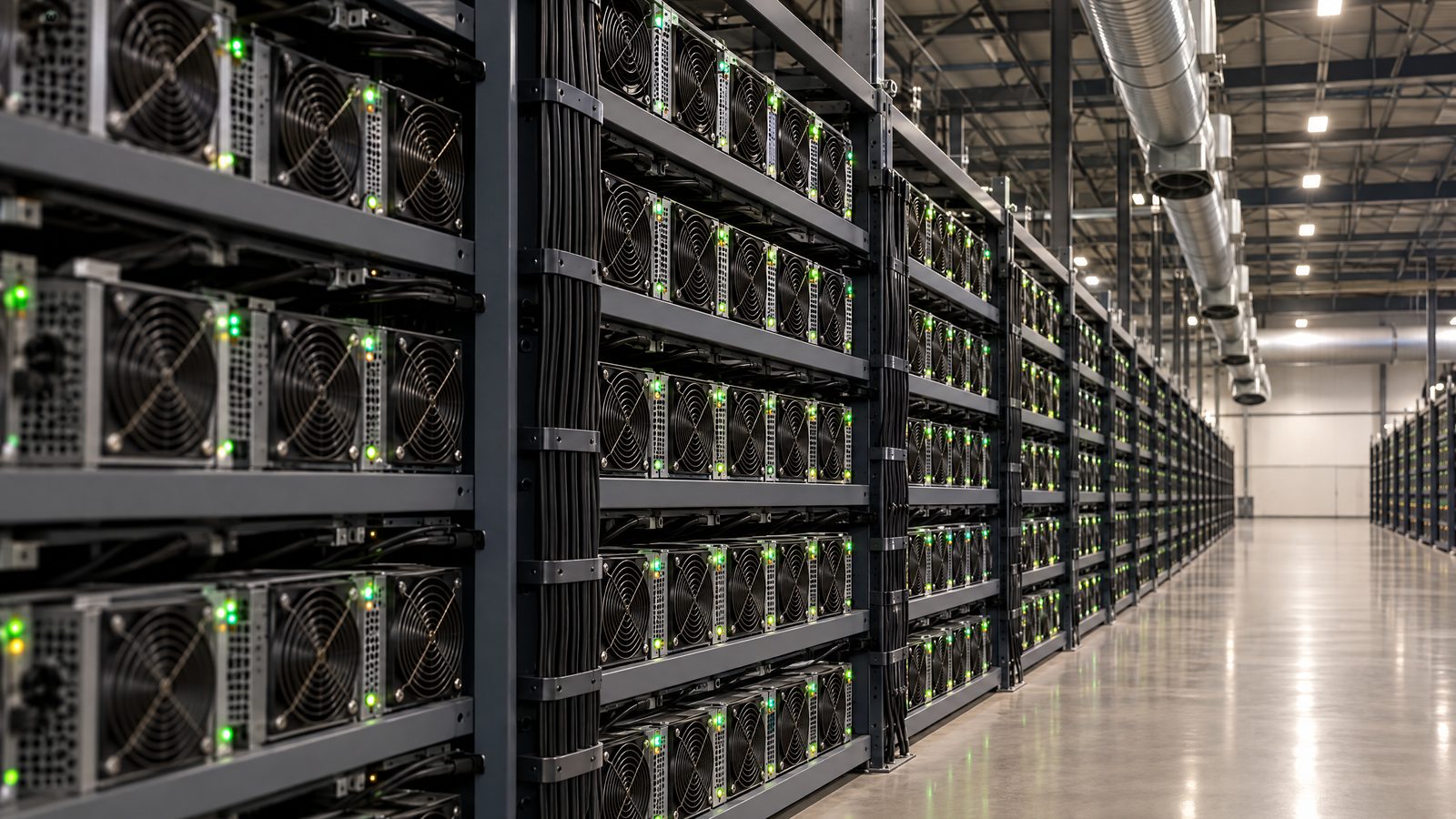
Hosted with us, that price is a parts bill. Air-cooled machines live at our Argentina site, where repairs are done on site and billed at the cost of the parts and nothing else; an in-warranty fault goes back to Canaan on its twelve-month terms, which we file for you. A failed hashboard is a line item, on this machine as on any other. The quality-control score above is a 5 because the record is empty, not because it is bad.
What one bitcoin costs it
At 15.5 J/TH a petahash of A15 Pro+ uses 372 kWh a day. At our Argentina rate of 6 cents the machine makes a bitcoin for about $52,600 of electricity at today's difficulty, and at Nigeria's 3.9 cents for about $35,700. Against a market price of $69,262 this morning, both are a fraction of what buying one costs; the gap is the whole case for mining rather than buying, and the keeper's arithmetic is what turns it into bitcoin in a wallet.
The one we bought in June 2026, at $2,514 and landed in Argentina at $3,692, has mined and kept 0.0167 BTC in 147 days for $782 of electricity, about $46,700 a bitcoin over that short run. That is $455 of cashflow against the landed cost, 12% of the box, which is what 147 days of a four-year machine looks like. Between now and the April 2028 halving it has about 0.053 BTC still in it at today's difficulty, worth roughly $6,601 with bitcoin back at its previous high: about 1.9× its hardware by the halving.
The number that decides its life is the line. After the halving, at an unchanged price and difficulty, a petahash earns half what it does today. At 6 cents that is below what 372 kWh costs; at 3.9 cents it is above it. So the A15 Pro+ is a machine that crosses to cheap power once, when the trailing year says Nigeria pays better, and then has years in front of it. The S21 XP, two points more efficient, does not need the crossing to survive the halving, and that is what its higher price per terahash buys.
At 6 cents, about $52,600 a bitcoin. At 3.9 cents, about $35,700.
Does it still make sense in late 2026?
Yes, for a particular buyer. If you have 6-cent power or ours, air cooling and no water loop, and you are filling positions, the A15 Pro+ turns a dollar of hardware into more terahash than the Antminers of its class, and it turns a kilowatt-hour into about 7% more bitcoin than the A15 Pro it replaces. Those are both real advantages, and at a settled price they compound.
It does not make sense if what you want is the lowest cost per bitcoin regardless of what the machine costs. That buyer wants the S21 XP in air, or a hydro unit at 9 to 13 J/TH if the site can take water, and should read why efficiency decides how many halvings a machine survives before choosing. The A15 Pro+ survives one halving on cheap power. The S21 XP survives it at 6 cents.
Our outlook on this machine, written in October before we had one running, argued the same thing from the spec sheet. Three months of running have not changed it, and have not yet added the thing that would: a record.
- MicroBT Whatsminer M74S+ (332 TH/s) — 12 J/TH, In stock, $40,732 of electricity per bitcoin, 21% year one
- MicroBT Whatsminer M73S (560 TH/s) — 13 J/TH, In stock, $44,126 of electricity per bitcoin, 23% year one
- Bitmain Antminer S23 (318 TH/s) — 11 J/TH, Pre-order, $37,338 of electricity per bitcoin, 20% year one
Our two cents
The A15 Pro+ is a fair machine at a good price from a maker having a hard year, and that combination is exactly when an air-cooled buyer with cheap power does well. Buy it from stock, rack it where the room stays under its 35 °C rating, and plan the crossing to 3.9-cent power into its life from the start.
If you can stretch to the S21 XP, stretch: the extra efficiency is the difference between a machine that needs cheap power after the halving and one that does not. If you cannot, this is the best Avalon there is, and a better buy than the A15 Pro it follows.
Sources and further reading
- Canaan Upgraded Avalon Miner A15 Series with Superior Performance — Canaan Inc., via PR Newswire, 7 Nov 2024
- Canaan Inc. Reports Unaudited Third Quarter 2026 Financial Results — Canaan Inc., via PR Newswire, 10 Nov 2026
- Avalon hashboard repair guide — D-Central, read 13 Nov 2026
Which machines this covers
The other side of this machine
Avalon A15 Pro+: 7% less power than the A15 Pro, and it still needs Nigeria after the halving — Canaan's A15 Pro+ is rated at 240 TH/s from 3,720 W, 15.5 J/TH. It turns the same electricity into about 7% more bitcoin than the A15 Pro it follows. On those numbers it clears its power today at every site, and after the April 2028 halving only at Nigeria's 3.9¢.
Disclosure
Firsthand Bitcoin sells and hosts mining hardware, including this machine. No manufacturer, distributor or affiliate programme paid for or reviewed this page and we take no commission on the links above. Historical figures are computed from daily bitcoin price and network hashprice, each day valued at its own prices. Nothing here is investment advice.