Home / Blog / MicroBT Whatsminer M31S
Field report · Nov 14, 2026 · 4 min read
Half a bitcoin from one Whatsminer M31S, bought a month after the 2020 halving
At 42 J/TH the M31S was never the efficient machine of 2020. A unit bought four weeks after the halving still had almost a whole cycle of 6.25 BTC blocks to itself. It stopped for 22 days in five and a half years, crossed to Nigeria once, and was retired in November 2025 with every BTC kept.
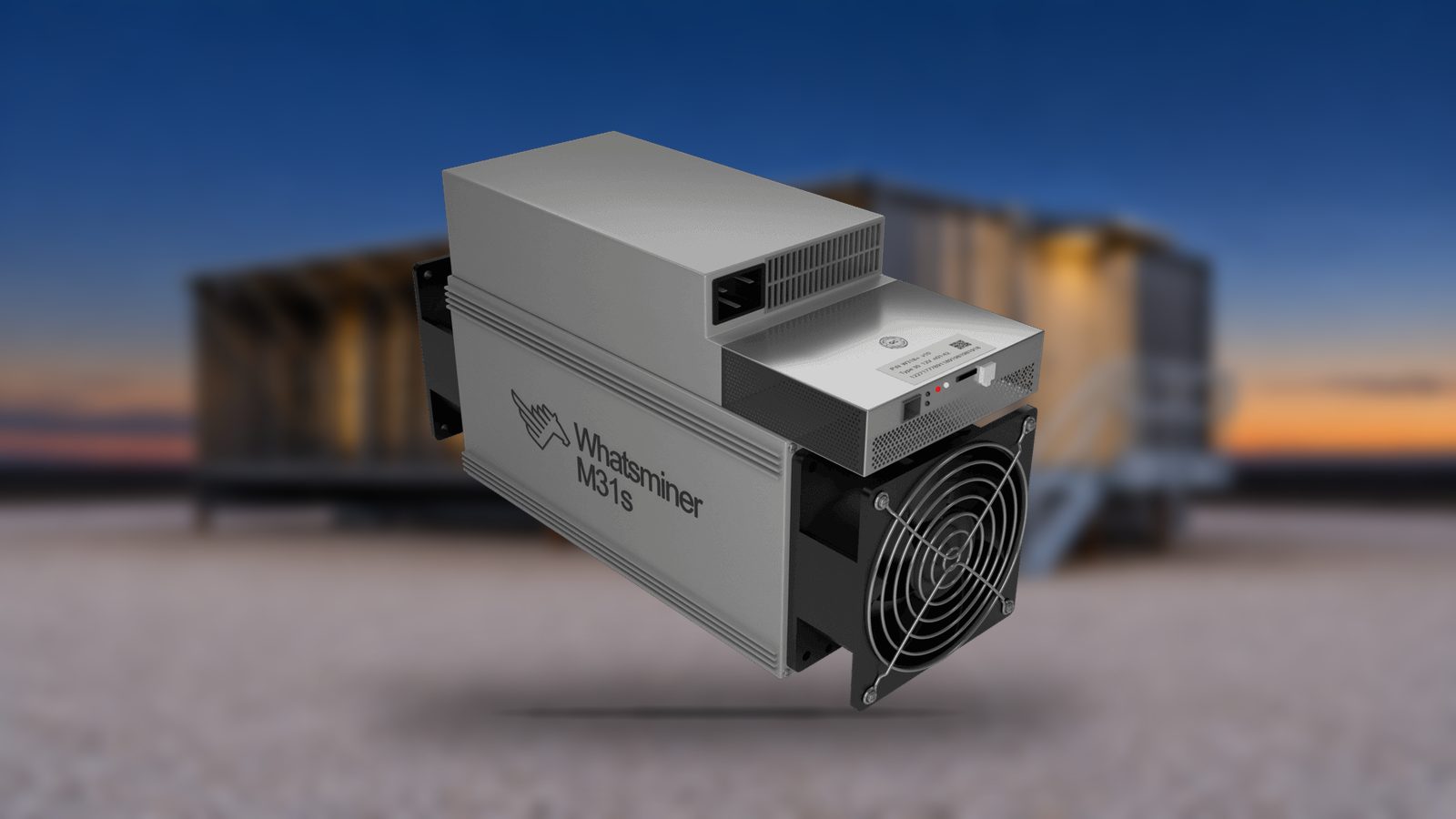
MicroBT Whatsminer M31s (76 TH/s)
A 42 J/TH machine, four weeks into a new halving cycle
Bitcoin’s third halving came on 11 May 2020 and cut the block subsidy to 6.25 BTC. The Whatsminer M31S stood one step behind MicroBT’s M30S that year: 76 TH/s from 3,220 W, about 42 J/TH, air-cooled, against 38 J/TH for the M30S, which has its own look-back. Those are the figures in our store record.
The first price we hold for it is $1,373 on 9 June 2020, $2,266 landed at our Argentina site with freight, duty and setup. The market agreed with that price. Three days earlier a reseller on Bitcointalk was asking $1,435 for new units of the 72 TH/s bin, and in April a hardware thread had listed the 80 TH/s M31S+ at $1,576. That same week a buyer on the forum reported MicroBT support confirming a 365-day warranty on the M30 and M31 lines, with shipping paid both ways.
It had almost a whole cycle of 6.25 BTC blocks to itself
The 2020 cycle lasted 1,440 days, from 11 May 2020 to the halving of 20 April 2024. The M31S missed the first 29 of them and mined on 1,389 of the rest.
Network hashprice was about $78 per petahash per day when it was switched on, and peaked at $412.85 on 20 October 2021. The machine spent that whole climb in Argentina, where the site runs 98.7% uptime at 5.75¢. When a terahash earns that much, hours online are worth more than a cheaper rate.
Those 1,389 days produced 0.4801 BTC, about $7.17 a day over electricity at the prices of each day. The 584 days it ran after the halving added 0.0200 BTC, at about $0.57 a day. Nothing about the machine changed in April 2024. The subsidy did, and efficiency decides what a machine does next.
96% of its bitcoin came before April 2024, from 70% of its working days.
Nine months in, the box itself fetched 5.3× its price
The 2021 bull market lifted the price of machines along with bitcoin. By March 2021 an M31S was changing hands at $7,329, 5.3× the $1,373 this one cost.
A seller at that point would have kept 0.1474 BTC of mining, worth $10,522 today, plus $7,329 for the box: $17,851, or 7.9× the landed cost, inside a year. The proceeds could also have bought the next generation, the replace-the-roof move. This run kept the machine and kept mining.
One pause of 22 days, one crossing
Bitcoin’s 2022 low took hashprice to $55.86 on 21 November 2022, the lowest reading since the purchase. After 1 December 2022, with the trailing month no longer covering its power, the machine was switched off. It was back on 24 December, 22 days later. That was the only pause of its working life.
On 6 May 2023 it crossed to Nigeria, the one crossing a machine makes. Nigeria runs 73.6% uptime against Argentina’s 98.7%, so it mines fewer hours, and at 3.9¢ it mines them for about a third less. For a 42 J/TH machine, a year of figures had settled that cheaper power was the better home.
It ran there for 934 days without a stop, through the April 2024 halving and for nineteen months beyond it.
The tally: 0.5001 BTC for $6,960 of electricity
Over 1,973 running days the M31S mined and kept 0.5001 BTC for $6,960 of electricity: $13,919 one BTC, averaged over its whole life. At today’s price those BTC are worth $35,687.
That is $28,727 of cashflow against a $2,266 landed cost, 12.7× its box. Nobody sold a BTC to pay a power bill, so every one is valued at today’s price and not at the price of the week it was mined.
The lifetime average is not what the machine would do now. At today’s difficulty one BTC from an M31S in Nigeria would take about $97,300 of electricity, against a bitcoin at $67,120.
Half a bitcoin, at about $13,900 of electricity for one BTC.
Retired on 25 November 2025, with every BTC kept
Its last day of mining was 24 November 2025, with hashprice at $36.19. The trailing month had stopped covering its power at 3.9¢, and it has been off since 25 November 2025. Hashprice has reached $41.64 at best since then, on 15 January 2026, and touched $27.74 on 6 June 2026.
A machine is retired when it is off today. Its bitcoin never is. Switched off, the machine costs nothing, and the 0.5001 BTC it made are still in the wallet.
What a buyer today can take from it
The M31S was not the efficient machine of 2020, and it still covered its box 12.7×. Two things did that: a settled entry price, and nearly a full halving cycle in front of it. Efficiency then decided how long it could keep going afterwards, and at 42 J/TH the answer was nineteen months.
The next halving is due in April 2028. A machine bought now is judged the same way: what it costs to land, how many days it has before the subsidy halves, and how little power it needs when that day comes. A current air-cooled machine such as the Whatsminer M74S+ at 12 J/TH makes one BTC in Nigeria for about $27,600 of electricity today, where the M31S would need $97,300.
For a miner the point is the bitcoin. This machine turned $6,960 of electricity into half a bitcoin, and all of it was kept.
- MicroBT Whatsminer M74S+ (332 TH/s) — 12 J/TH, In stock, $27,569 of electricity per bitcoin, 21% year one
- MicroBT Whatsminer M73S (560 TH/s) — 13 J/TH, In stock, $29,867 of electricity per bitcoin, 25% year one
- MicroBT Whatsminer M70S (256 TH/s) — 13.5 J/TH, In stock, $31,015 of electricity per bitcoin, 22% year one
Sources and further reading
- WTS 3 new whatsminer M31S 72T (46W): 1435$ each without shipping — Bitcointalk, 6 Jun 2020
- Whatsminer M30 / M31 Reliability + Warentee Experiences. — Bitcointalk, 8 Jun 2020
- MicroBT WhatsMiner M30S++, M30S+, M30S, M31S+ Hardware Specifics — Bitcointalk, 17 Apr 2020
Which machines this covers
Disclosure
Firsthand Bitcoin sells and hosts mining hardware, including this machine. No manufacturer, distributor or affiliate programme paid for or reviewed this page and we take no commission on the links above. Historical figures are computed from daily bitcoin price and network hashprice, each day valued at its own prices. Nothing here is investment advice.